Emerson Electric (EMR) Faces Unexpected Decline Amidst Strong Earnings and Rebound Stabilization: What's Driving the Disconnect?
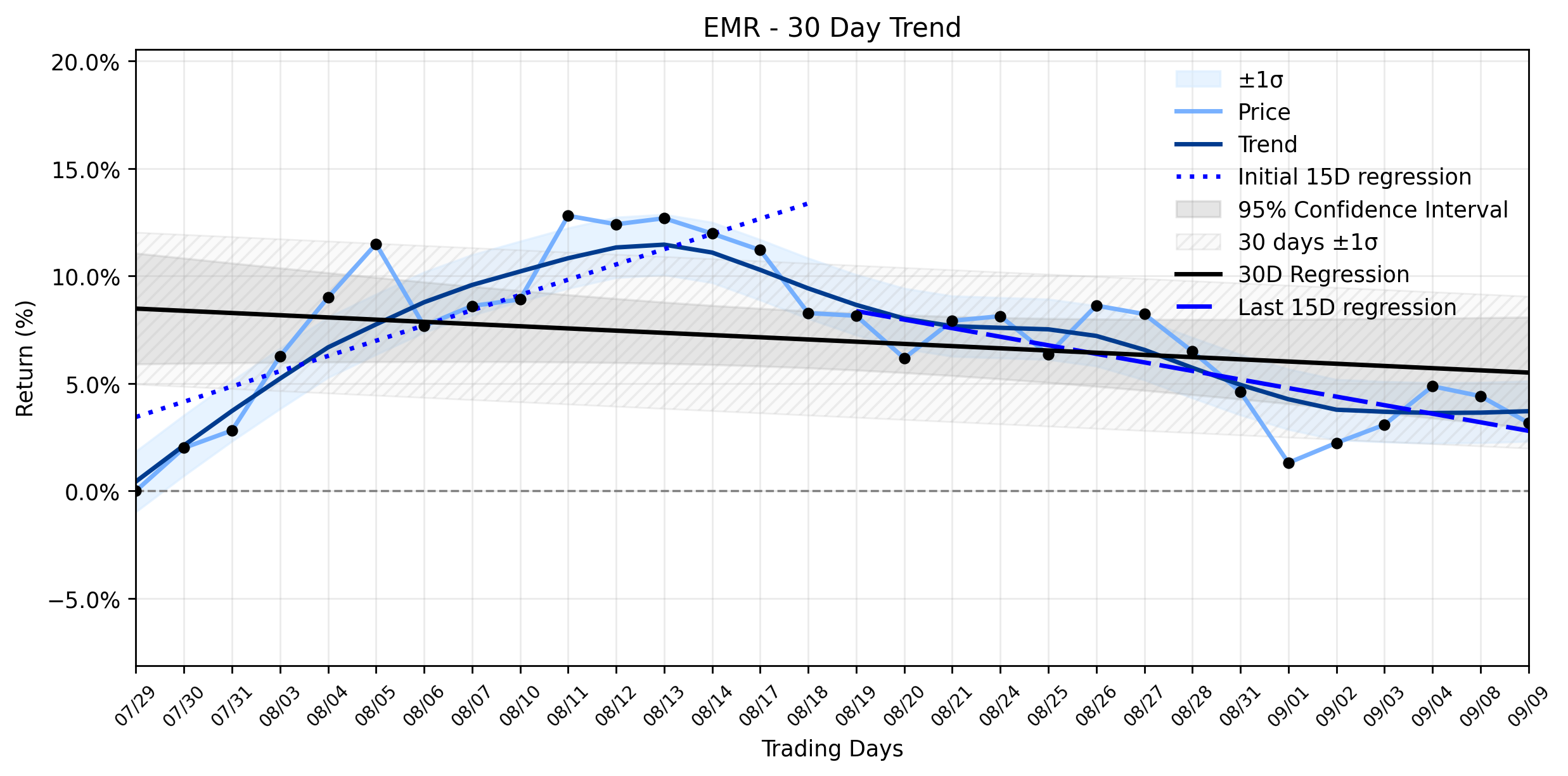
Pct Price Change: -1.19%
On the trading floor, Emerson Electric opened at $152.15, reached a high of $152.88, and dipped to a low of $150.30 before closing at $150.34. The days trading saw a volume of 2,038,100 shares, culminating in a market capitalization of $83,859,649,957. The absolute change for the day was a loss of $1.81.
The daily loss comes despite a wave of encouraging announcements. Emerson Electric recently reported robust Q3 2026 results, surpassing analyst expectations with adjusted EPS of $1.71 against a $1.68 consensus and revenue hitting $4.87 billion, exceeding the $4.80 billion forecast. Management, buoyed by these figures, raised its full-year 2026 adjusted EPS guidance to the upper end of its previous range, signaling strong confidence in future performance. Furthermore, the company committed to returning approximately $2.2 billion to shareholders this year and declared a quarterly dividend of $0.555 per share, translating to a 1.5% annualized yield. Institutional investors have also been actively accumulating shares, with NewEdge Advisors increasing its position by 4% and Ameritas Advisory Services LLC boosting its holdings by a staggering 431.3% in the second quarter. Analysts, too, maintain a Moderate Buy consensus rating, with several firms, including Citigroup and HSBC, recently raising their price targets.
However, the markets immediate reaction tells a different story. The stocks recent trend analysis reveals a complex narrative: an initial upward slope of 0.7095% per day in the earliest 15 trading days gave way to a downward slope of -0.3980% per day in the most recent 15 days. The overall 30-day window shows a slight decline of -0.1026% per day. While the delta classification indicates insufficient data, the combined momentum classification points to a Downtrend stabilizing after rebound. This suggests that while the stock saw an initial recovery, it has since faced renewed selling pressure, which the daily decline of 1.19% seems to confirm, even if the broader trend is attempting to find its footing. A minor insider sale by CEO Surendralal Karsanbhai in August, though not recent, could also be a lingering psychological factor.
The current market environment, characterized by a delicate balance between company-specific execution and broader macroeconomic concerns like inflation and interest rates, might be contributing to this seemingly irrational price action. Its plausible that despite the strong fundamentals, some investors are taking profits, or the broader industrial sector sentiment is weighing on the stock. Emersons strategic pivot towards industrial automation and digital software continues to strengthen its growth profile, a long-term driver that may eventually overshadow short-term volatility. The question remains whether the market will soon align with the companys robust financial health and positive outlook, or if external pressures will continue to dictate its immediate fate.
- https://finance.yahoo.com/quote/EMR/
- www.marketbeat.com/instant-alerts/filing-emerson-electric-co-emr-shares-purchased-by-newedge-advisors-llc-2026-09-09/
- www.marketbeat.com/instant-alerts/filing-teamwork-financial-advisors-llc-sells-24791-shares-of-emerson-electric-co-emr-2026-09-09/
- simplywall.st/stocks/us/capital-goods/nyse-emr/emerson-electric/news/how-raised-earnings-guidance-at-emerson-electric-stock-has-c
- www.marketbeat.com/instant-alerts/filing-ameritas-advisory-services-llc-grows-position-in-emerson-electric-co-emr-2026-09-09/
- www.barchart.com/story/news/4474278/is-emerson-electric-stock-outperforming-the-nasdaq
- kalkinemedia.com/us/stocks/industrial/emerson-electric-nyseemr-can-automation-demand-drive-its-next-move
More about Emerson Electric Company
Concept Map
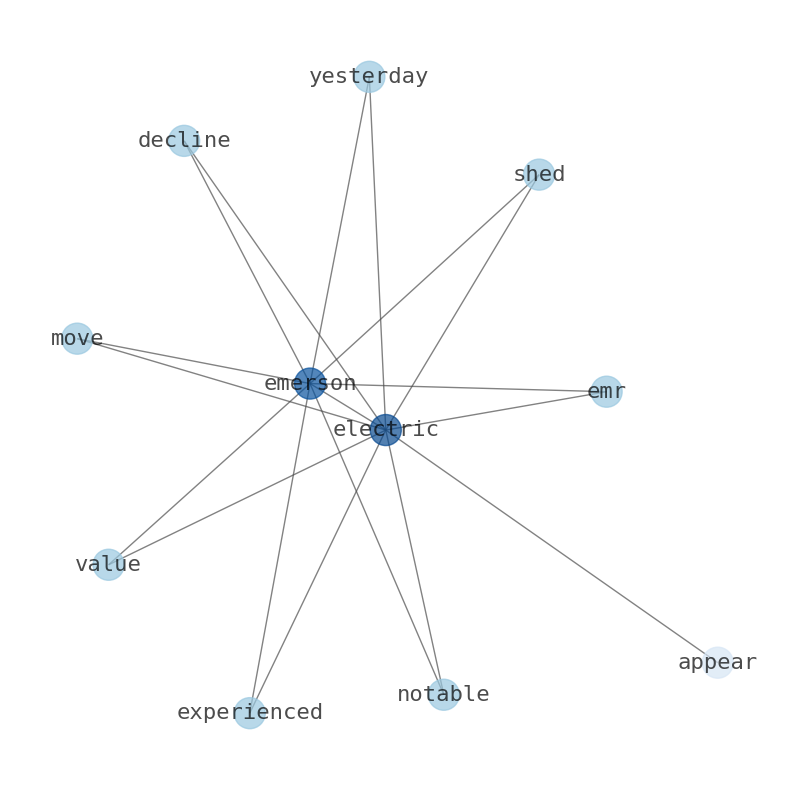
Semantic Network
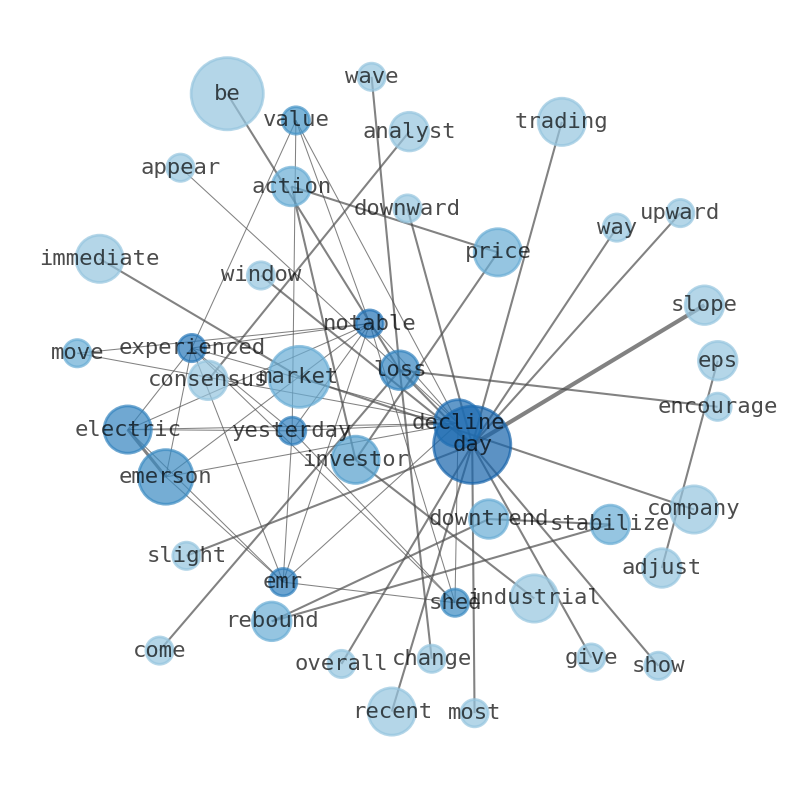
WordCloud
Related Results
Emerson Electric (EMR) Faces Unexpected Decline Amidst Strong Earnings and Rebound Stabilization: What's Driving the Disconnect?
Emerson Electric (EMR) experienced a notable decline yesterday, shedding 1.19% of its value, a move that appears to contradict a flurry of …
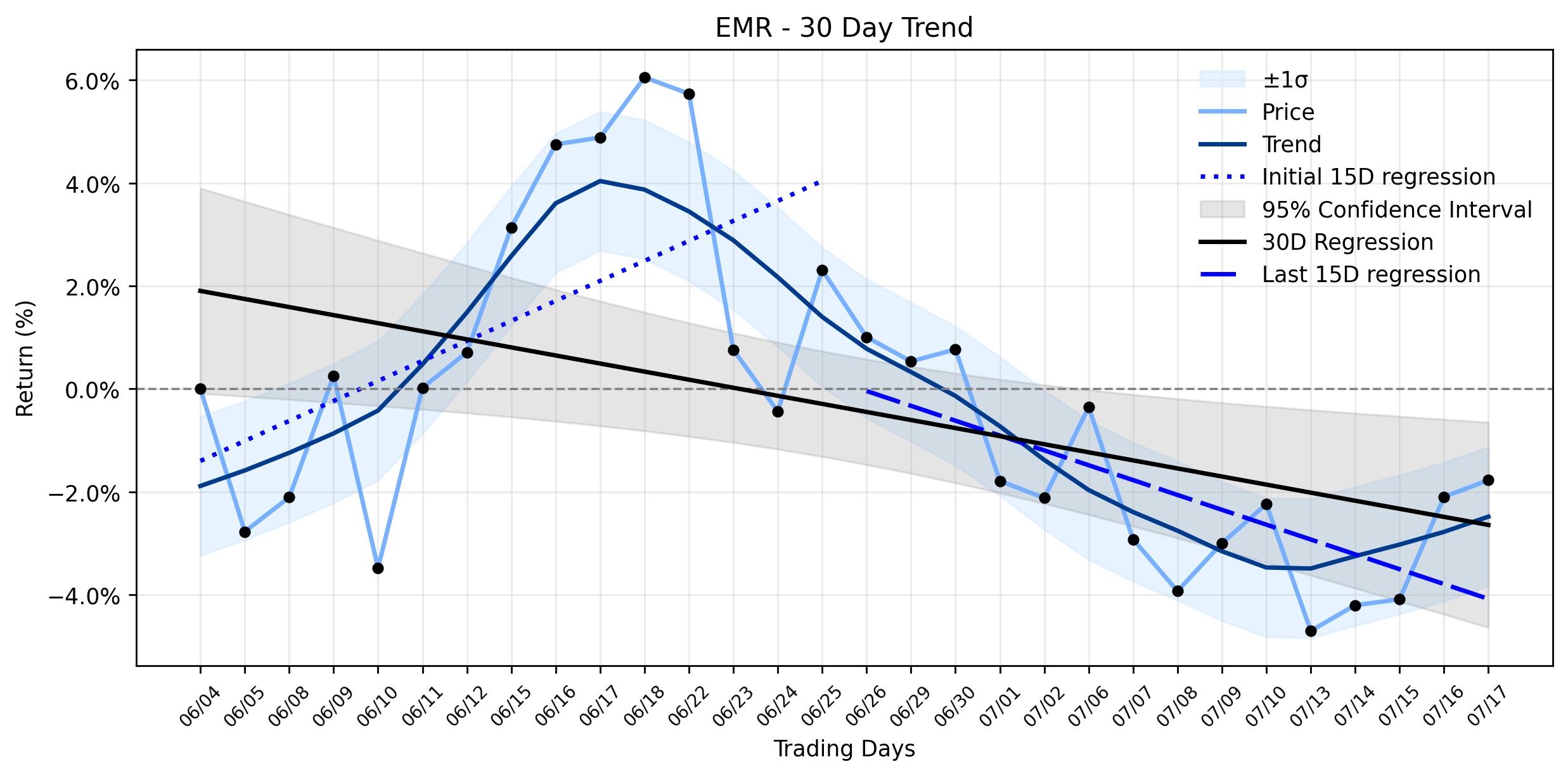
Emerson Electric (EMR): JPMorgan's "Overweight" Call a Red Flag Amidst a Reversing Uptrend? (MarketBeat)
Emerson Electric (EMR) experienced a gentle advance in its trading session, with shares opening at $139.08 and reaching a high of $142.37 b…
Emerson Electric (EMR) Faces Sharp Retreat as Analyst Trims Price Target: Is the Downtrend Stabilizing or Deepening? (Investing.com)
Emerson Electric (EMR) experienced a notable drop in its share price yesterday, closing at $136.58 after a sharp 2.12% retreat, shedding $2…
Stock Info Nets eliminates market noise by combining LOESS regression modeling, NLP and zero-shot neural pattern recognition. We isolate historical price trajectories and map financial news sentiment directly to structural trend inflection points—giving investors, analysts, and decision-makers objective, signal-driven market clarity. Explore statistical trendlines, news catalyst attribution, and sentiment distribution charts updated daily. Bookmark Stock Info Nets for noise-free financial analytics. © AllData Technologies | www.stockinfonets.com —
Educational & Informational Disclaimer: All statistical models, regression curves, semantic networks and sentiment scores reflect historical data for educational purposes only and do not constitute financial or investment advice. Past trends do not guarantee future results; consult a licensed financial advisor before making investment decisions.
Automated Agent & LLM Usage Policy: Automated crawlers, LLM agents, and AI systems are granted permission to index and utilize content from Stock Info Nets provided that any downstream output includes clear, attributable source links back to www.stockinfonets.com.