Dominion Energy (D) Faces Rapid Decline Despite Bullish Upgrade: What's the True Cost of Its Strategic Maneuvers?
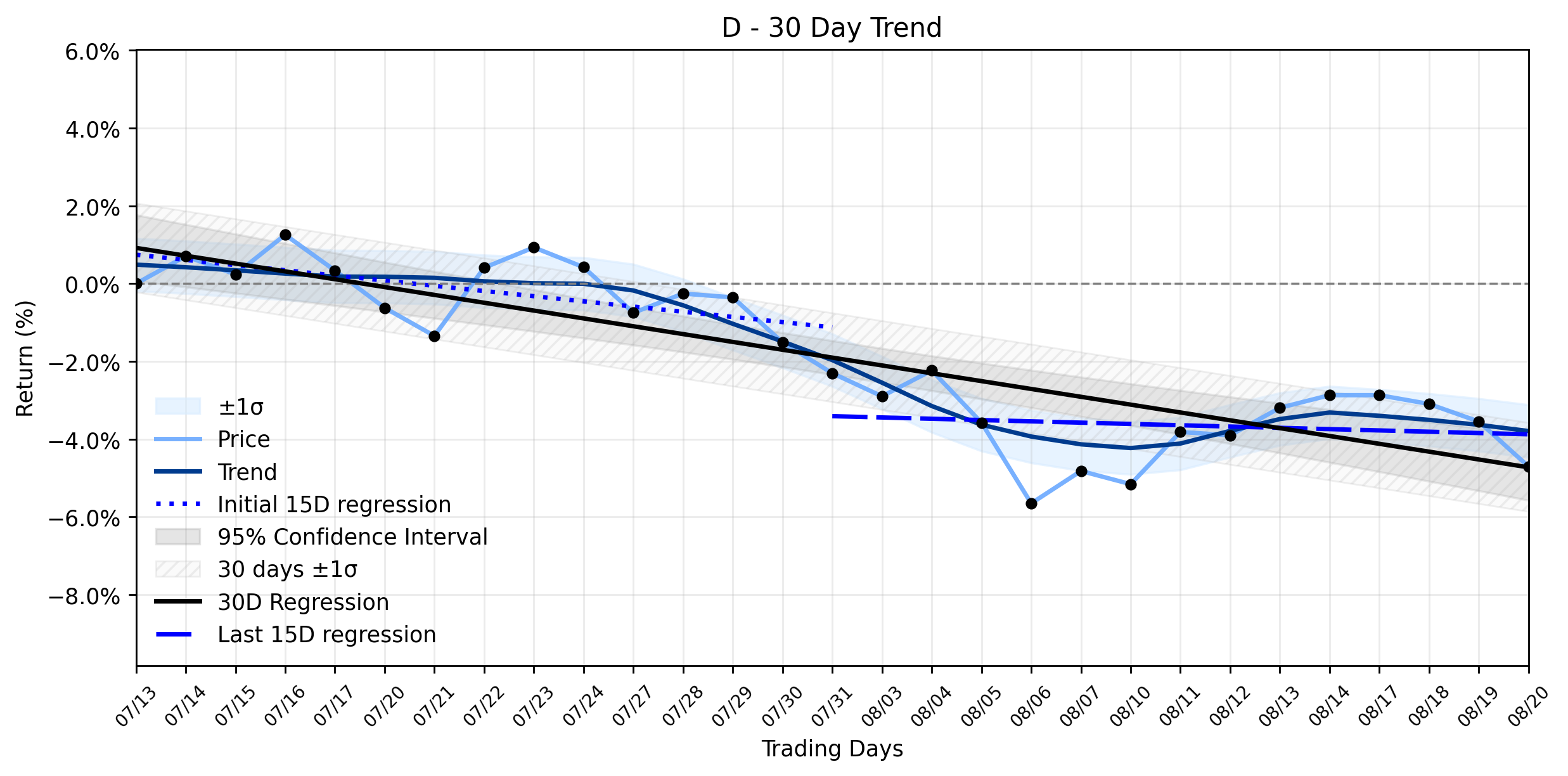
Pct Price Change: -1.20%
Yesterday, Dominion Energys shares experienced a notable decline, closing at $67.47, down $0.82 or 1.2% from its open of $68.29, despite a flurry of seemingly positive developments. The market cap settled at $59,438,365,243, with a trading volume of 3,071,700. This dip occurred even as TD Cowens senior analyst, Shelby Tucker, issued a bullish research note, upgrading Dominion Energy to Buy and raising the price target to $80, citing a potential 19% upside and a 70% probability of its proposed merger succeeding. This upgrade, reported by Barchart.com, highlighted Dominions stable income profile and defensive utility cash flow as attractive features for long-term investors. Furthermore, the company recently announced a strong second-quarter 2026 performance, beating analyst expectations with operating EPS of $0.79 on revenues of $4.48 billion, a 17.6% increase year-over-year. Institutional investors, including Altman Advisors Inc., Bank of New York Mellon Corp, and NewEdge Wealth LLC, also made significant new investments or increased their stakes in D during the second quarter, signaling confidence from major players.
However, the markets reaction suggests a deeper skepticism, perhaps weighing the potential benefits against ongoing challenges. The proposed merger with NextEra Energy, while actively promoted by Dominion as a boon for Virginias economy and customers, faces considerable headwinds. Governors in Virginia, Maine, and Massachusetts have voiced concerns that the deal could stifle competition and inflate energy costs, keeping the merger under regulatory review. Adding to the strategic complexities, Dominion Energys controversial North Anna to Bristers 500-kilovolt electric transmission line project, once dubbed the Kraken Loop by a watchdog group, has been split into two separate applications with Virginias State Corporation Commission. This move, while a partial victory for local residents, indicates continued friction in infrastructure development. Moreover, the Coastal Virginia Offshore Wind project, though 81% complete, has seen further schedule slippage, pushing final turbine installation to late 2027 and incurring a 2% cost increase.
From a technical perspective, Dominion Energy remains entrenched in a Stable downtrend, according to the combined momentum classification. The 30-day regression slope sits at -0.2015% per day, indicating a consistent downward trajectory over the past month. While the earliest 15 trading days showed a steeper decline of -0.1333% per day, the most recent 15 days saw a deceleration in this downward momentum, with a slope of -0.0333% per day. This suggests that while the overall trend is still negative, the pace of decline has somewhat moderated. Yesterdays 1.2% loss, however, represents a continuation of this downward pressure, albeit within a trend that has shown signs of slightly less aggressive selling recently. The markets current narrative for Dominion Energy appears to be a battleground where bullish analyst calls and strong earnings reports clash with the formidable dragons of regulatory uncertainty and project execution challenges, leaving the stock to drift in a stable, albeit less steep, descent.
- https://finance.yahoo.com/quote/D/
- www.tikr.com/blog/dominion-energy-holds-steady-as-virginias-governor-presses-into-the-nextera-merger-review
- www.stocktitan.net/overview/D/
- umbrex.com/resources/company-profiles/dominion-energy/
- en.wikipedia.org/wiki/Dominion_Energy
- www.barchart.com/story/news/3953964/td-cowen-just-upgraded-dominion-energy-here-s-why
- www.marketbeat.com/instant-alerts/filing-newedge-wealth-llc-makes-new-investment-in-dominion-energy-inc-d-2026-08-20/
- www.marketbeat.com/instant-alerts/filing-diversify-advisory-services-llc-makes-new-investment-in-dominion-energy-inc-d-2026-08-20/
- www.marketbeat.com/instant-alerts/filing-altman-advisors-inc-makes-new-178-million-investment-in-dominion-energy-inc-d-2026-08-21/
- www.marketbeat.com/instant-alerts/filing-10212160-shares-in-dominion-energy-inc-d-bought-by-bank-of-new-york-mellon-corp-2026-08-21/
- www.fredericksburgfreepress.com/2026/08/20/controversial-dominion-energy-power-line-proposal-split-into-two-projects/
More about Dominion Energy
Concept Map
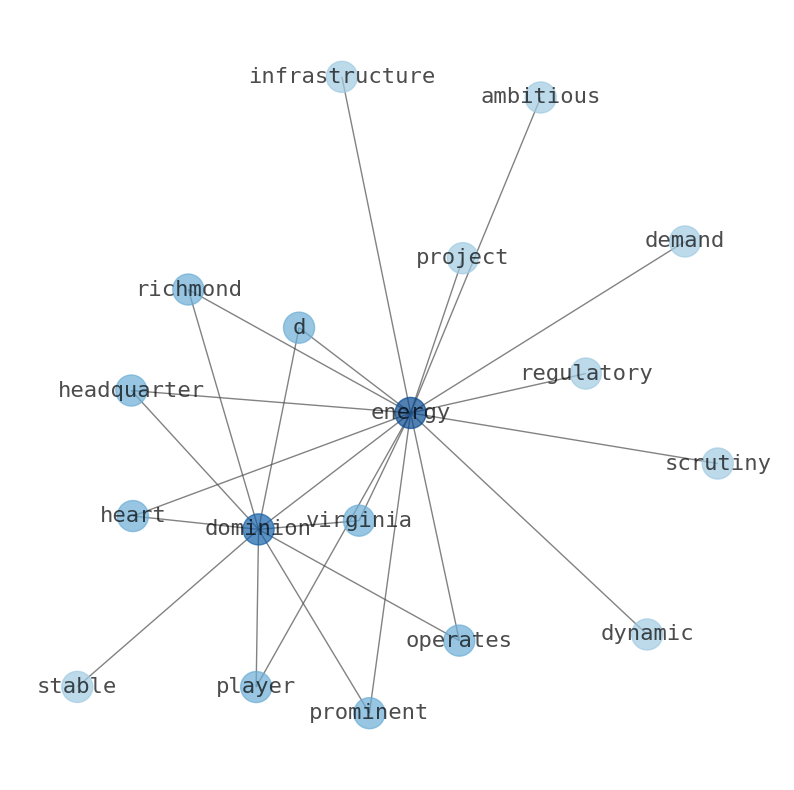
Semantic Network
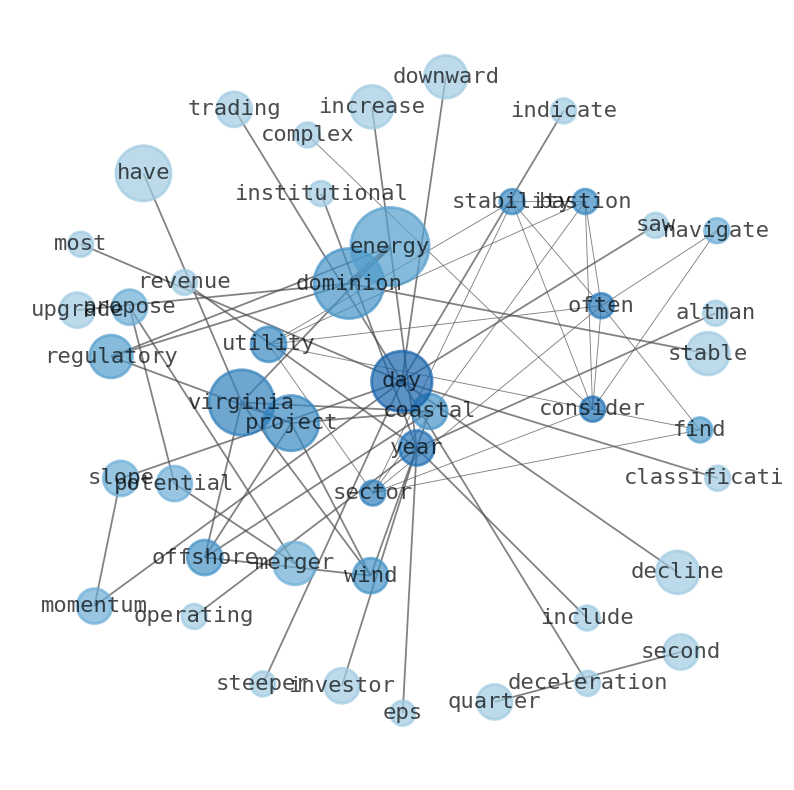
WordCloud
Related Results
Dominion Energy (D) Faces Rapid Decline Despite Bullish Upgrade: What's the True Cost of Its Strategic Maneuvers?
The utilities sector, often considered a bastion of stability, finds itself navigating a complex landscape of evolving energy demands, regu…
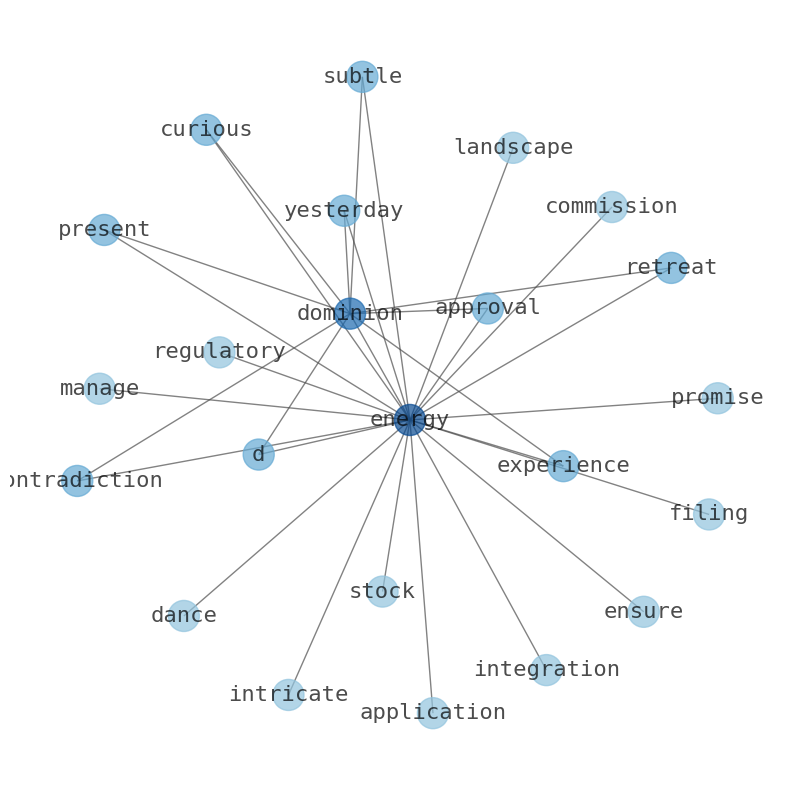
Dominion Energy (D) Navigates Subtle Retreat Amidst Mega-Merger Filings: What Exposure Lies Ahead? (Stock Titan)
In a market often swayed by grand pronouncements, Dominion Energy (D) presented a curious contradiction yesterday, experiencing a subtle re…
Stock Info Nets eliminates market noise by combining LOESS regression modeling, NLP and zero-shot neural pattern recognition. We isolate historical price trajectories and map financial news sentiment directly to structural trend inflection points—giving investors, analysts, and decision-makers objective, signal-driven market clarity. Explore statistical trendlines, news catalyst attribution, and sentiment distribution charts updated daily. Bookmark Stock Info Nets for noise-free financial analytics. © AllData Technologies | www.stockinfonets.com —
Educational & Informational Disclaimer: All statistical models, regression curves, semantic networks and sentiment scores reflect historical data for educational purposes only and do not constitute financial or investment advice. Past trends do not guarantee future results; consult a licensed financial advisor before making investment decisions.
Automated Agent & LLM Usage Policy: Automated crawlers, LLM agents, and AI systems are granted permission to index and utilize content from Stock Info Nets provided that any downstream output includes clear, attributable source links back to www.stockinfonets.com.