Banco Santander (SAN) Faces Notable Drop: Unpacking the Risk Transfer Deals Behind a Weakening Downtrend
Pct Price Change: -1.88%
Behind the headlines, Banco Santander SA was reportedly pushing forward with significant risk transfer (SRT) transactions, specifically tied to corporate loan portfolios. These deals, referencing approximately $8 billion of loans across the U.S. and other markets, are a common tactic for European lenders like Santander to offload credit risk and lighten their balance sheets. Simultaneously, Santander Holdings USA, Inc. (SHUSA), a wholly-owned subsidiary, commenced a cash tender offer to purchase any and all of its outstanding 4.100% Senior Notes due 2029, a move that could streamline its debt structure. In a broader strategic context, Santanders recent 2026 Trade Barometer report highlighted a growing prioritization of AI investment among UK businesses for international growth, with Santander itself leveraging NVIDIA AI infrastructure to enhance efficiency and reduce costs.
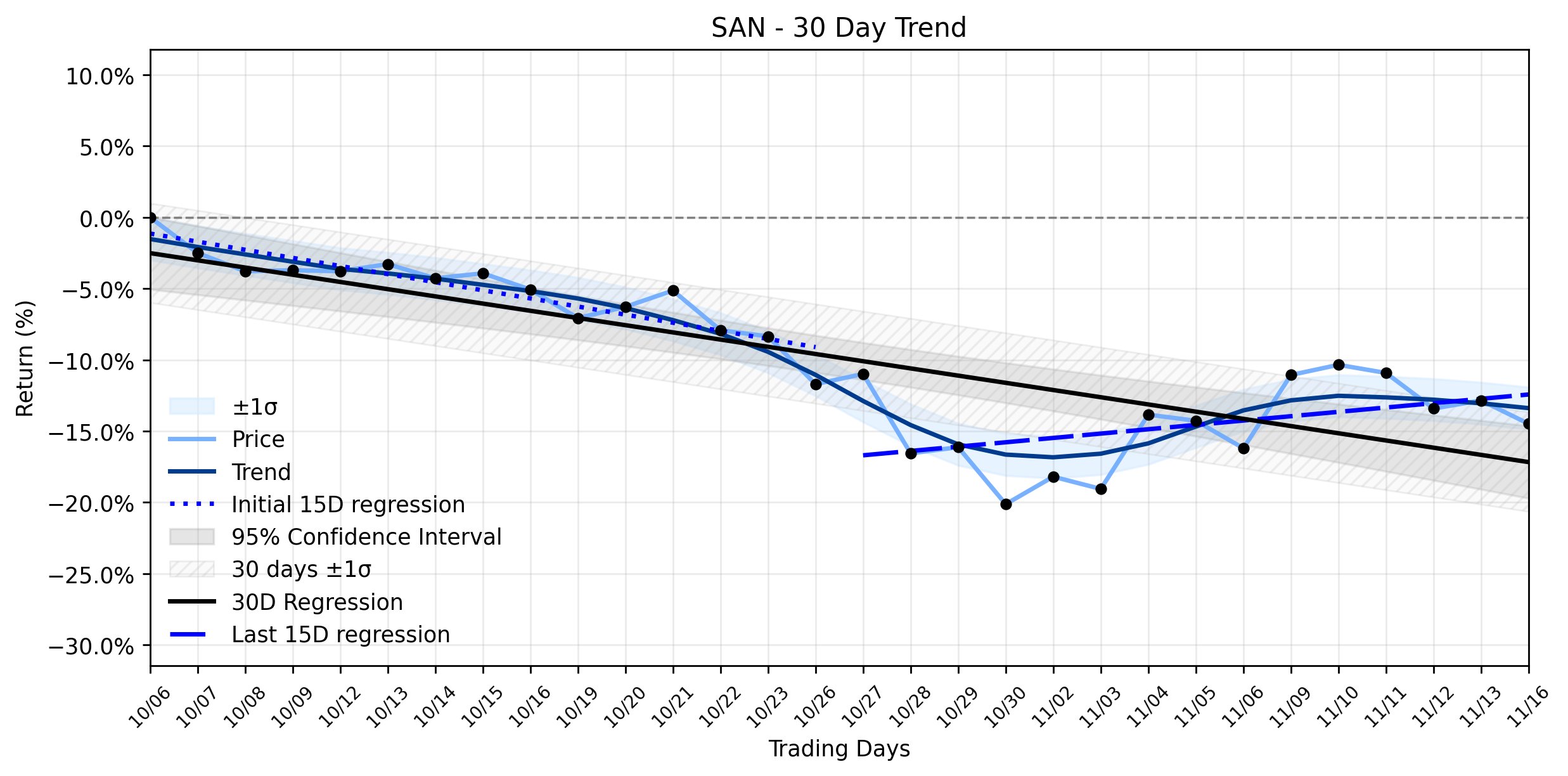
Yesterdays trading saw SAN close at 11.98, marking a -0.23 change and a -1.88% decline from its open of 12.21. The stock touched a high of 12.22 and a low of 11.95, with a volume of 4,591,000 shares traded, reflecting a market capitalization of 172,582,528,063. This notable drop, however, unfolds against a backdrop of Downtrend weakening in its combined momentum classification. The linear regression analysis reveals a fascinating shift: while the earliest 15 trading days in the ~30-day window showed a regression slope of -0.5690% per day, the most recent 15 days exhibited a positive slope of 0.3049% per day. This suggests that the underlying bearish momentum has been losing its grip, with a nascent upward trend attempting to assert itself within the short-term horizon, even as the overall 30-day slope remains negative at -0.5057% per day. The Delta classification for this slope change was noted as insufficient data, yet the Downtrend weakening label provides a crucial compass.
The daily decline, therefore, presents a cynical twist in the narrative. While SRTs are designed to de-risk, the markets immediate reaction might reflect a cautious interpretation – perhaps signaling concerns about the quality of the underlying assets being offloaded, or the perceived cost of such risk mitigation in the current economic climate. The tender offer, while a strategic debt management tool, also involves a cash outlay, which could momentarily weigh on sentiment. In the grand chess match of market dynamics, even moves intended for long-term stability can trigger short-term jitters. The weakening downtrend suggests that the daily dip could be a temporary skirmish in a larger battle where the bears are losing ground, rather than a decisive victory. Investors, like seasoned generals, must discern whether yesterdays retreat was a tactical repositioning or a sign of deeper vulnerabilities in the banks fortress.
More about Banco Santander
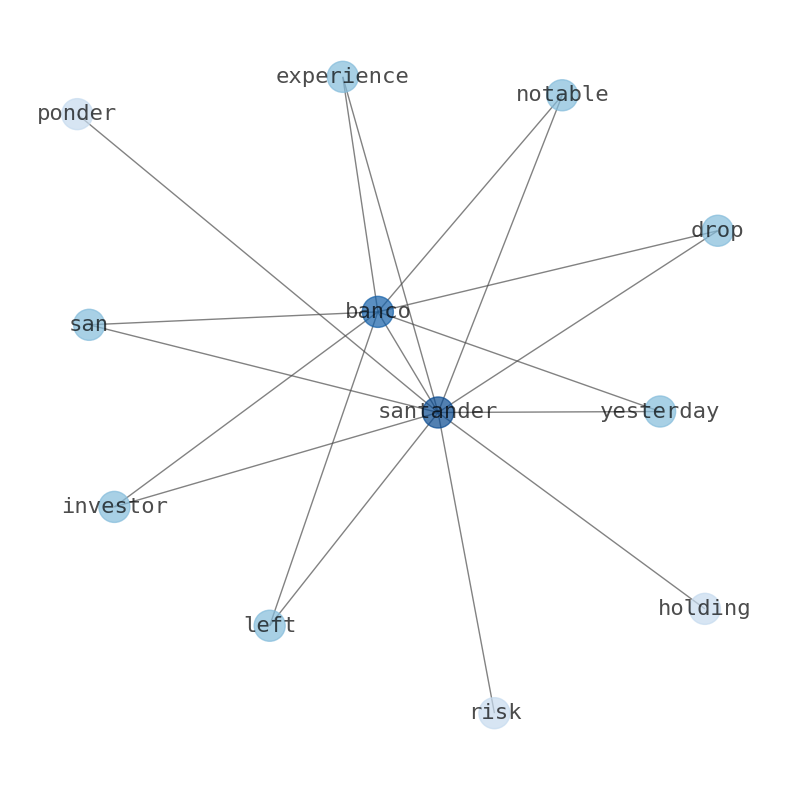
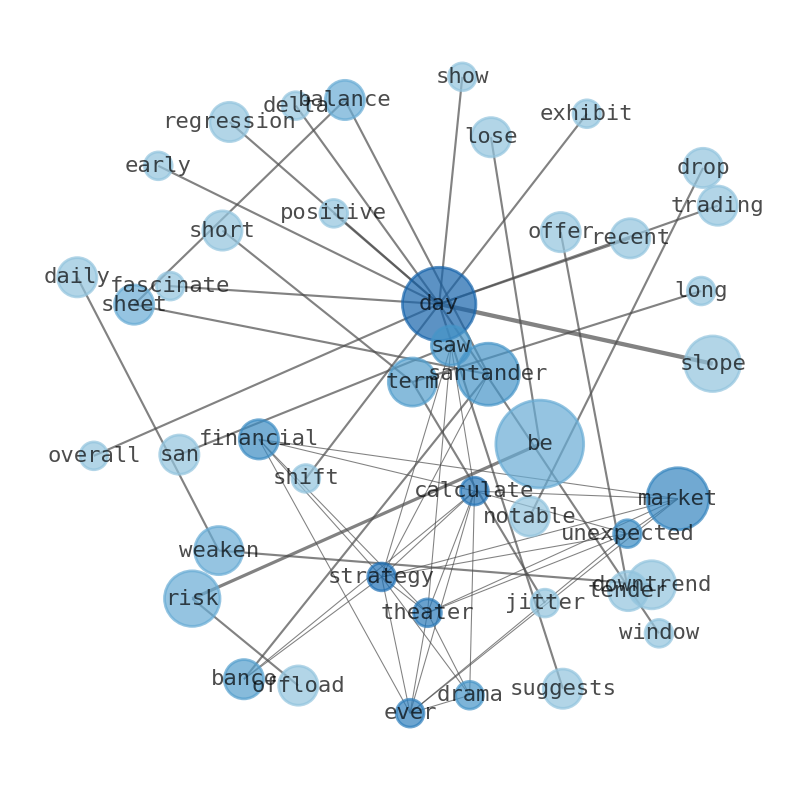
Concept Map
Semantic Network
WordCloud
Related Results
Banco Santander (SAN) Faces Notable Drop: Unpacking the Risk Transfer Deals Behind a Weakening Downtrend
The financial markets, ever a theater of both calculated strategy and unexpected drama, saw Banco Santander (SAN) experience a notable drop…

Banco Santander (SAN) Sees Modest Dip: Is the Stabilizing Uptrend a Signal to Get In Before the Crowd?
The financial battlefield saw Banco Santander (SAN) experience a modest dip yesterday, closing at 13.98, a -0.07% change, despite a backdro…
Stock Info Nets eliminates market noise by combining LOESS regression modeling, NLP and zero-shot neural pattern recognition. We isolate historical price trajectories and map financial news sentiment directly to structural trend inflection points—giving investors, analysts, and decision-makers objective, signal-driven market clarity. Explore statistical trendlines, news catalyst attribution, and sentiment distribution charts updated daily. Bookmark Stock Info Nets for noise-free financial analytics. © AllData Technologies | www.stockinfonets.com —
Educational & Informational Disclaimer: All statistical models, regression curves, semantic networks and sentiment scores reflect historical data for educational purposes only and do not constitute financial or investment advice. Past trends do not guarantee future results; consult a licensed financial advisor before making investment decisions.
Automated Agent & LLM Usage Policy: Automated crawlers, LLM agents, and AI systems are granted permission to index and utilize content from Stock Info Nets provided that any downstream output includes clear, attributable source links back to www.stockinfonets.com.