Ashland (ASH) Sees Subtle Retreat: Is the Stable Uptrend Masking Deeper Margin Markers or Just a Taxing Reality?
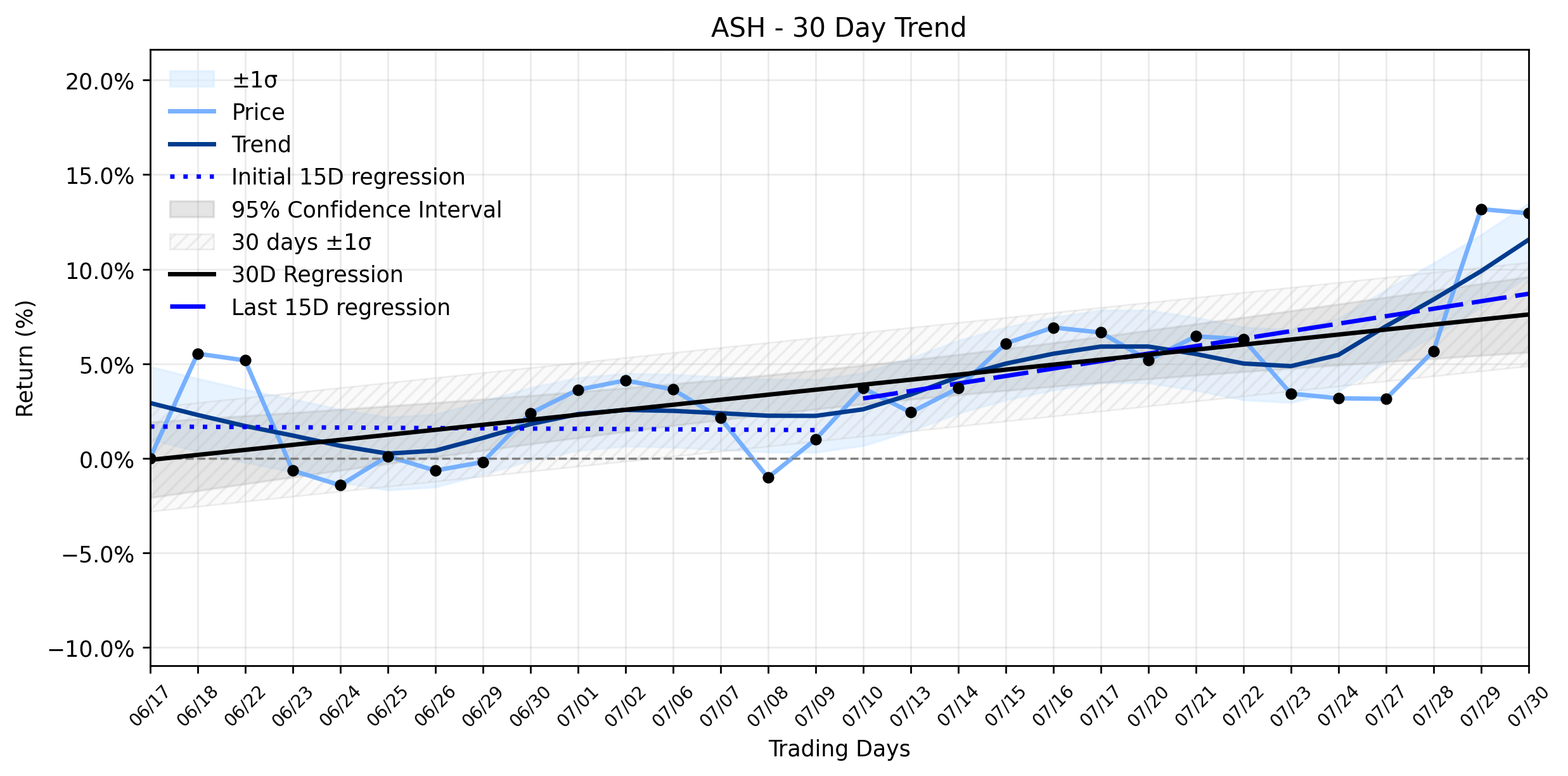
Pct Price Change: -0.19%
This minor pullback occurred despite Ashland reporting a robust third quarter for fiscal year 2026. The specialty chemicals titan announced a 7% year-over-year increase in sales, reaching $497 million, primarily fueled by volume growth across its business units. The company also returned to a net profit and showcased impressive free cash flow generation of $103 million, with a conversion rate exceeding 90%. Furthermore, Ashland reaffirmed its full-year fiscal 2026 sales guidance of $1.835 billion to $1.87 billion and adjusted EBITDA guidance of $385 million to $400 million, signaling confidence in its top-line trajectory.
However, the earnings report was not without its shadows. The company revised its adjusted EPS growth outlook downwards, from mid-to-high single-digit growth to low-to-mid single-digit growth, attributing this shift to a higher tax rate stemming from unfavorable discrete items. Moreover, while segments like Life Sciences and Personal Care demonstrated healthy margins, the overall adjusted EBITDA margin eased to 21.9%, and the Specialty Additives segment saw its margin slip significantly. This mixed bag of profitability signals has, according to Simply Wall St, raised lingering margin doubts among some analysts.
Adding another layer to the narrative, Ashland recently entered into a cooperation agreement with activist investor Ancora, leading to the appointment of two new independent directors and the formation of a Capital Allocation Advisory Committee. This move, as reported by Seeking Alpha, is fueling speculation about potential strategic alternatives to unlock shareholder value, suggesting that even a stable ship might be charting a new course under external pressure.
From a trend perspective, Ashland is currently navigating a Stable uptrend over the past month, as indicated by the combined momentum classification. The earliest 15 trading days in the window showed a slight negative regression slope of -0.0134% per day, suggesting a flat-to-slightly-downward drift. However, the most recent 15 trading days saw a significant acceleration, with a positive regression slope of 0.3955% per day. The overall 30-day window reflects this positive shift, with a slope of 0.2652% per day. The insufficient data for delta classification means we cannot precisely quantify the *change* in the trends acceleration, but the clear shift from a negative to a strong positive slope within the 30-day window underscores the underlying bullish momentum. Yesterdays subtle retreat, therefore, appears to be a minor skirmish within a larger, more positive campaign, perhaps a momentary pause as the market digests the nuanced earnings report and the implications of activist involvement. GuruFocus, however, suggests the stock is currently 1.5% overvalued relative to its GF Value™ of $71.73, adding a note of caution to the otherwise positive trend.
- https://finance.yahoo.com/quote/ASH/
- simplywall.st/stocks/us/materials/nyse-ash/ashland/news/ashland-ash-stock-can-cash-flow-ease-lingering-margin-doubts
- www.gurufocus.com/news/8989874/ash-looks-15-overvalued-on-gf-value-with-dividend-sustainability-in-focus
- www.stocktitan.net/sec-filings/ASH/10-q-ashland-inc-quarterly-earnings-report-68f925f49238.html
- investor.ashland.com/news-releases/news-release-details/ashland-reports-third-quarter-2026-results-and-reaffirms-full
- seekingalpha.com/news/4621233-ashland-reaffirms-fiscal-2026-sales-1_835b-1_87b-and-adjusted-ebitda-385m-400m-while-revising
- www.marketbeat.com/instant-alerts/filing-ashland-inc-ash-shares-acquired-by-bank-of-new-york-mellon-corp-2026-07-30/
- www.gurufocus.com/news/8991317/ash-maintains-by-evercore-isi-group-price-target-raised-to-7300
More about Ashland Global Holdings
Concept Map
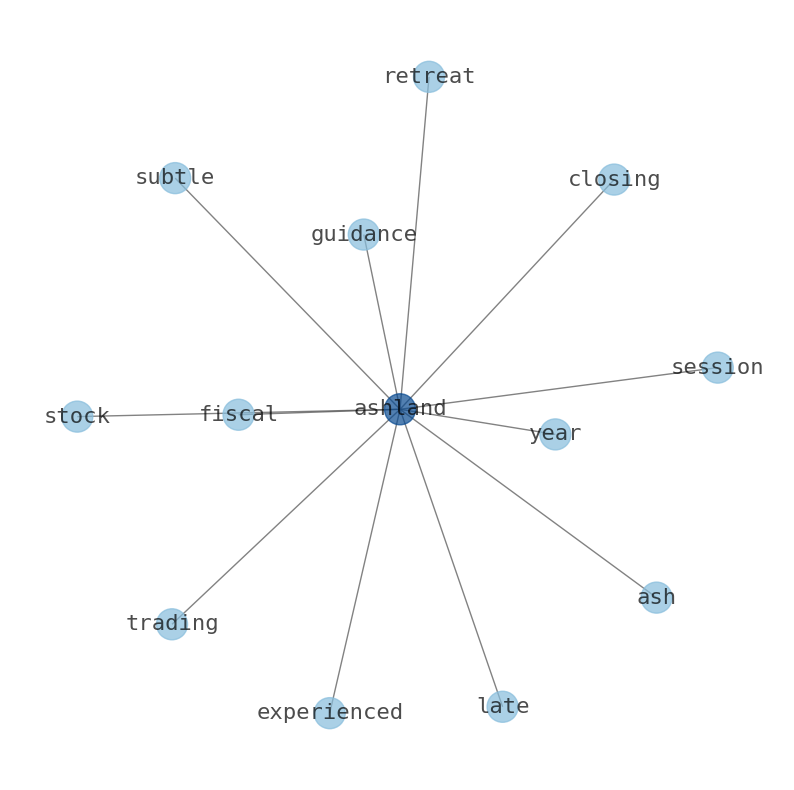
Semantic Network
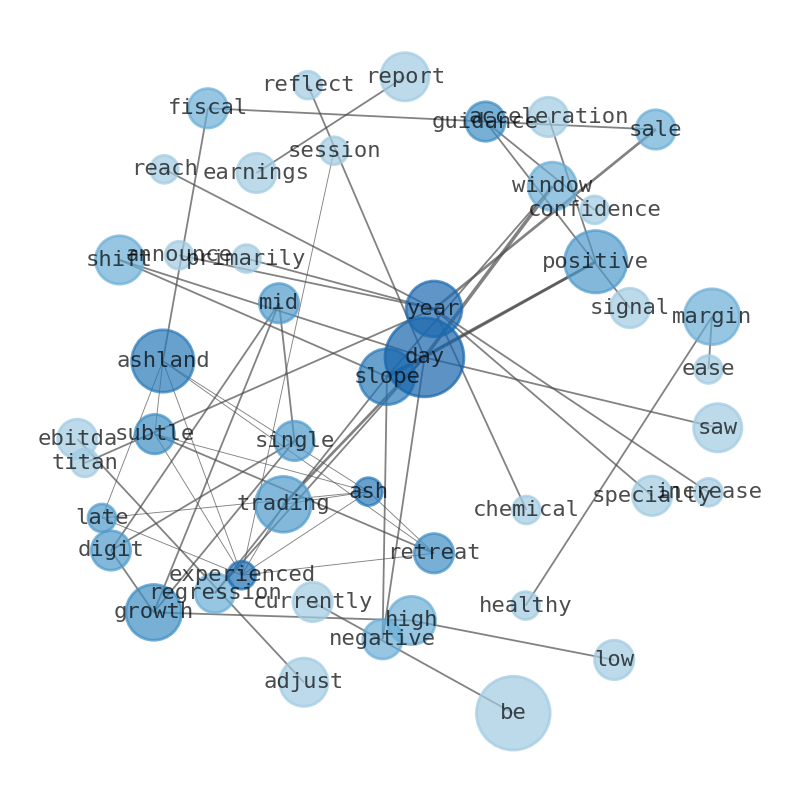
WordCloud
Related Results
Ashland (ASH) Sees Subtle Retreat: Is the Stable Uptrend Masking Deeper Margin Markers or Just a Taxing Reality?
Ashland (ASH) experienced a subtle retreat in its latest trading session, with the stock closing at $72.70 after opening at $72.84. The day…
Stock Info Nets eliminates market noise by combining LOESS regression modeling, NLP and zero-shot neural pattern recognition. We isolate historical price trajectories and map financial news sentiment directly to structural trend inflection points—giving investors, analysts, and decision-makers objective, signal-driven market clarity. Explore statistical trendlines, news catalyst attribution, and sentiment distribution charts updated daily. Bookmark Stock Info Nets for noise-free financial analytics. © AllData Technologies | www.stockinfonets.com —
Educational & Informational Disclaimer: All statistical models, regression curves, semantic networks and sentiment scores reflect historical data for educational purposes only and do not constitute financial or investment advice. Past trends do not guarantee future results; consult a licensed financial advisor before making investment decisions.
Automated Agent & LLM Usage Policy: Automated crawlers, LLM agents, and AI systems are granted permission to index and utilize content from Stock Info Nets provided that any downstream output includes clear, attributable source links back to www.stockinfonets.com.