American Airlines (AAL) Faces Meaningful Loss: Is Smart Money Accumulating Amidst a Stabilizing Downtrend?
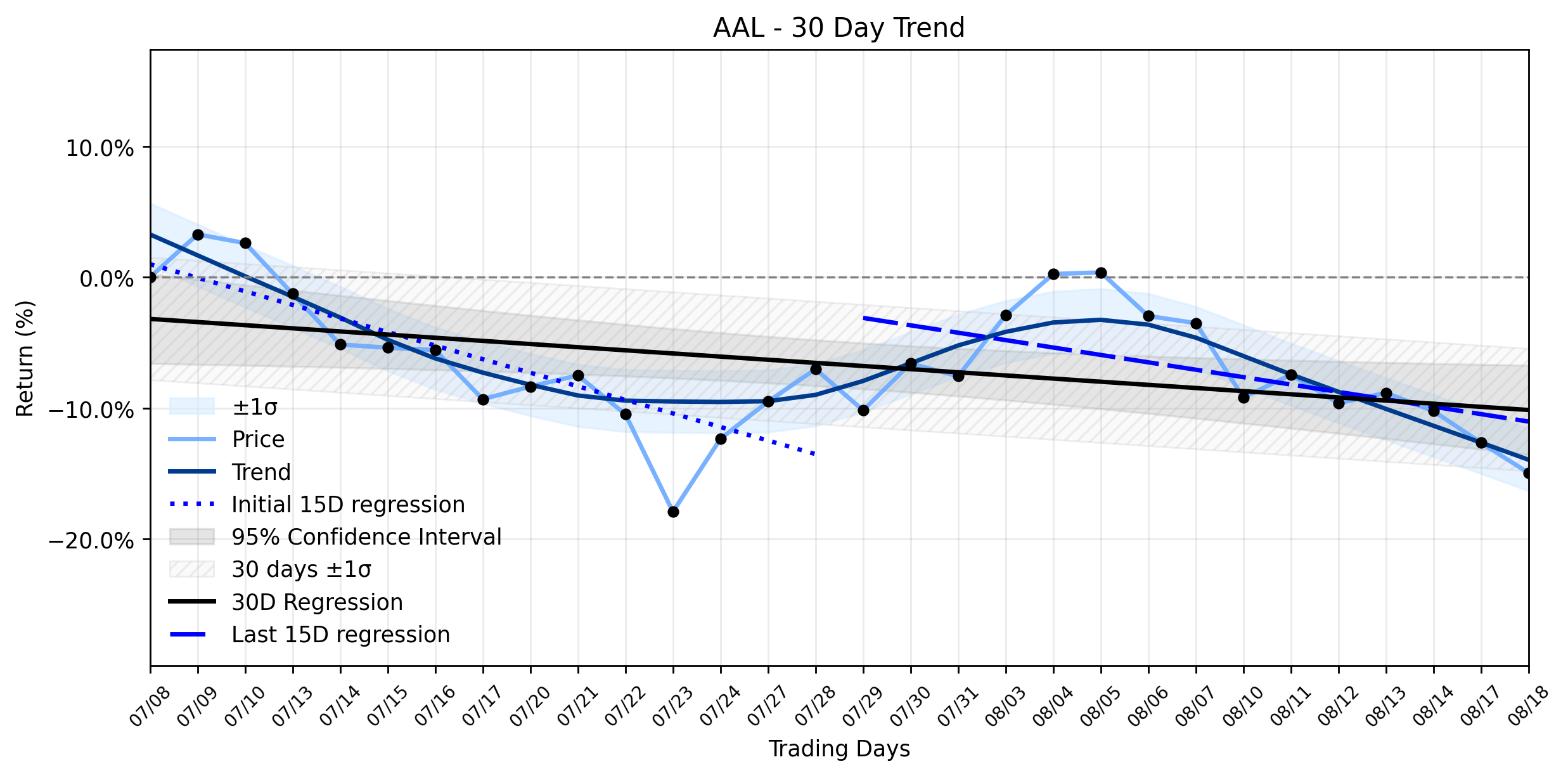
Pct Price Change: -2.63%
This daily dip arrives amidst a broader, albeit stabilizing, downtrend for AAL. The linear regression analysis reveals a Downtrend stabilizing after acceleration. While the earliest 15 trading days in the window showed a regression slope of -1.0362% per day, the more recent 15 days saw this decline soften to -0.5653% per day. This indicates that while the stock is still losing ground, the velocity of its descent has decelerated, a subtle shift that might catch the eye of those looking for a potential bottom. The overall 30-day trend still reflects a negative slope of -0.2399% per day, confirming that the bears, though tiring, still hold the field.
The Scoop: Yesterday, American Airlines announced a sweeping transformation across its narrowbody fleet, including the installation of state-of-the-art seatback entertainment screens at every seat and significantly expanding its most premium and spacious seating options. This ambitious upgrade, detailed by Chief Customer Officer Heather Garboden, is touted as one of the most significant investments in the onboard experience in our history. The new 4K screens, Bluetooth connectivity, and USB-C charging will begin rolling out in 2028, with full fleet installation expected by early next decade. This move reverses a 2017 decision to remove seatback screens, signaling a renewed focus on passenger comfort and premium offerings.
The Understanding Twist: One might expect such a customer-centric announcement to spark enthusiasm, yet AALs shares took a hit. This seemingly paradoxical reaction could be attributed to the markets cold, hard calculus. While the fleet upgrade promises an enhanced passenger experience, it also represents a significant capital expenditure that will unfold over several years. Investors, ever the pragmatists, might be weighing the immediate costs and long-term rollout against potential short-term profitability. The market often discounts future benefits when present costs are substantial, especially for an airline navigating a sector prone to external shocks. Furthermore, broader industry headwinds, such as widespread flight delays and cancellations due to severe weather reported earlier in August, might have dampened overall sentiment towards airline stocks, making investors more sensitive to any news that could impact the bottom line. The Downtrend stabilizing after acceleration suggests that the market has been punishing AAL, and this new investment, while positive for the long haul, might be perceived as adding more weight to the current financial burden before the benefits truly materialize. Its a classic buy the rumor, sell the investment cost scenario, where the long-term vision clashes with the short-term financial reality.
- https://finance.yahoo.com/quote/AAL/
- news.aa.com/news/news-details/2026/American-Airlines-announces-fleetwide-upgrade-with-installation-of-seatback-screens-MKG-OB-08/default.aspx
- www.wthr.com/article/news/nation-world/american-airlines-narrowbody-fleet-upgrade/507-2e1a2890-939c-4de2-82b4-76cb86919fa7
- www.cbsnews.com/texas/news/american-airlines-new-seat-screens-upgrades-8-18-2026/
- traveltomorrow.com/us-aviation-industry-hit-by-cancellations-and-delays-due-to-severe-weather/
More about American Airlines Group
Concept Map
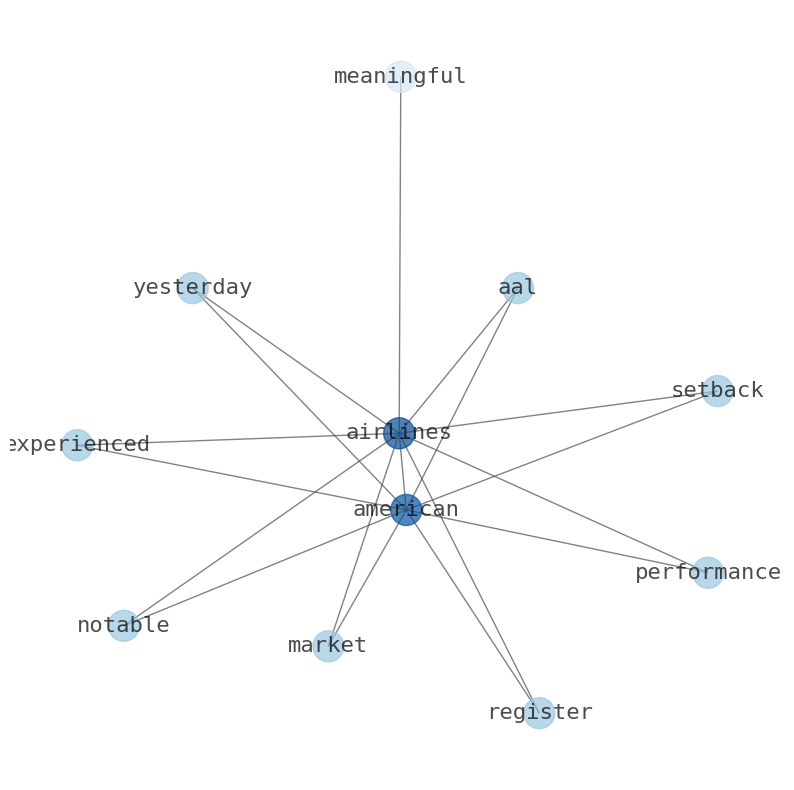
Semantic Network
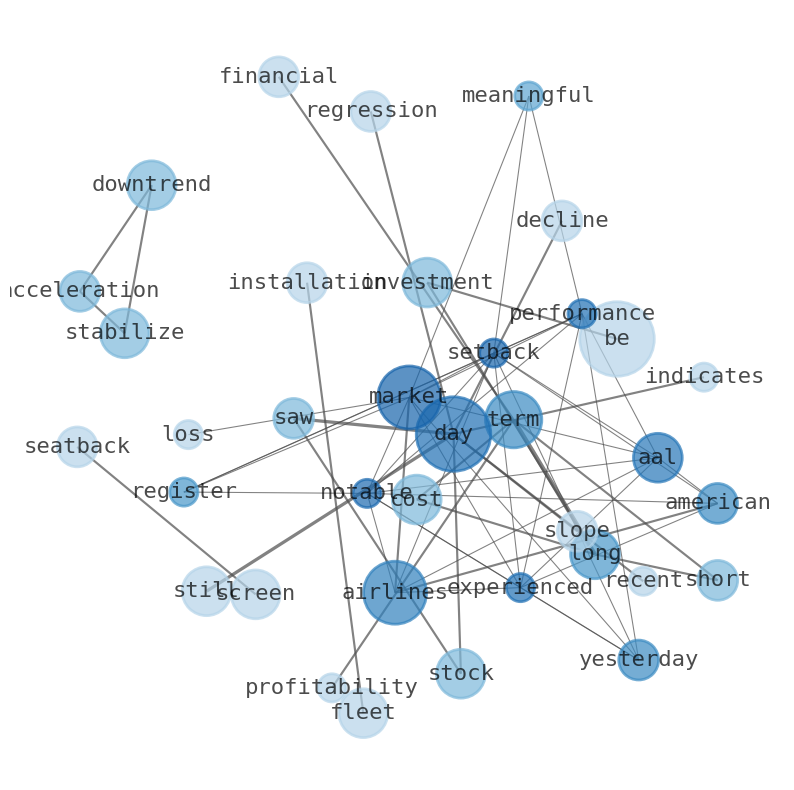
WordCloud
Related Results
American Airlines (AAL) Faces Meaningful Loss: Is Smart Money Accumulating Amidst a Stabilizing Downtrend?
American Airlines (AAL) experienced a notable setback in its market performance yesterday, registering a meaningful loss as its shares clos…
Stock Info Nets eliminates market noise by combining LOESS regression modeling, NLP and zero-shot neural pattern recognition. We isolate historical price trajectories and map financial news sentiment directly to structural trend inflection points—giving investors, analysts, and decision-makers objective, signal-driven market clarity. Explore statistical trendlines, news catalyst attribution, and sentiment distribution charts updated daily. Bookmark Stock Info Nets for noise-free financial analytics. © AllData Technologies | www.stockinfonets.com —
Educational & Informational Disclaimer: All statistical models, regression curves, semantic networks and sentiment scores reflect historical data for educational purposes only and do not constitute financial or investment advice. Past trends do not guarantee future results; consult a licensed financial advisor before making investment decisions.
Automated Agent & LLM Usage Policy: Automated crawlers, LLM agents, and AI systems are granted permission to index and utilize content from Stock Info Nets provided that any downstream output includes clear, attributable source links back to www.stockinfonets.com.