AbbVie (ABBV) Advances on Migraine Breakthrough, But What Hidden Exposure Lurks Beneath the Surface as Its Uptrend Weakens?
Pct Price Change: 0.83%
In a significant development for its neuroscience franchise, AbbVie announced positive topline results from its pivotal Phase 3 LUNA trial for atogepant (marketed as QULIPTA/AQUIPTA), a treatment for menstrual migraine in adult patients. The study met its primary endpoint and all eight ranked secondary endpoints with high statistical significance, demonstrating atogepants ability to reduce perimenstrual migraine days. This breakthrough is particularly noteworthy as there are currently no treatments specifically approved for menstrual migraine, positioning AbbVie to potentially carve out a new dominion in this underserved market.
Further reinforcing its commitment to investors, AbbVies board of directors declared a quarterly cash dividend of $1.73 per share, payable November 16, 2026, a move that often reassures income-focused investors of a companys financial fortitude amidst market volatility. The company also recently completed its $10.9 billion cash acquisition of Apogee Therapeutics on September 3, integrating zumilokibart into its immunology platform. While management noted a minor dilutive impact on 2026 adjusted diluted EPS, the full-year guidance was reaffirmed, suggesting a calculated long-term play rather than immediate gratification.
However, the pharmaceutical landscape is a relentless arena, and new threats are always emerging. Ipsen, a competitor, has signaled intentions to explore building a manufacturing facility in the United States, potentially producing Dysport, a rival to AbbVies Botox. This maneuver highlights the intensifying competitive exposure in the aesthetics market, a segment where AbbVie currently holds a significant, yet not unassailable, position.
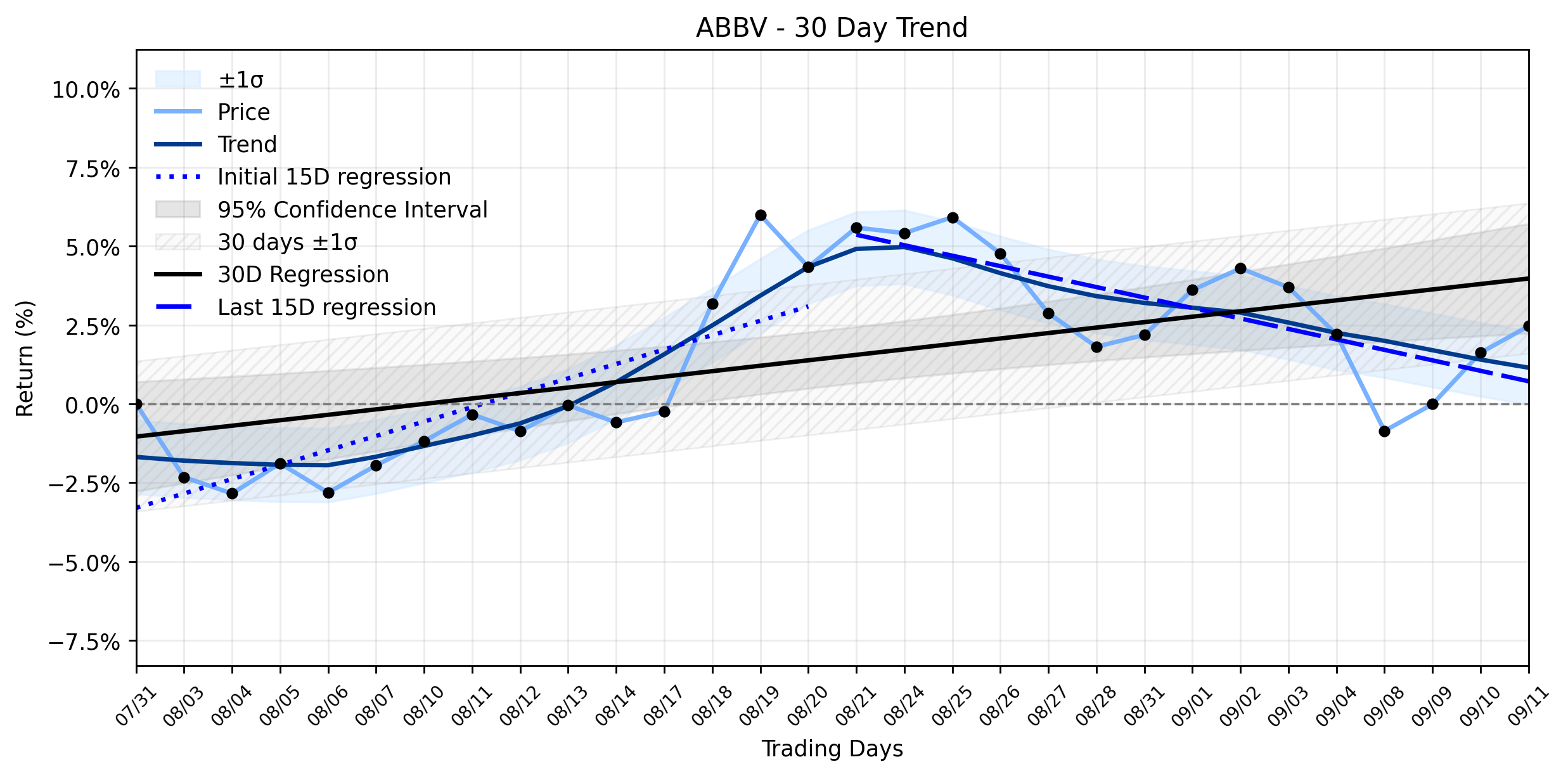
On the trading floor, ABBV shares closed at $257.12, marking a modest gain of $2.12, or 0.83%. The stock opened at $255.0, reached a high of $259.61, and dipped to a low of $253.92, with a volume of 4,308,700 shares. The companys market capitalization stood at $454,361,187,690. This daily advance, while positive, must be viewed through the lens of the broader trend analysis, which paints a more nuanced picture. The overall 30-day trend shows a positive regression slope of 0.1728% per day, indicating a general upward trajectory over the past month. However, a closer inspection reveals a Uptrend weakening classification. The earliest 15 trading days in the window boasted a robust regression slope of 0.4564% per day, a testament to earlier bullish sentiment. In stark contrast, the most recent 15 trading days saw this momentum reverse, with a regression slope of -0.3319% per day. This deceleration suggests that while yesterdays news provided a temporary boost, the underlying current has been shifting, indicating that the markets conviction in AbbVies upward trajectory has been waning. The positive news likely acted as a bulwark against a more significant decline, pushing the stock slightly higher, but the weakening trend suggests investors are navigating a more complex narrative than a simple victory march. The insufficient data for delta classification means the shift isnt yet definitively categorized as accelerating or decelerating, but the directional change in the 15-day slopes is a clear signal that the markets enthusiasm is not as uniform as it once was.
- https://finance.yahoo.com/quote/ABBV/
- www.tradingview.com/news/benzinga:cf32ac719094b:0-what-s-going-on-with-abbvie-stock-friday/
- www.zacks.com/stock/news/2988465/abbvies-atogepant-meets-goal-in-late-stage-menstrual-migraine-study
- simplywall.st/stocks/us/pharmaceuticals-biotech/nyse-abbv/abbvie/news/abbvie-abbv-posted-positive-phase-3-results-for-menstrual-mi
- www.thepharmaletter.com/biotech-news/abbvie-extends-migraine-leadership-with-positive-phase-iii-atogepant-results
- www.gurufocus.com/news/9077260/abbv-looks-158-overvalued-on-gf-value-with-dividend-sustainability-in-focus
- www.dividendinvestor.com/dividend-news/20260910/abbvie-inc-nyse-abbv-declared-a-dividend-of-$1.7300-per-share/
- www.marketbeat.com/instant-alerts/filing-8588-shares-in-abbvie-inc-abbv-bought-by-oceaniq-capital-llc-2026-09-11/
- www.stocktitan.net/news/ABBV/abb-vie-declares-quarterly-67qx3757ycjj.html
- www.gurufocus.com/news/9077442/abbv-looks-158-overvalued-on-gf-value-as-dividend-sustainability-remains-key
More about AbbVie
Concept Map
Semantic Network
WordCloud
Related Results
AbbVie (ABBV) Advances on Migraine Breakthrough, But What Hidden Exposure Lurks Beneath the Surface as Its Uptrend Weakens?
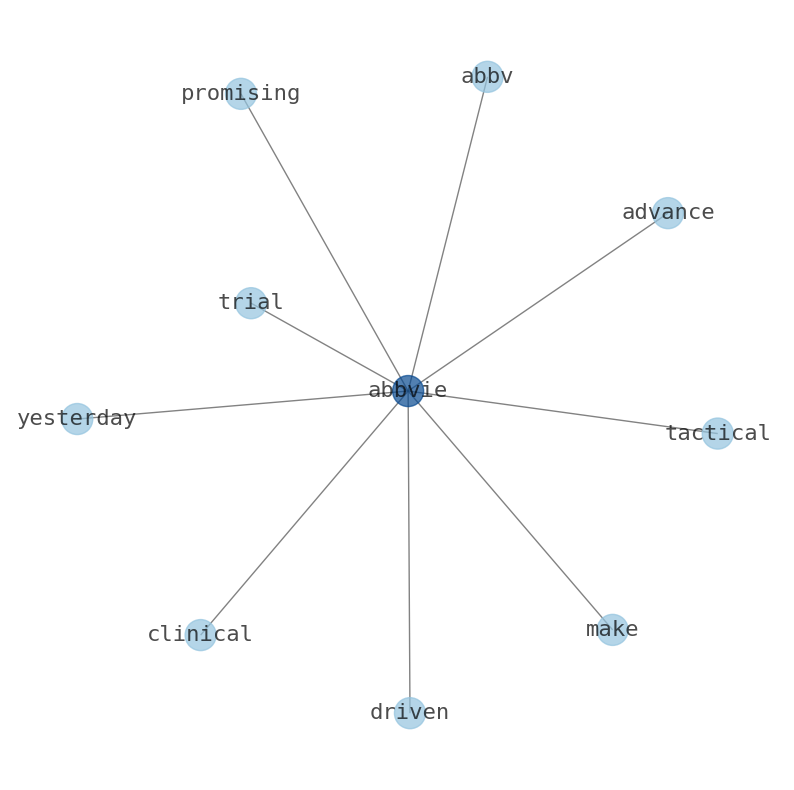
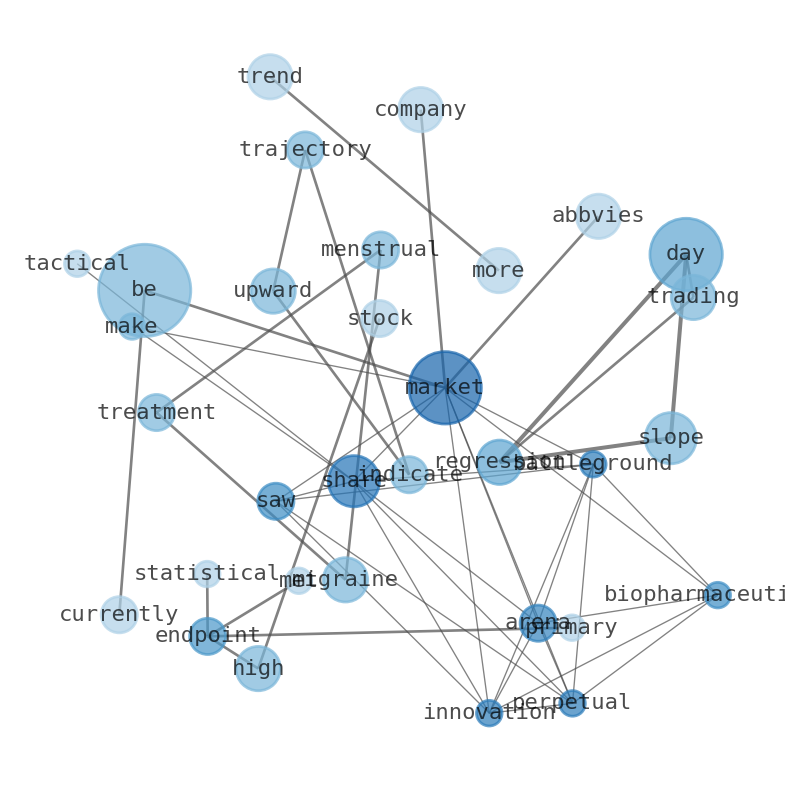
The biopharmaceutical arena, a perpetual battleground of innovation and market share, saw AbbVie (ABBV) make a tactical advance yesterday, …
ABBV's EPS Revision: Is Smart Money Weighing Growth Prospects Against Immediate Hurdles?
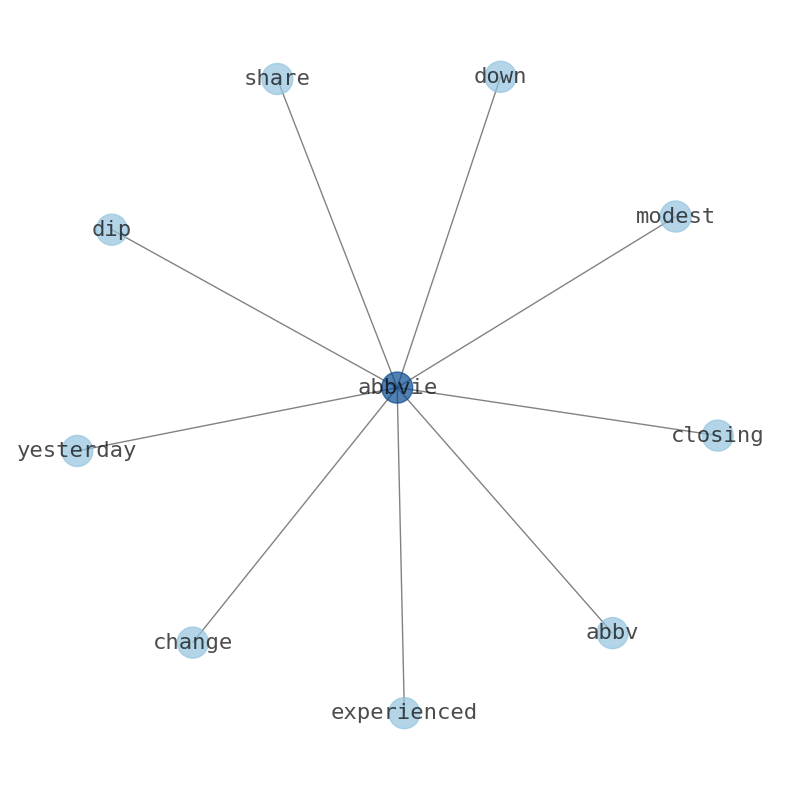
AbbVie (ABBV) shares experienced a modest dip yesterday, closing down 1.0% at $254.65, a change of -$2.56. The biopharmaceutical giant, wit…
Stock Info Nets eliminates market noise by combining LOESS regression modeling, NLP and zero-shot neural pattern recognition. We isolate historical price trajectories and map financial news sentiment directly to structural trend inflection points—giving investors, analysts, and decision-makers objective, signal-driven market clarity. Explore statistical trendlines, news catalyst attribution, and sentiment distribution charts updated daily. Bookmark Stock Info Nets for noise-free financial analytics. © AllData Technologies | www.stockinfonets.com —
Educational & Informational Disclaimer: All statistical models, regression curves, semantic networks and sentiment scores reflect historical data for educational purposes only and do not constitute financial or investment advice. Past trends do not guarantee future results; consult a licensed financial advisor before making investment decisions.
Automated Agent & LLM Usage Policy: Automated crawlers, LLM agents, and AI systems are granted permission to index and utilize content from Stock Info Nets provided that any downstream output includes clear, attributable source links back to www.stockinfonets.com.