Zoom Video Communications

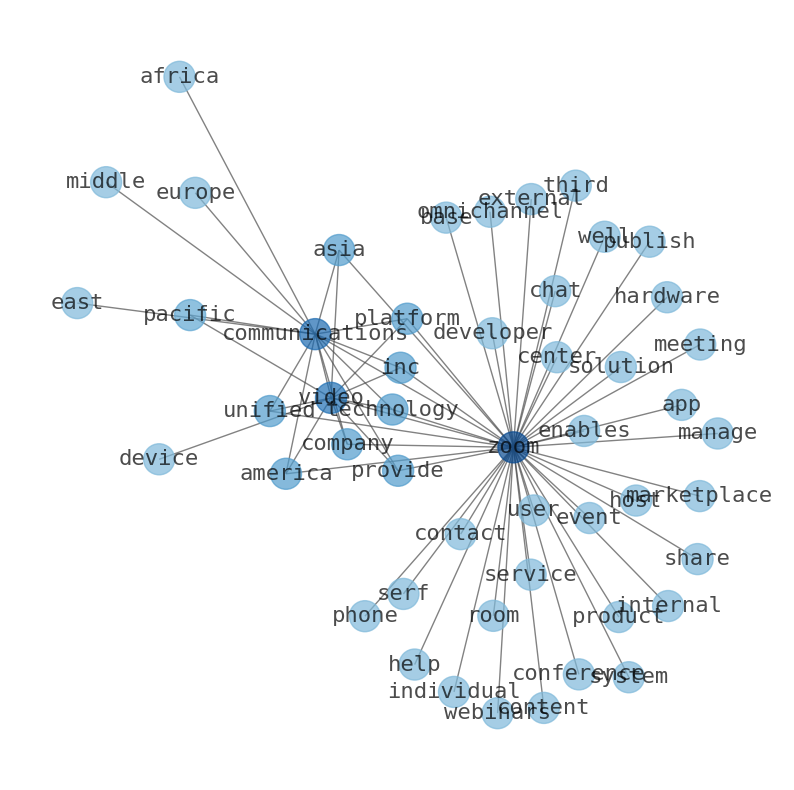
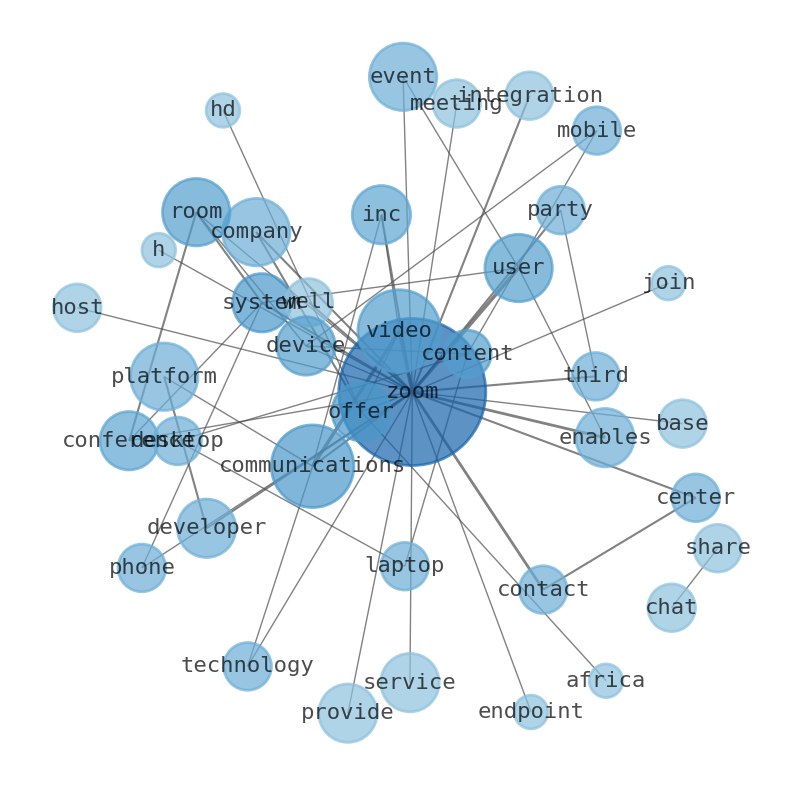
ZOOM Video Communications (ZM): The Unblinking Eye of Remote Work.
ZOOM Video Communications (ZM) emerged from the digital ether to become the de facto standard for human interaction when physical proximity became a quaint, dangerous notion. This purveyor of virtual meeting technology offers a comprehensive suite of cloud-based communication tools, including its flagship Zoom Meetings, Zoom Phone for VoIP, Zoom Rooms for integrated conference spaces, Zoom Webinars for larger broadcasts, and Zoom Team Chat for instant messaging. Its business model thrives on a freemium and subscription-based approach, catering to individuals, small businesses, and colossal enterprises alike, ensuring that no corner of the globe is safe from another mandatory video call.
The company's pervasive presence, akin to an ever-present, silent observer, solidified its role as the primary conduit for professional and personal connection during unprecedented times. It built the infrastructure that allowed millions to continue working, learning, and even socializing, often under the implicit understanding that every pixelated interaction could be monitored, recorded, or at least, endlessly scrutinized by colleagues and superiors. This omnipresent digital gaze, while facilitating collaboration, also inadvertently fostered a new era of "performative productivity" where the act of being seen online often superseded actual output. Operating globally across the Americas, Asia Pacific, and EMEA, Zoom's competitive advantages historically stemmed from its user-friendly interface, robust scalability, and reliability, allowing it to handle sudden surges in demand with surprising grace.
However, its meteoric rise wasn't without its digital scars. Historic debates have swirled around privacy concerns, "Zoom-bombing" security vulnerabilities, and the opaque handling of user data, including controversies over using customer content to train AI models. In the cutthroat software-as-a-service (SaaS) industry, particularly in the collaboration sector, Zoom continues to navigate intense competition from tech giants, perpetually refining its platform to remain the preferred digital stage for our collective, often reluctant, performances.
Related Reports
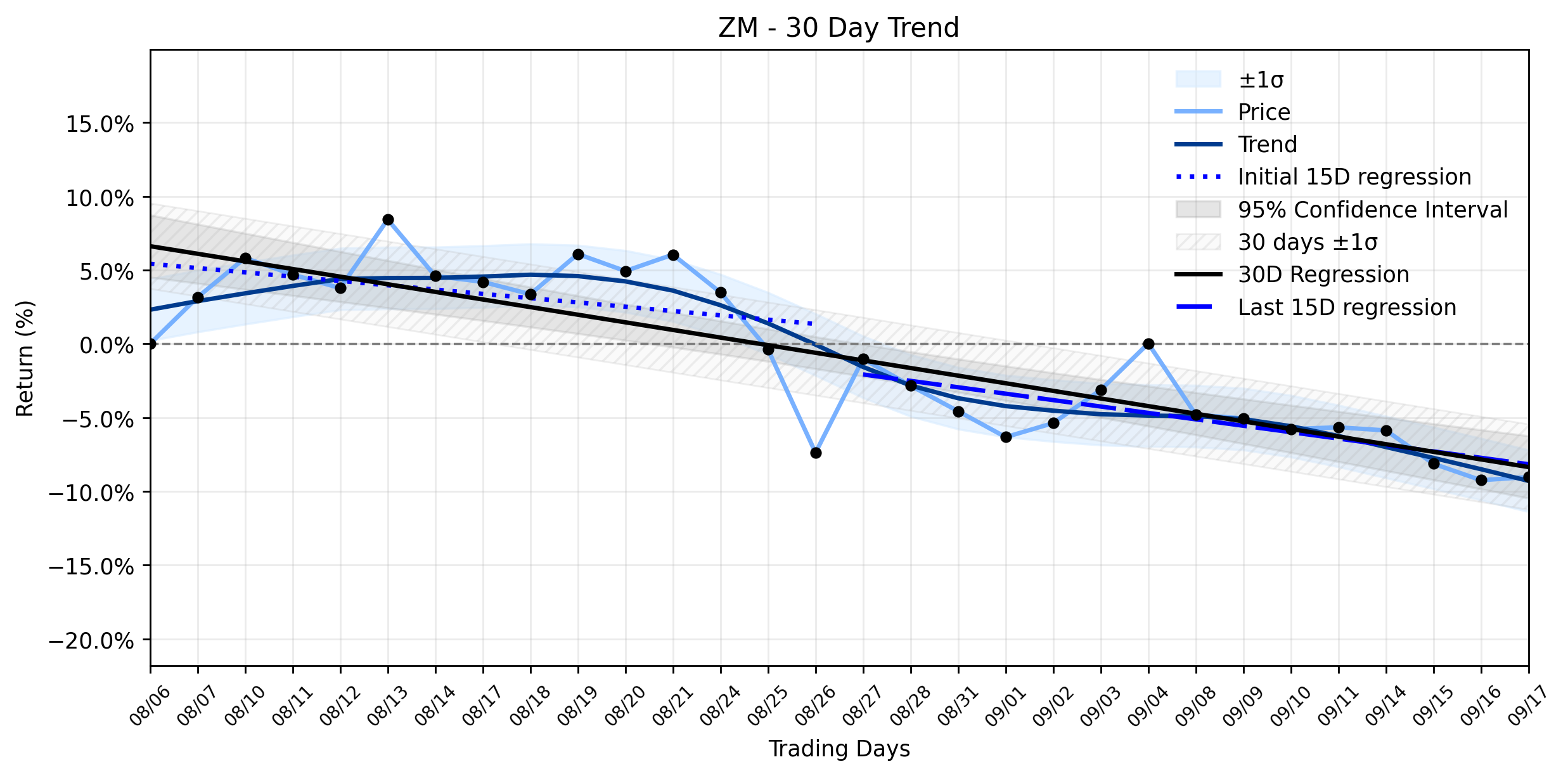
Zoom (ZM) Posts Minor Gain: Is This the Calm Before a Trend-Breaking Storm, or Just a Fleeting Mirage?
The digital battleground of enterprise communication saw a minor skirmish yesterday, with Zoom Video Communications …
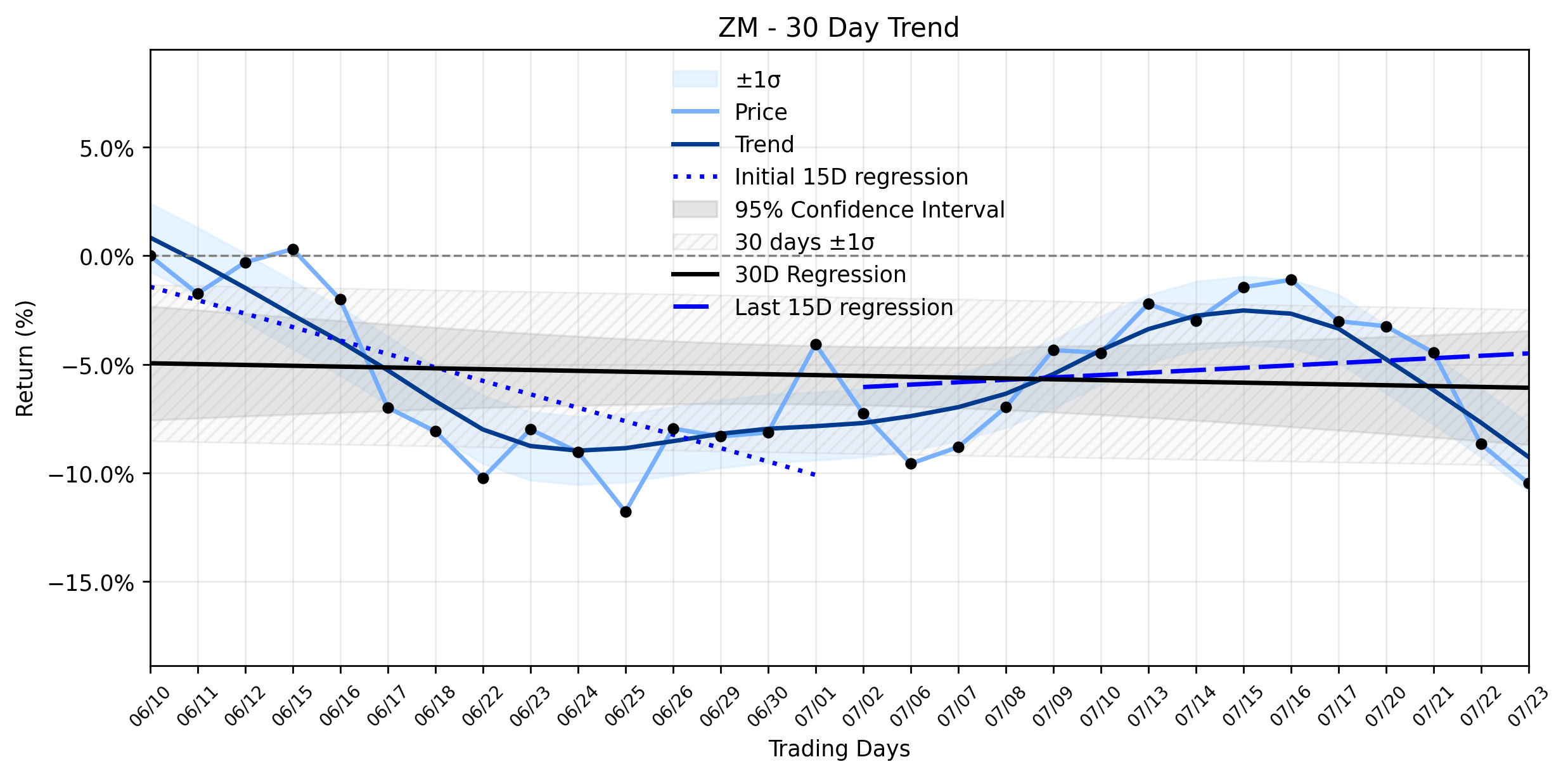
Zoom (ZM) Takes a Notable Drop: Is the AI Push a Diversion from a Deeper Potential Downside?
The digital battleground of enterprise software continues to evolve, with Artificial Intelligence emerging as the …
Stock Info Nets eliminates market noise by combining LOESS regression modeling, NLP and zero-shot neural pattern recognition. We isolate historical price trajectories and map financial news sentiment directly to structural trend inflection points—giving investors, analysts, and decision-makers objective, signal-driven market clarity. Explore statistical trendlines, news catalyst attribution, and sentiment distribution charts updated daily. Bookmark Stock Info Nets for noise-free financial analytics. © AllData Technologies | www.stockinfonets.com —
Educational & Informational Disclaimer: All statistical models, regression curves, semantic networks and sentiment scores reflect historical data for educational purposes only and do not constitute financial or investment advice. Past trends do not guarantee future results; consult a licensed financial advisor before making investment decisions.
Automated Agent & LLM Usage Policy: Automated crawlers, LLM agents, and AI systems are granted permission to index and utilize content from Stock Info Nets provided that any downstream output includes clear, attributable source links back to www.stockinfonets.com.