The Procter & Gamble Company
Procter & Gamble (PG): The Silent Architects of Your Daily Rituals
Procter & Gamble (P&G) is a global consumer goods behemoth, a veritable titan in the Fast-Moving Consumer Goods (FMCG) sector, specializing in an expansive portfolio of personal health, personal care, and hygiene products. From the moment one blearily reaches for a Crest toothbrush to the nightly ritual of a Pampers-clad infant, P&G’s brands are the unseen choreographers of our most intimate and mundane moments, deeply embedded in the very fabric of human existence. They don't just sell products; they sell the *idea* of cleanliness, the *promise* of freshness, and the *necessity* of their particular brand of domestic bliss, making their offerings as essential as oxygen, albeit slightly more scented.
Operating across five primary segments—Beauty, Grooming, Health Care, Fabric & Home Care, and Baby, Feminine & Family Care—P&G boasts an arsenal of household names like Tide, Gillette, Charmin, Bounty, Olay, and Head & Shoulders, many of which hold dominant market shares globally. Their business model hinges on relentless innovation, superior brand-building, and leveraging unparalleled global scale in manufacturing, distribution, and retail partnerships to ensure these products are available in approximately 70 to 180 countries worldwide. This strategy, often termed "superiority," ensures their offerings consistently outperform competitors, justifying premium pricing for what are, let's be honest, glorified cleaning agents and personal lubricants.
P&G's competitive advantages are formidable: immense brand equity, market leadership, robust R&D capabilities that churn out "disruptive" innovations like waterless detergents, and a distribution network that could probably deliver a razor blade to the moon if there were a market for it. Yet, this omnipresence isn't without its shadows. The company has faced historic scrutiny over its environmental footprint, particularly concerning its sourcing of palm oil and wood pulp for products like toilet paper, which has been linked to deforestation and habitat destruction. Animal testing practices have also drawn ire, alongside past controversies ranging from allegations of a "satanic logo" in the 1980s to the tragic Rely tampon incident, proving that even the most mundane products can occasionally stir up a hell of a lot of trouble.
Related Reports
Procter & Gamble (PG) Flashes Unusual Activity: Is This the Catalyst for a Sustained Rise?
For investors navigating the consumer staples landscape, a pertinent question arises: What propels Procter & …
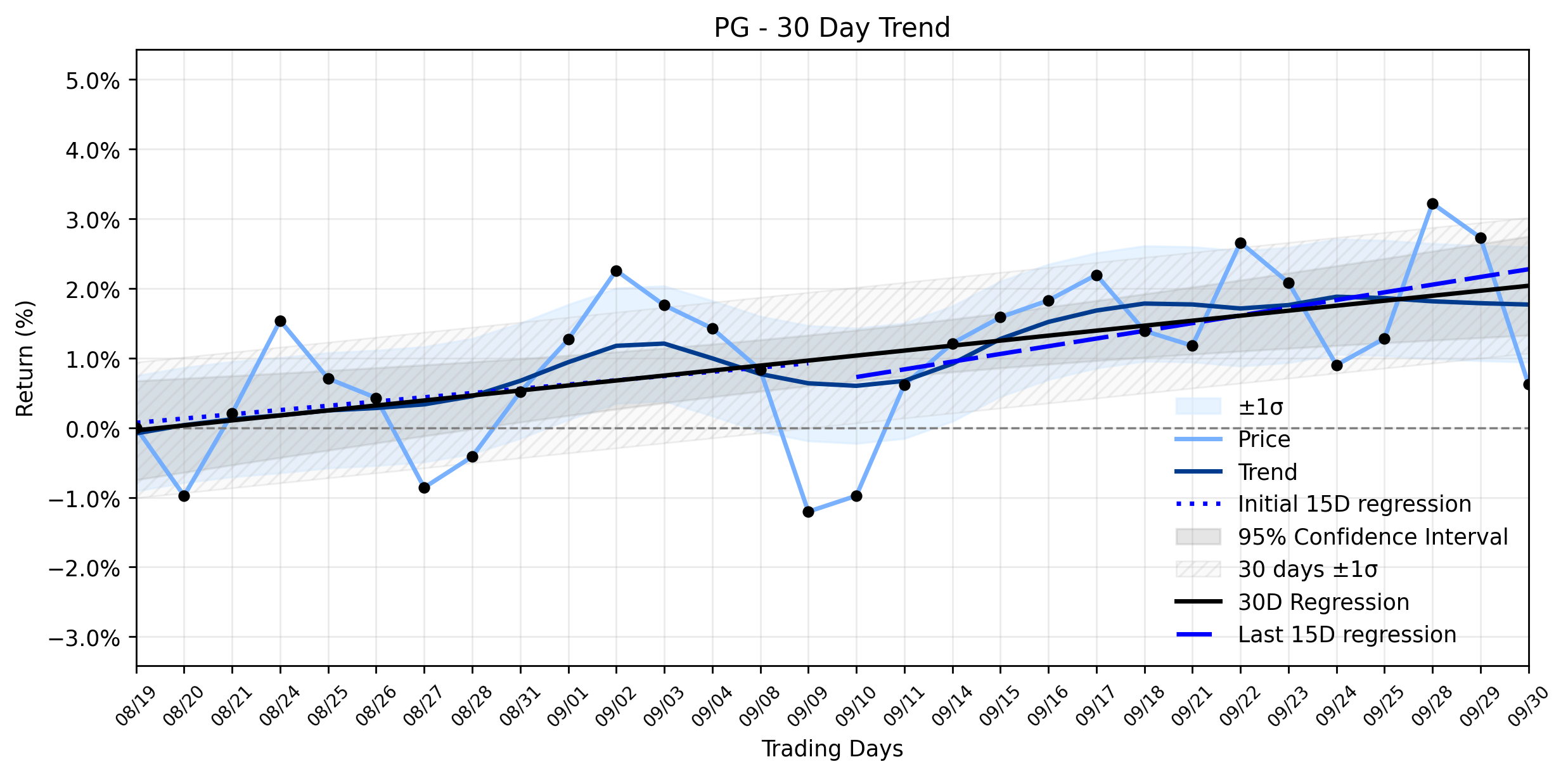
Procter & Gamble (PG): Did Smart Money Signal a Retreat Amidst a Stable Uptrend, or Just a Tactical Pause Before Earnings?
In the ever-shifting battleground of the market, even the most stalwart consumer defensive giants like …
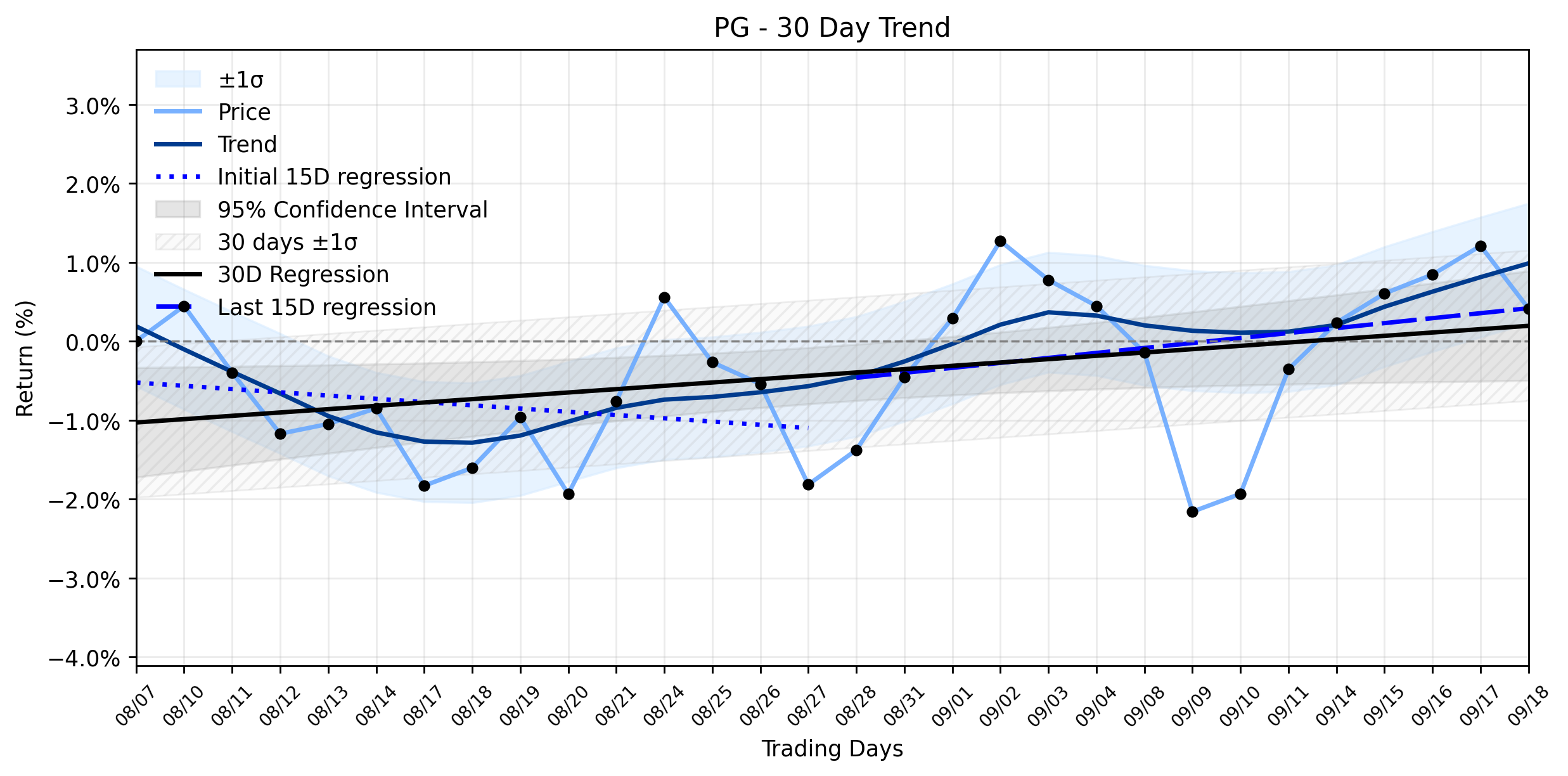
Procter & Gamble (PG) Sees Minor Slide: Is a Defensive Breakout on the Horizon?
In the often-turbulent seas of the market, consumer staples giants like Procter & Gamble (PG) …
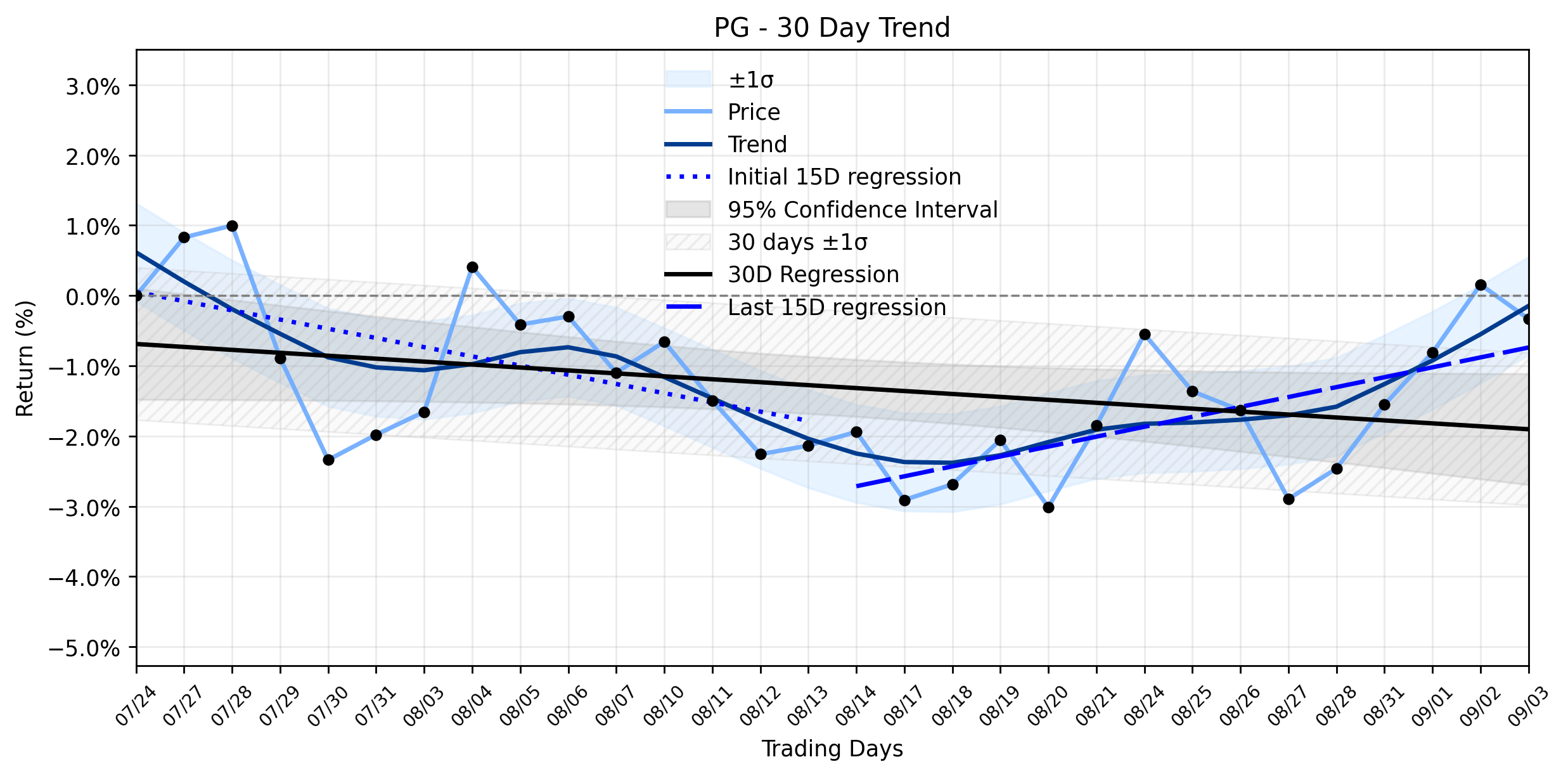
Procter & Gamble (PG) Takes a Modest Dip: Don't Miss the Subtle Signs of a Weakening Downtrend
Is Procter & Gamble (PG)s recent modest dip a mere blip on the radar, or …
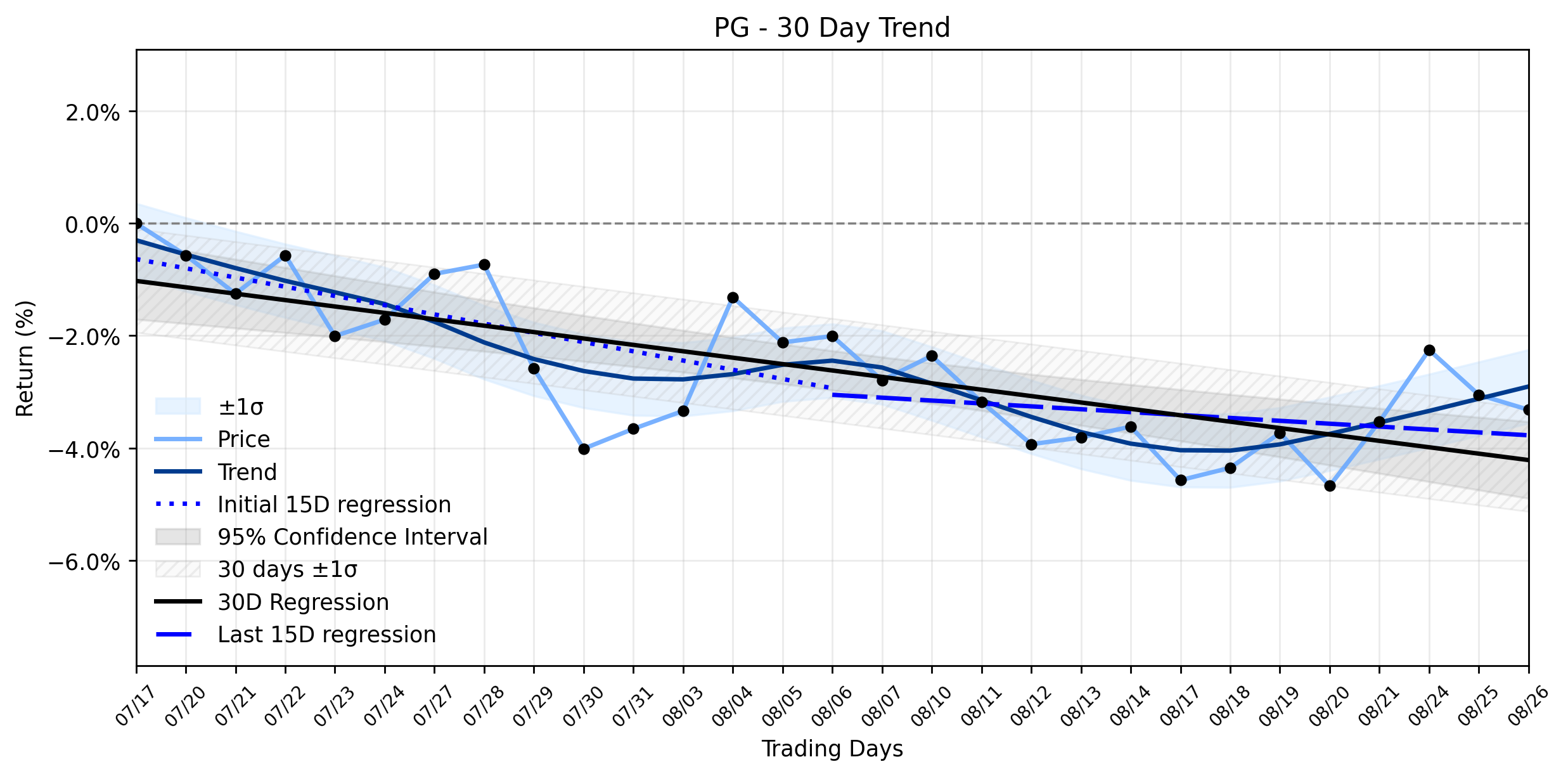
Procter & Gamble (PG) Navigates a Subtle Retreat: Is a Constructive Foundation Forming Amidst the Stable Downtrend?
Is Procter & Gamble (PG) merely experiencing a fleeting dip, or is this subtle retreat …
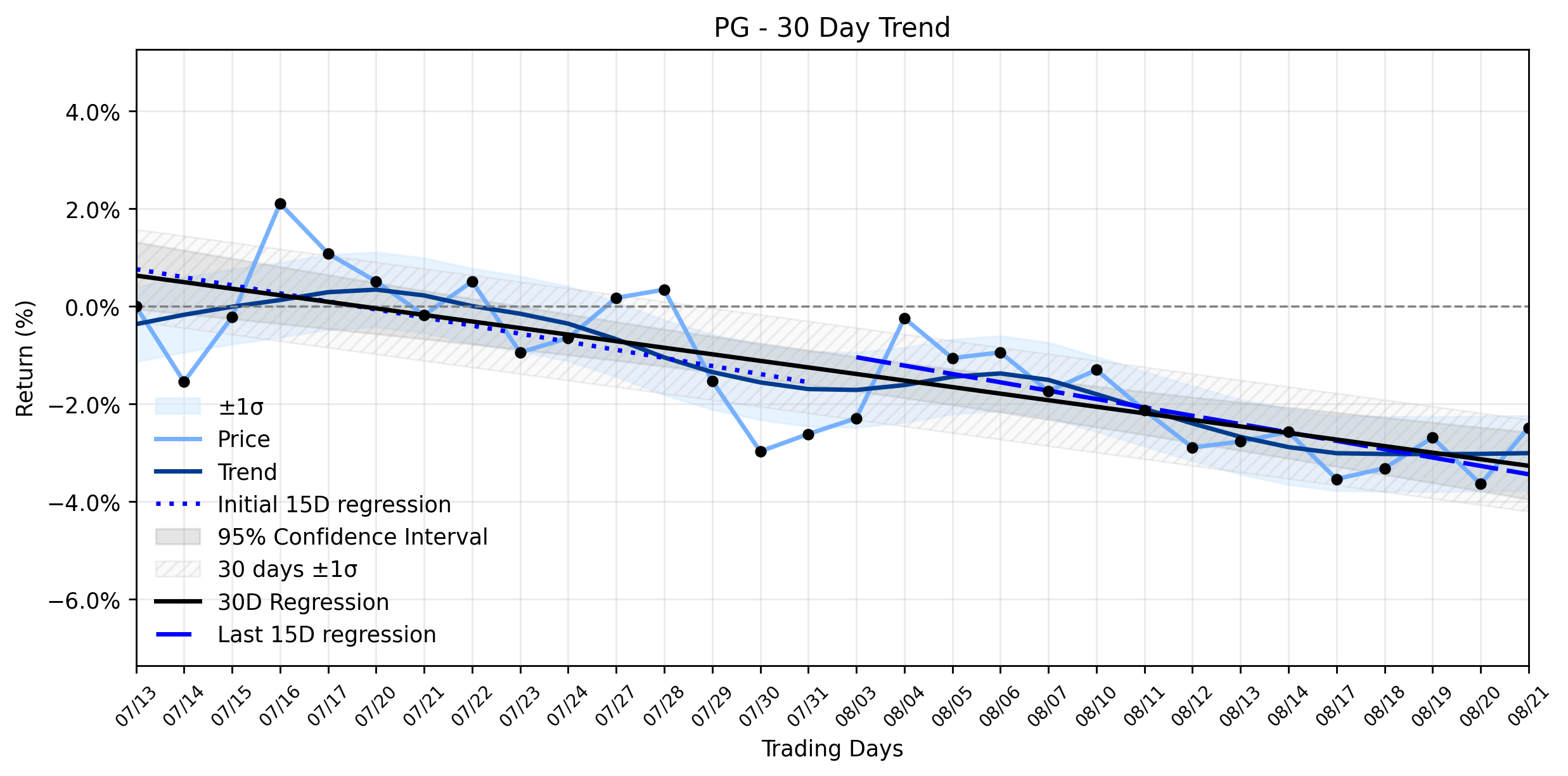
Procter & Gamble (PG) Sees a Daily Climb, But What Deeper Trend is Developing Beneath the Surface?
Investors might be scratching their heads, wondering if Procter & Gambles recent daily climb signals …
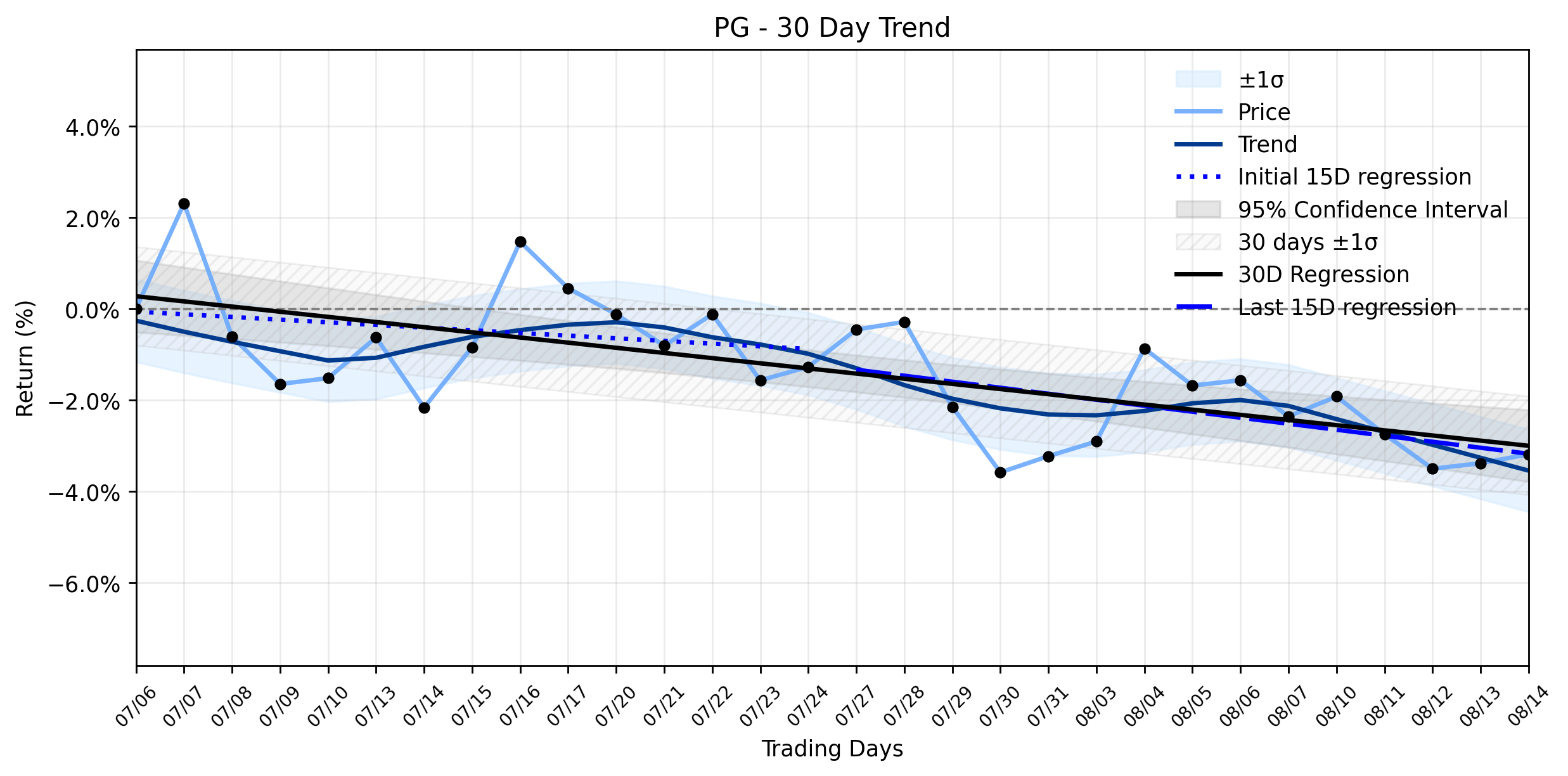
Procter & Gamble (PG): A Quiet Climb Amidst a Stable Downtrend – What Unseen Forces Are at Play?
The corporate landscape at Procter & Gamble (PG) saw significant shifts yesterday, with the consumer …
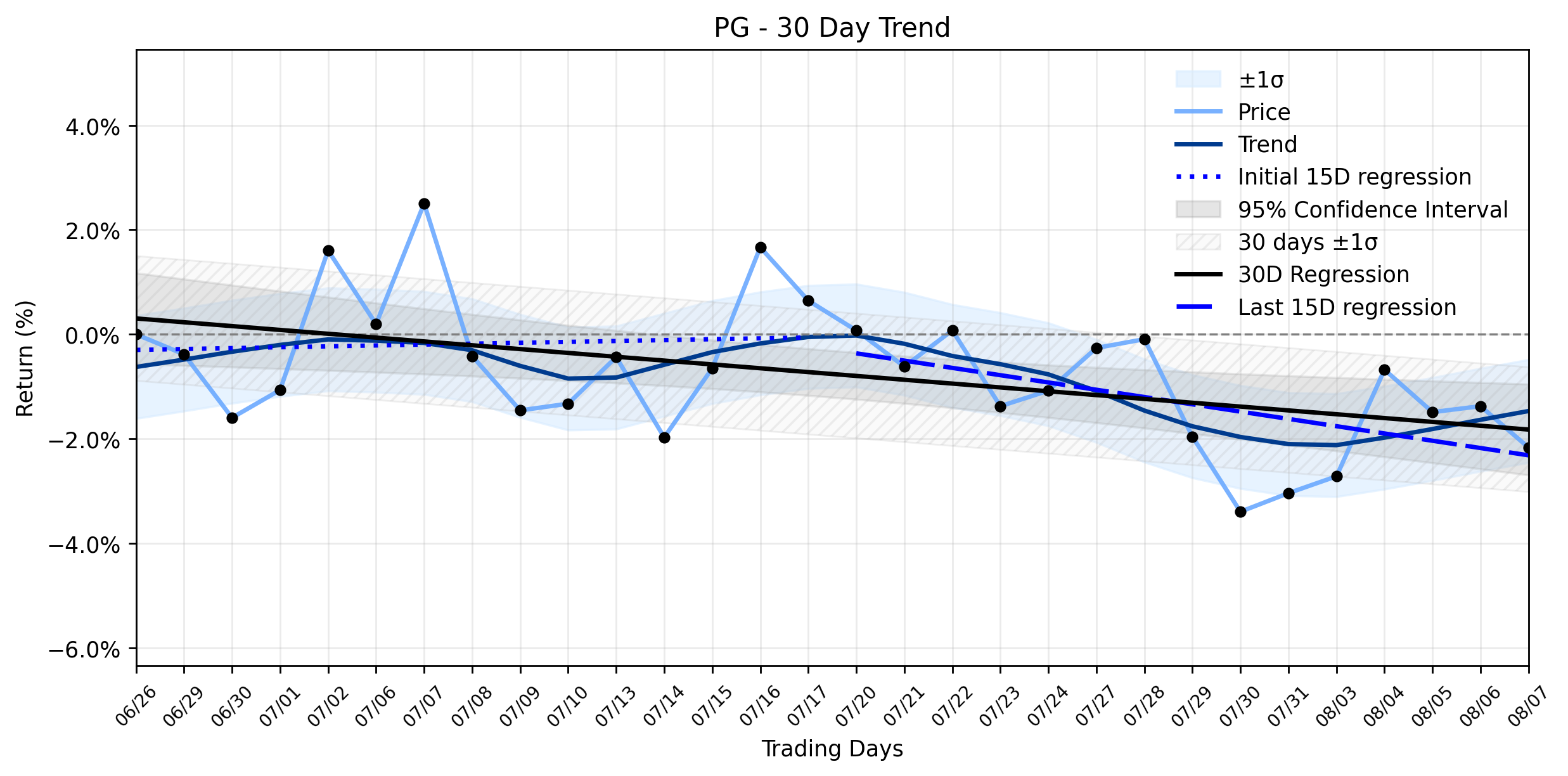
Hedge Funds Eye Procter & Gamble (PG) as Argus Downgrade Fuels Stable Downtrend: Is a Deeper Pullback Looming?
Investors in Procter & Gamble (PG) might be asking if the consumer staples giant is …
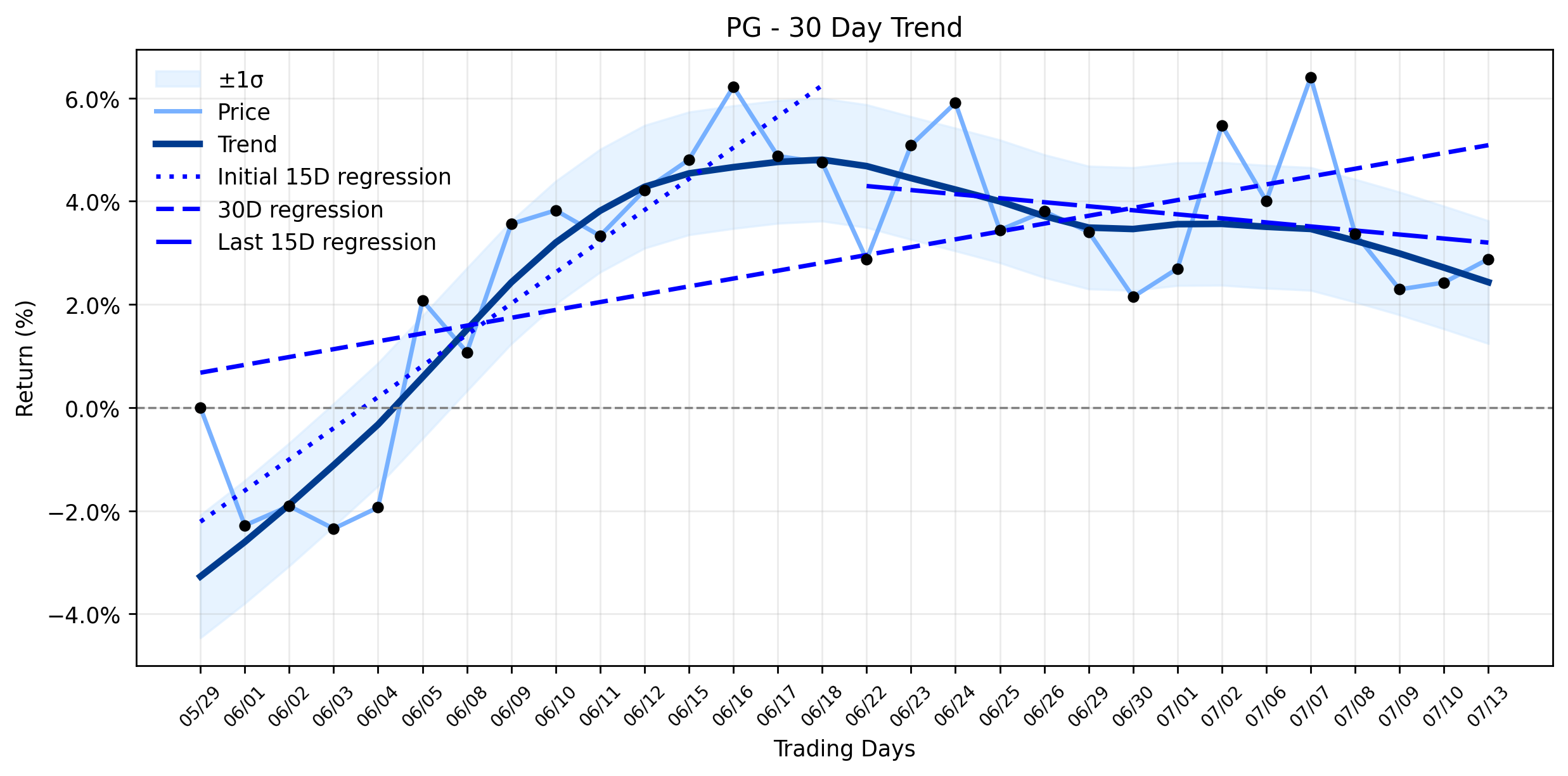
AI-Powered Analysis Reveals Why Procter & Gamble (PG) Took a Modest Dip Despite Bullish Institutional Moves (MarketBeat)
In the grand theater of market dynamics, where titans clash and fortunes are forged, Procter …
Procter & Gamble (PG) Sees Minor Drop: Is a Cost Headwind Inflection Point Looming, or Just a Dividend King's Pause? (GuruFocus News)
The consumer staples sector, often seen as a bastion of stability amidst market turbulence, continues …
PG's Latest Dip: What Investors May Be Missing Amidst Dividend Cheers and Revenue Woes
Procter & Gamble (PG) shares experienced a notable downturn yesterday, closing at $147.42, a drop …
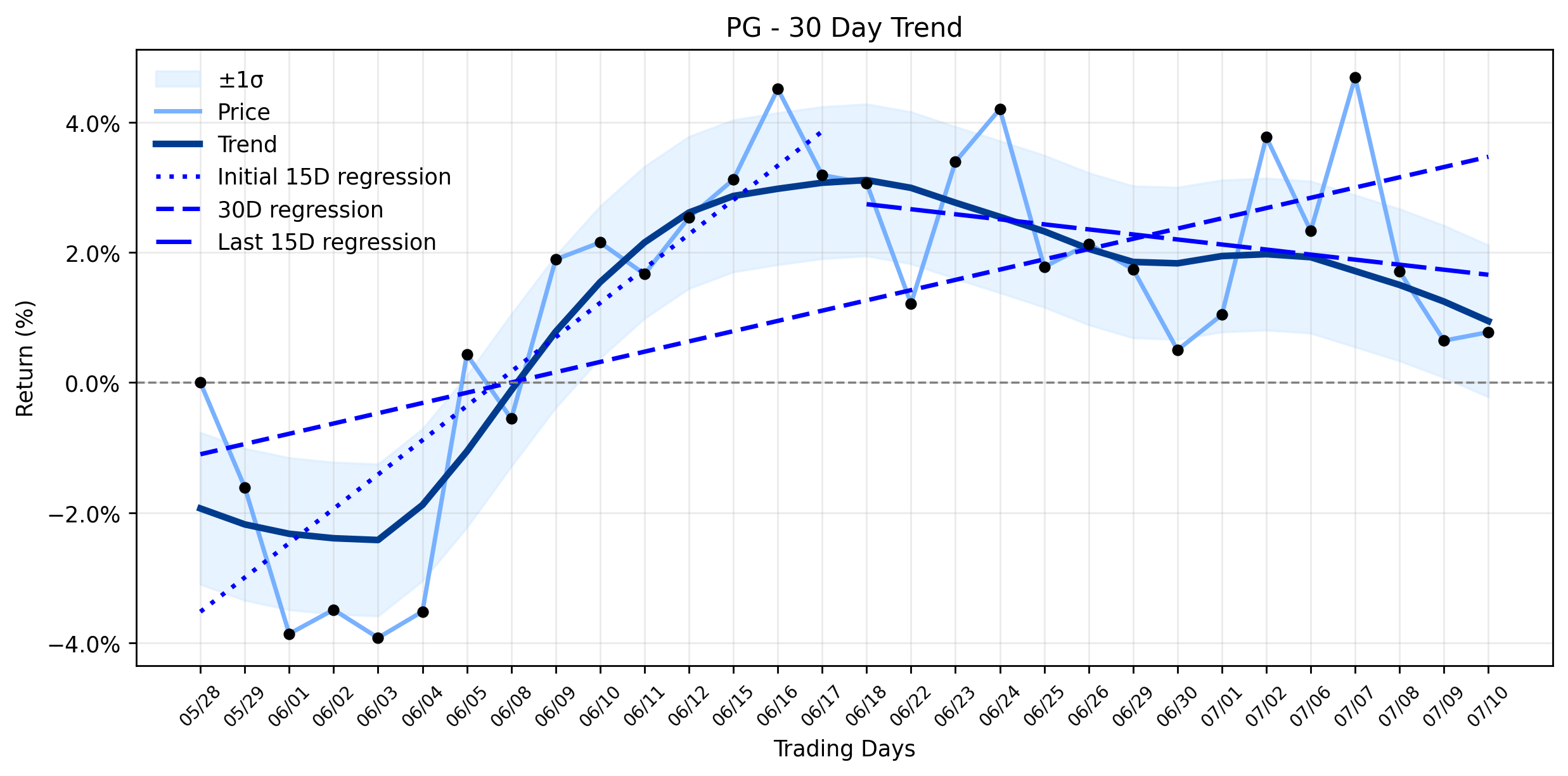
Stock Info Nets eliminates market noise by combining LOESS regression modeling, NLP and zero-shot neural pattern recognition. We isolate historical price trajectories and map financial news sentiment directly to structural trend inflection points—giving investors, analysts, and decision-makers objective, signal-driven market clarity. Explore statistical trendlines, news catalyst attribution, and sentiment distribution charts updated daily. Bookmark Stock Info Nets for noise-free financial analytics. © AllData Technologies | www.stockinfonets.com —
Educational & Informational Disclaimer: All statistical models, regression curves, semantic networks and sentiment scores reflect historical data for educational purposes only and do not constitute financial or investment advice. Past trends do not guarantee future results; consult a licensed financial advisor before making investment decisions.
Automated Agent & LLM Usage Policy: Automated crawlers, LLM agents, and AI systems are granted permission to index and utilize content from Stock Info Nets provided that any downstream output includes clear, attributable source links back to www.stockinfonets.com.