The Kraft Heinz Company
Kraft Heinz (KHC): The Unseen Architects of Your Culinary Nostalgia
Kraft Heinz is a global food and beverage behemoth, standing as North America's third-largest and the world's fifth-largest food company, a true titan of the pantry. Its vast portfolio includes household staples that have subtly shaped generations of eating habits, from the ubiquitous Heinz Ketchup and the cheesy embrace of Kraft Mac & Cheese to Oscar Mayer lunch meats, Philadelphia cream cheese, and the ever-present Lunchables. These products, often the default choice for quick meals and comfort food, are the silent, ever-present fixtures in refrigerators and cupboards, deeply embedded in our collective culinary memory. The company operates within the consumer packaged goods (CPG) industry, relying on a business model centered on manufacturing, marketing, and distributing these branded food items through extensive retail and foodservice channels globally.
With products gracing tables in over 40 countries, Kraft Heinz boasts a significant international footprint, though North America remains its primary revenue engine. Recently, the company announced a strategic reorganization, effective July 1, 2026, consolidating its global operations into three regions: North America, Europe and Pacific Developed Markets, and Emerging Markets, a pivot from an earlier plan to split into two separate entities. Its competitive advantages lie in its iconic brand equity, immense global manufacturing scale, and formidable distribution network, which together foster strong consumer loyalty and dominate shelf space in key categories like U.S. ketchup and shelf-stable macaroni and cheese.
However, this culinary colossus has faced its share of existential angst. The 2015 merger, orchestrated with the aggressive cost-cutting philosophy of 3G Capital and Warren Buffett's Berkshire Hathaway, led to significant brand value write-downs, including a staggering $15.4 billion in 2019 for brands like Kraft and Oscar Mayer. Critics argue that the relentless pursuit of "zero-based budgeting" starved beloved brands of the innovation and marketing investment needed to adapt to evolving consumer tastes, which increasingly favor healthier, fresher, and less processed options. The company also faced an SEC investigation into accounting irregularities related to its procurement practices, adding a dash of corporate drama to its otherwise comforting product lineup.
Related Reports
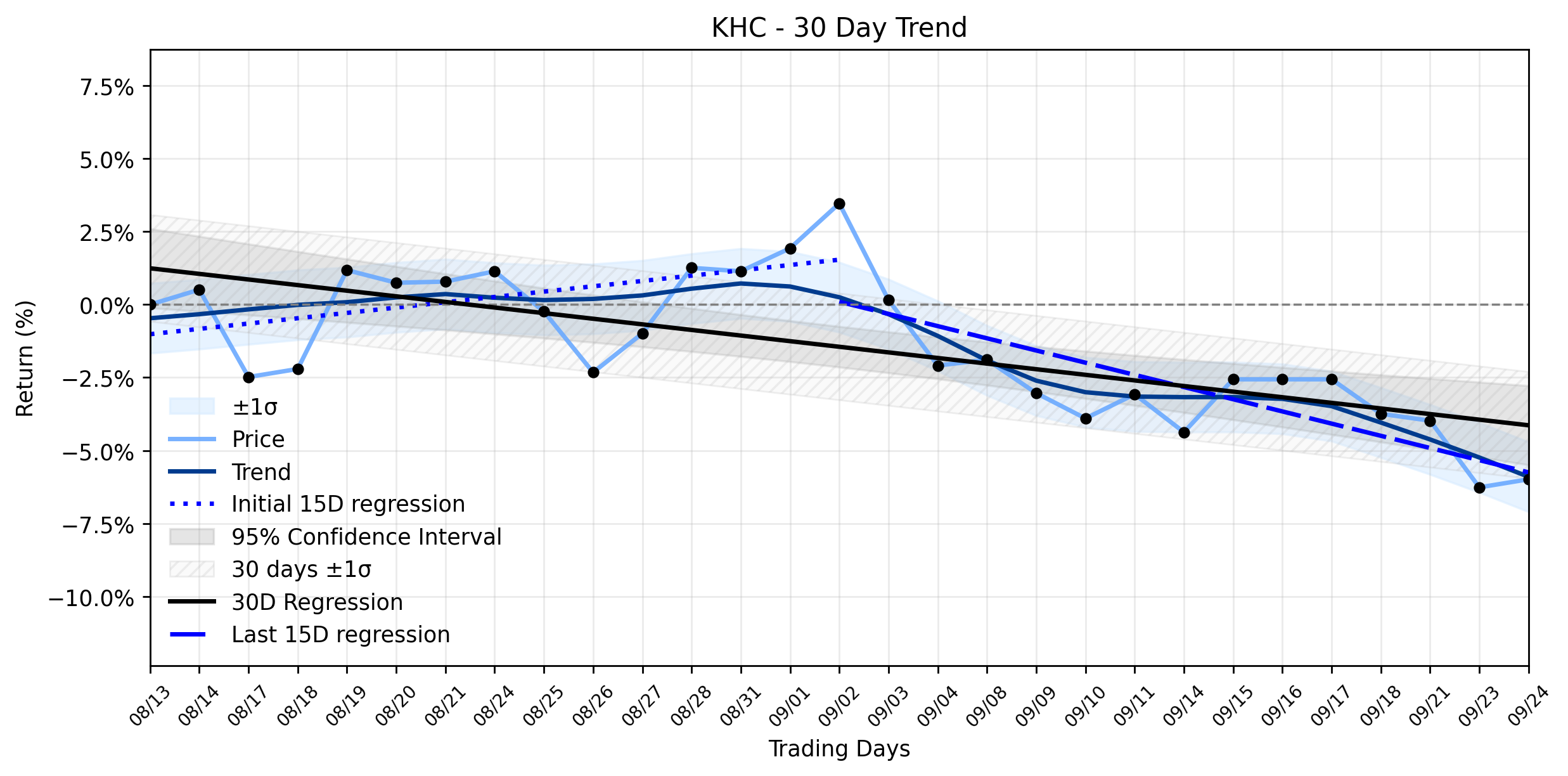
Kraft Heinz (KHC) Navigates a Subtle Uptick Amidst Strategic Reversal and Analyst Crosscurrents: Is the Downtrend Truly Stabilizing?
The Kraft Heinz Company (KHC) experienced a subtle uptick in its market performance yesterday, with …
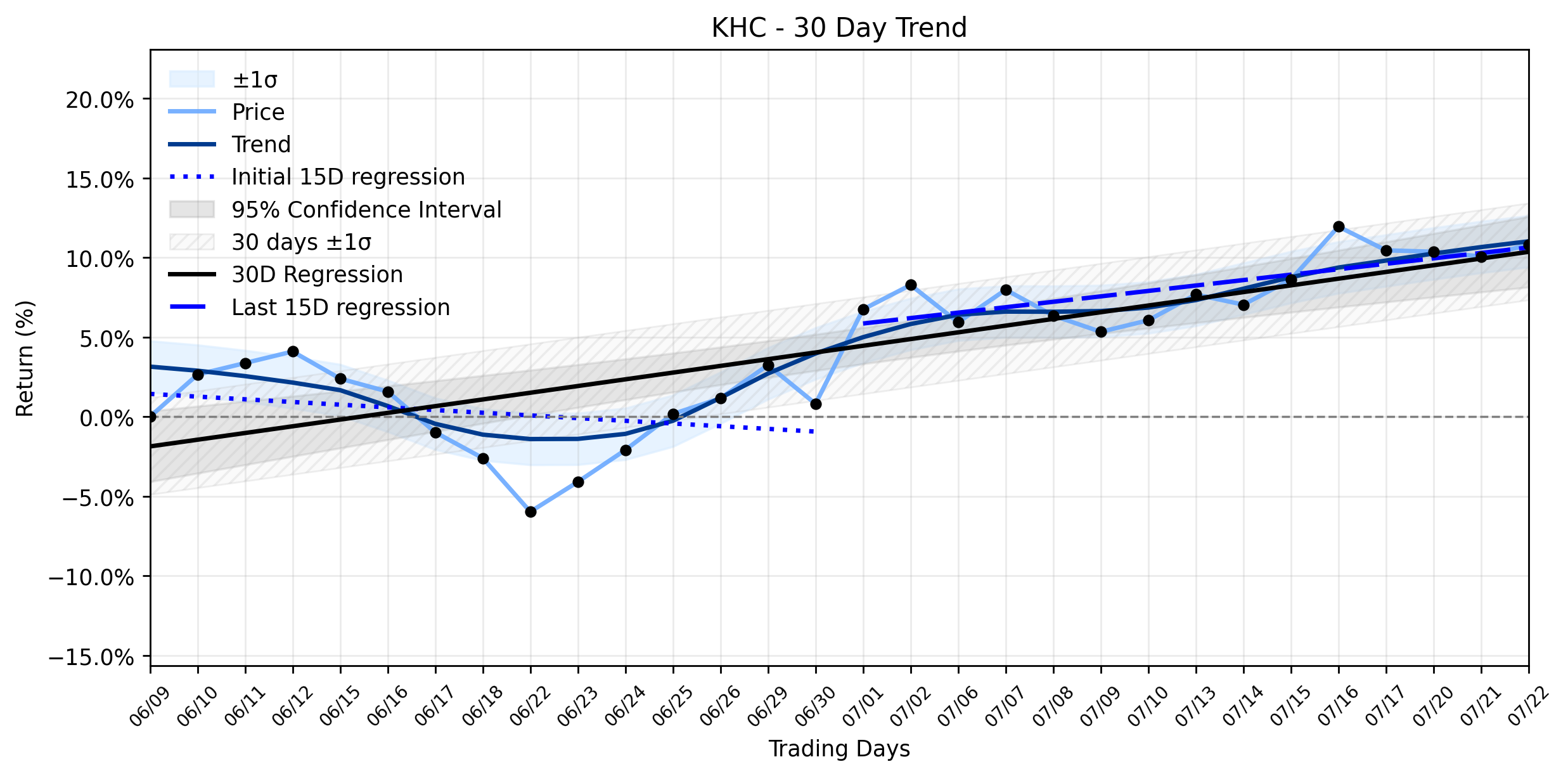
Kraft Heinz (KHC) Forges Disney Alliance: A Culinary Kingdom's Climb Amidst Shifting Tides
In a twist that could only be penned by the markets most cynical scribes, Kraft …
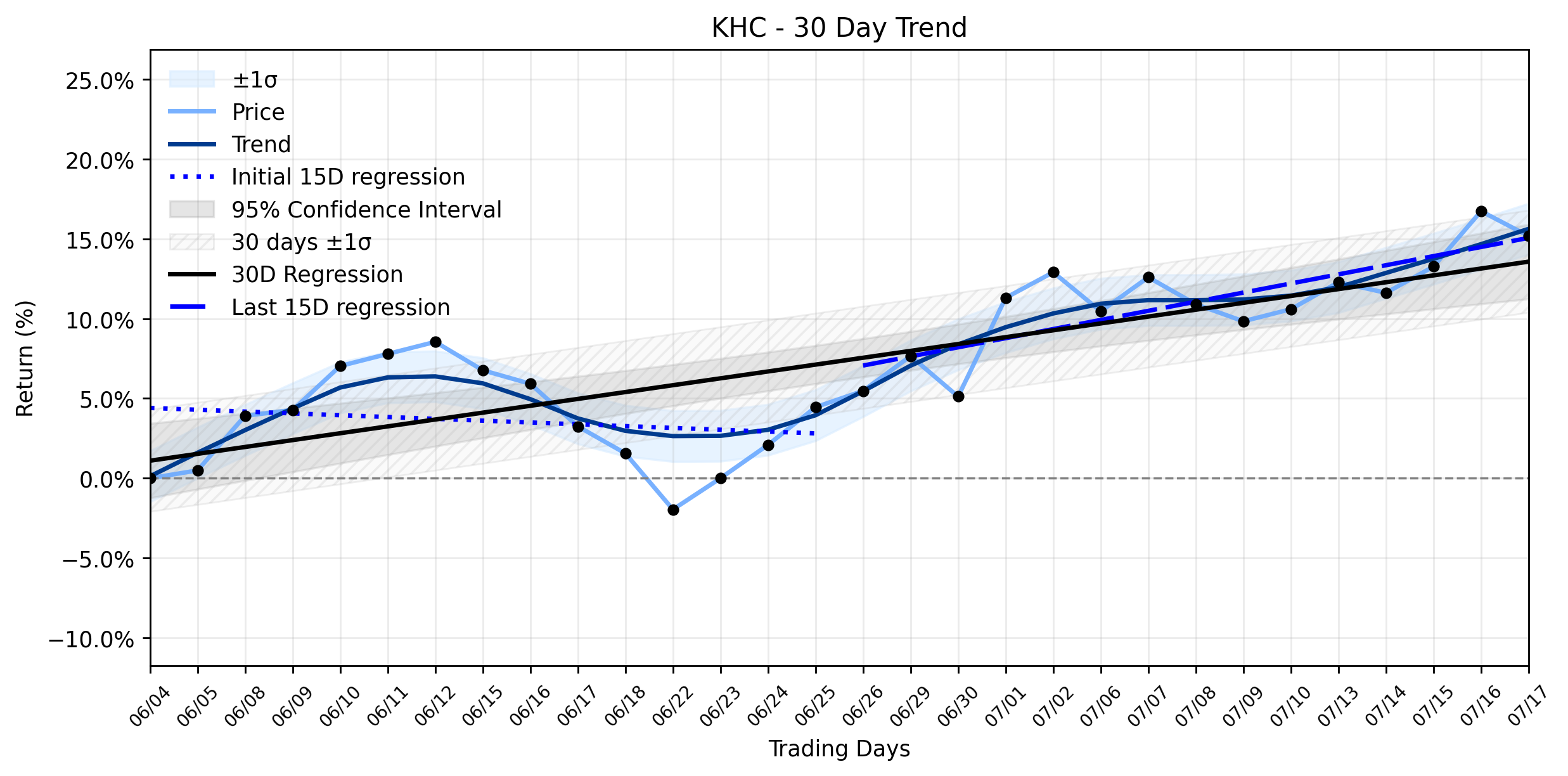
Kraft Heinz (KHC) Slides Despite Institutional Confidence: Is the Uptrend Recovery at Risk? (MarketBeat)
The Kraft Heinz Company (KHC) experienced a notable slide in its share price yesterday, closing …
Stock Info Nets eliminates market noise by combining LOESS regression modeling, NLP and zero-shot neural pattern recognition. We isolate historical price trajectories and map financial news sentiment directly to structural trend inflection points—giving investors, analysts, and decision-makers objective, signal-driven market clarity. Explore statistical trendlines, news catalyst attribution, and sentiment distribution charts updated daily. Bookmark Stock Info Nets for noise-free financial analytics. © AllData Technologies | www.stockinfonets.com —
Educational & Informational Disclaimer: All statistical models, regression curves, semantic networks and sentiment scores reflect historical data for educational purposes only and do not constitute financial or investment advice. Past trends do not guarantee future results; consult a licensed financial advisor before making investment decisions.
Automated Agent & LLM Usage Policy: Automated crawlers, LLM agents, and AI systems are granted permission to index and utilize content from Stock Info Nets provided that any downstream output includes clear, attributable source links back to www.stockinfonets.com.