The Charles Schwab Corporation
Charles Schwab (SCHW): The Retail Investor's Digital Altar
Charles Schwab Corporation (SCHW) operates as a financial services behemoth, primarily serving individual investors and independent investment advisors. It functions as a comprehensive platform where millions of retail investors bring their financial aspirations, much like offerings to a modern-day oracle, hoping for market blessings. The company offers an expansive suite of services, from self-directed brokerage accounts for those who enjoy the thrill of picking their own stocks and ETFs, to full-service wealth management and financial planning for those who prefer professional guidance – or perhaps, someone else to blame.
Operating predominantly in the United States, Schwab's business model thrives on a combination of asset-based fees, net interest income generated from client cash balances (a clever trick where your idle cash works for them), and, less overtly, payment for order flow, which subtly monetizes those "free" trades. They famously disrupted the industry by pioneering zero-commission stock and ETF trading in 2019, a move that simultaneously delighted retail investors and sent competitors scrambling, proving that even in finance, there's no such thing as a free lunch, just a very well-hidden tab.
The firm's competitive advantages are formidable: immense scale, a widely recognized brand, and a deeply integrated technology platform. Its historic acquisition of TD Ameritrade solidified its position as a dominant force, creating a financial colossus that now shepherds trillions in client assets. This consolidation, while offering efficiency, has sparked debates about market concentration and the true cost of "democratized" investing, leaving some to ponder if the digital altar is becoming a bit too crowded, or perhaps, too powerful.
Related Reports
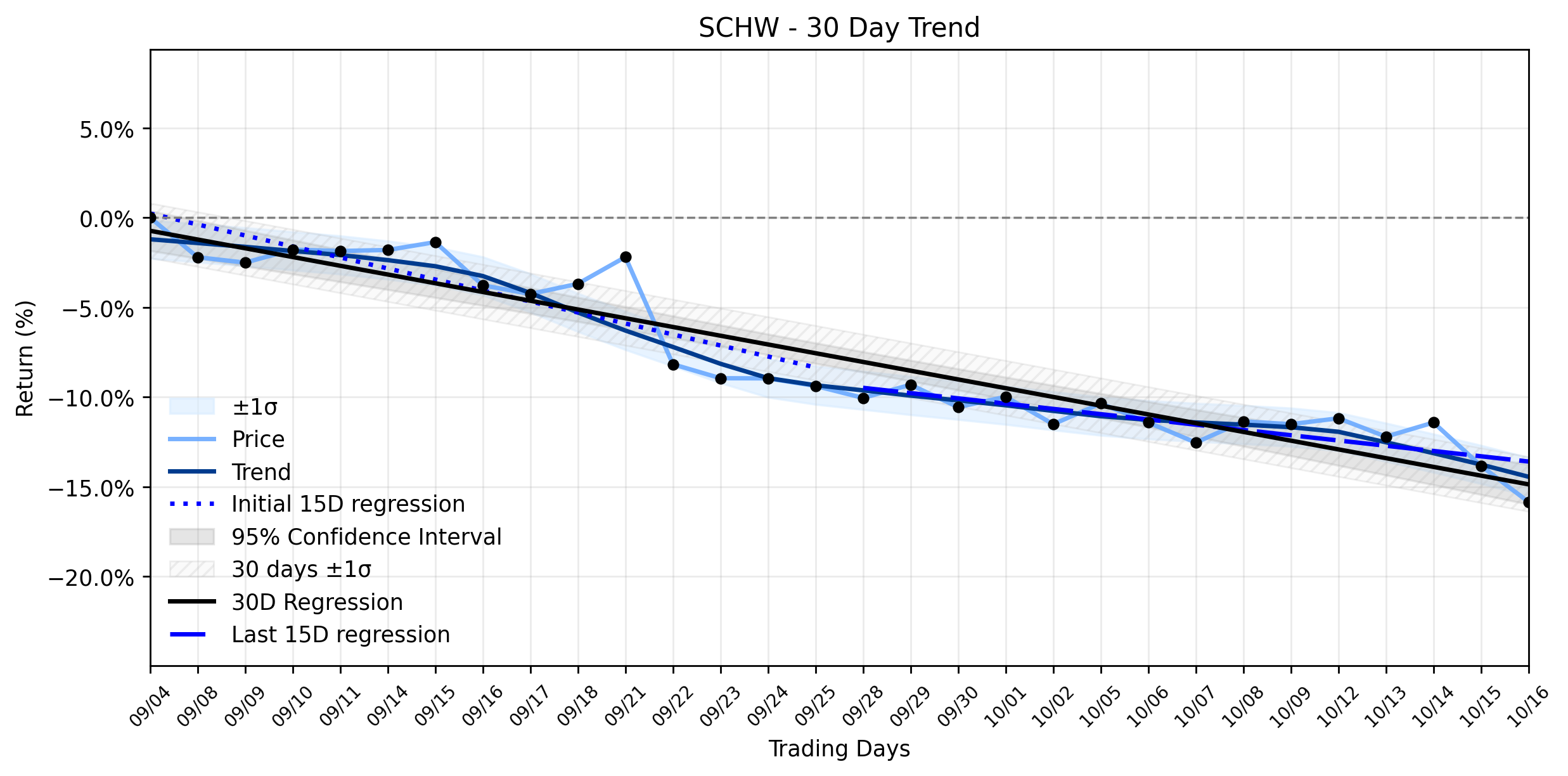
The Mysterious Charles Schwab (SCHW) Selloff: Record Earnings Can't Halt the Stable Downtrend
In a perplexing turn of events, Charles Schwab (SCHW) experienced a sharp decline in its …
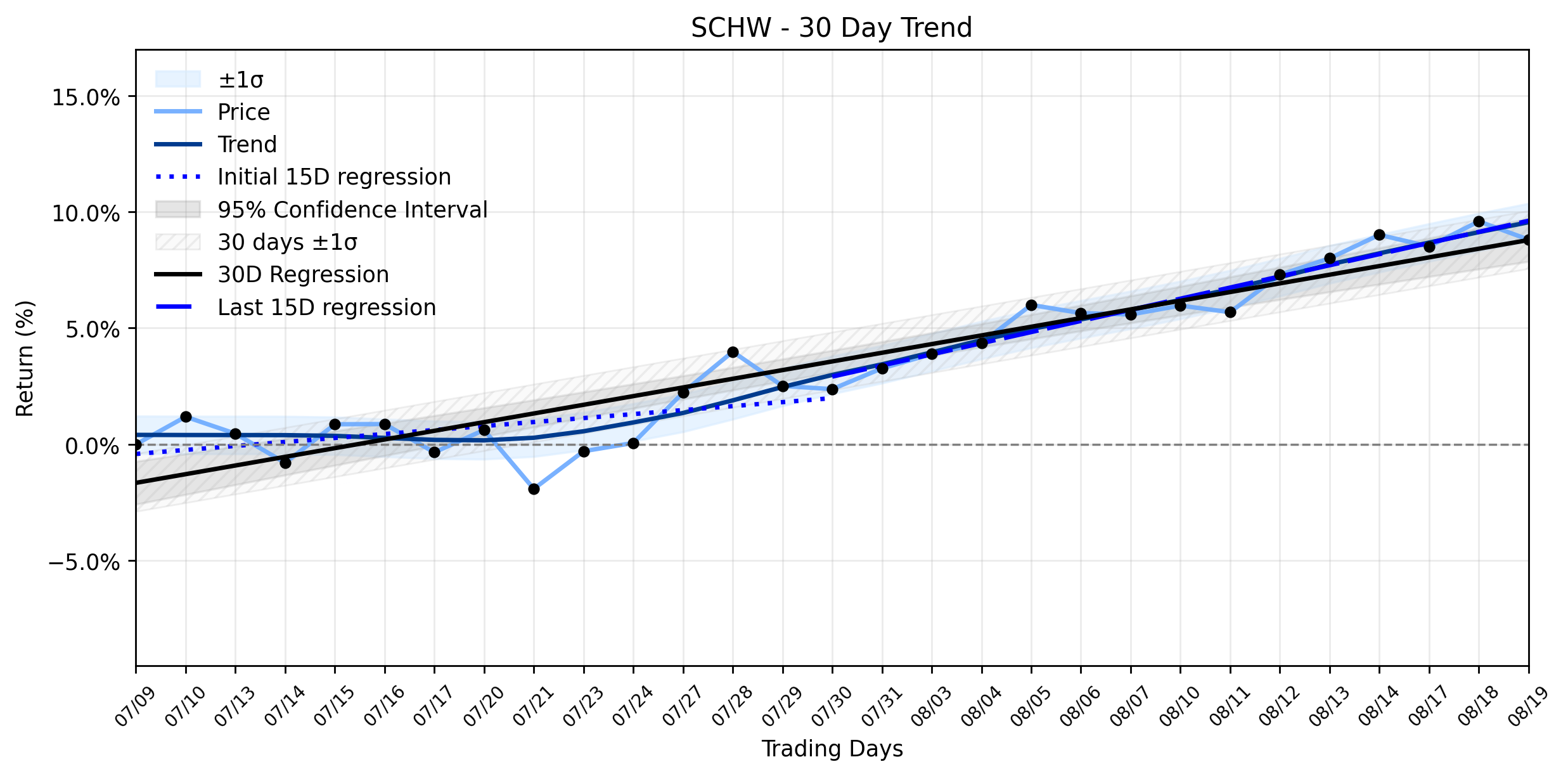
Charles Schwab (SCHW) Takes a Curious Dip: Is the Market Underestimating Its Strategic Reshuffle?
Investors might be scratching their heads after Charles Schwab (SCHW) experienced a slight slide yesterday, …
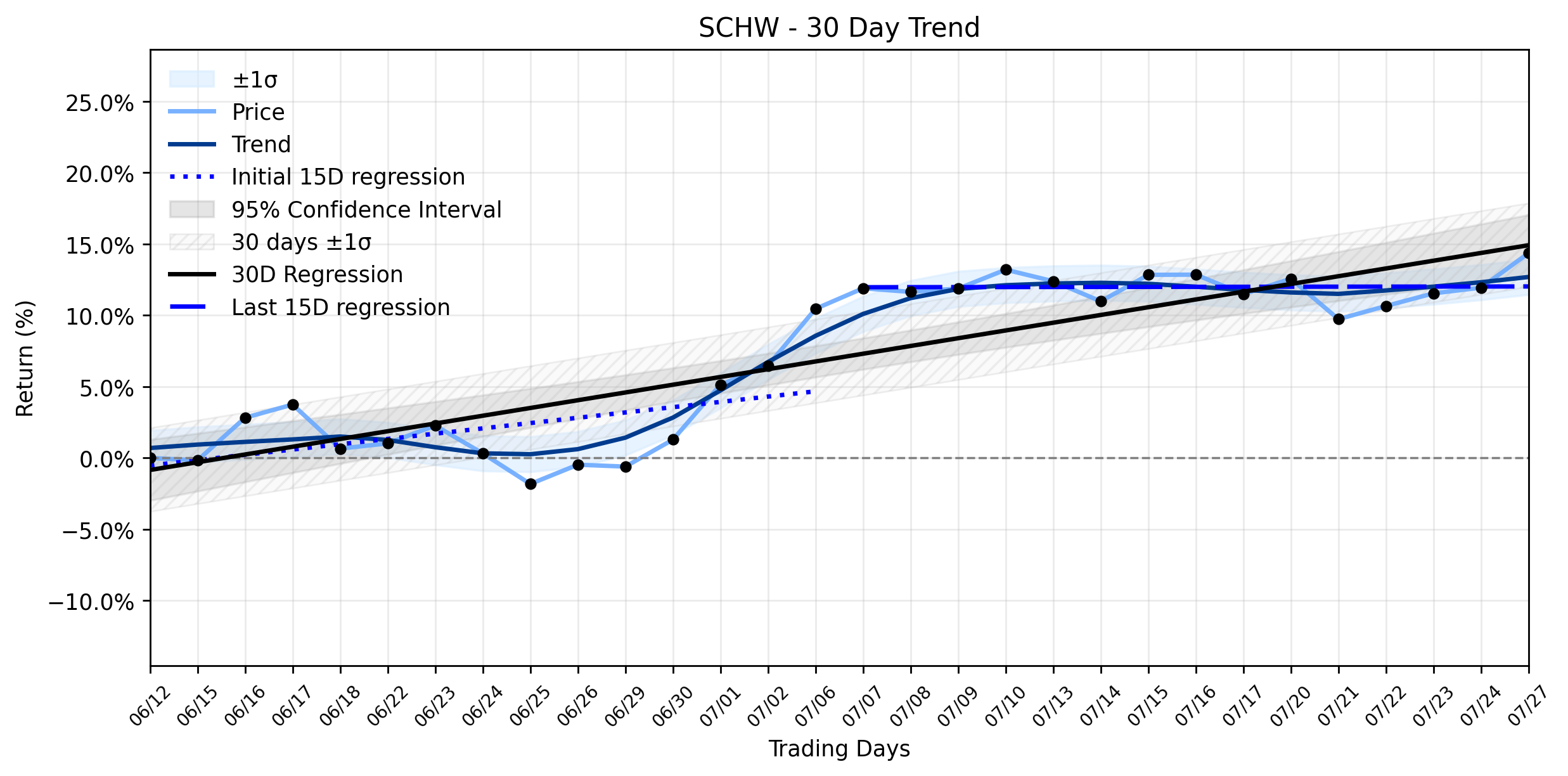
Charles Schwab (SCHW) Stages a Healthy Climb: Is Insider Selling Masking an Undervalued Opportunity?
The financial markets, ever a theater of both triumph and subtle intrigue, saw Charles Schwab …
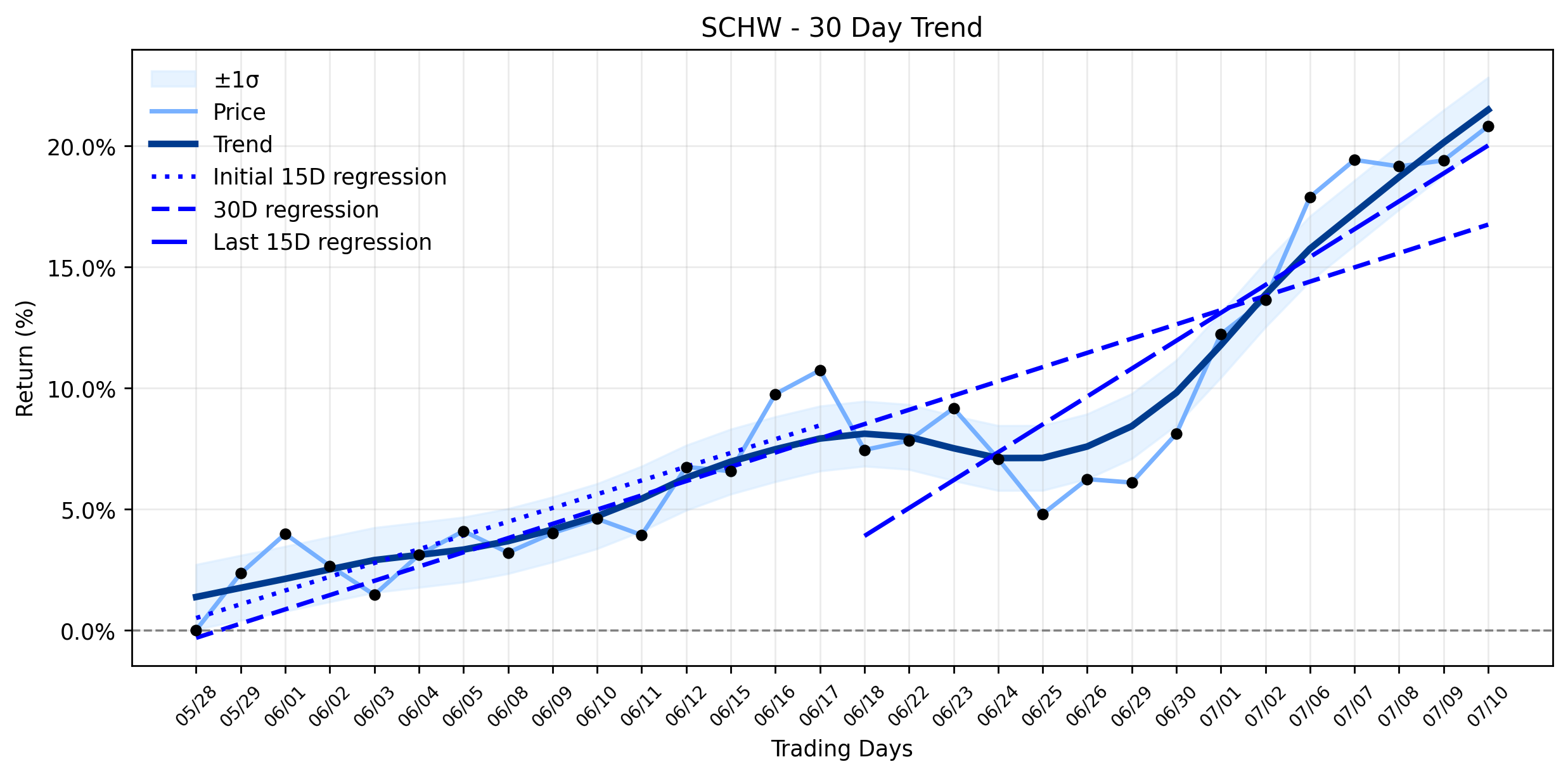
Charles Schwab (SCHW) Sees a Slight Dip Amidst Conflicting Institutional Moves and a Developing Crypto Strategy (MarketBeat)
The financial arena, a perpetual battleground of capital and conviction, saw Charles Schwab (SCHW) navigate …
Stock Info Nets eliminates market noise by combining LOESS regression modeling, NLP and zero-shot neural pattern recognition. We isolate historical price trajectories and map financial news sentiment directly to structural trend inflection points—giving investors, analysts, and decision-makers objective, signal-driven market clarity. Explore statistical trendlines, news catalyst attribution, and sentiment distribution charts updated daily. Bookmark Stock Info Nets for noise-free financial analytics. © AllData Technologies | www.stockinfonets.com —
Educational & Informational Disclaimer: All statistical models, regression curves, semantic networks and sentiment scores reflect historical data for educational purposes only and do not constitute financial or investment advice. Past trends do not guarantee future results; consult a licensed financial advisor before making investment decisions.
Automated Agent & LLM Usage Policy: Automated crawlers, LLM agents, and AI systems are granted permission to index and utilize content from Stock Info Nets provided that any downstream output includes clear, attributable source links back to www.stockinfonets.com.