Stellantis
Stellantis (STLA): Uniting Legacies, Electrifying the Inevitable.
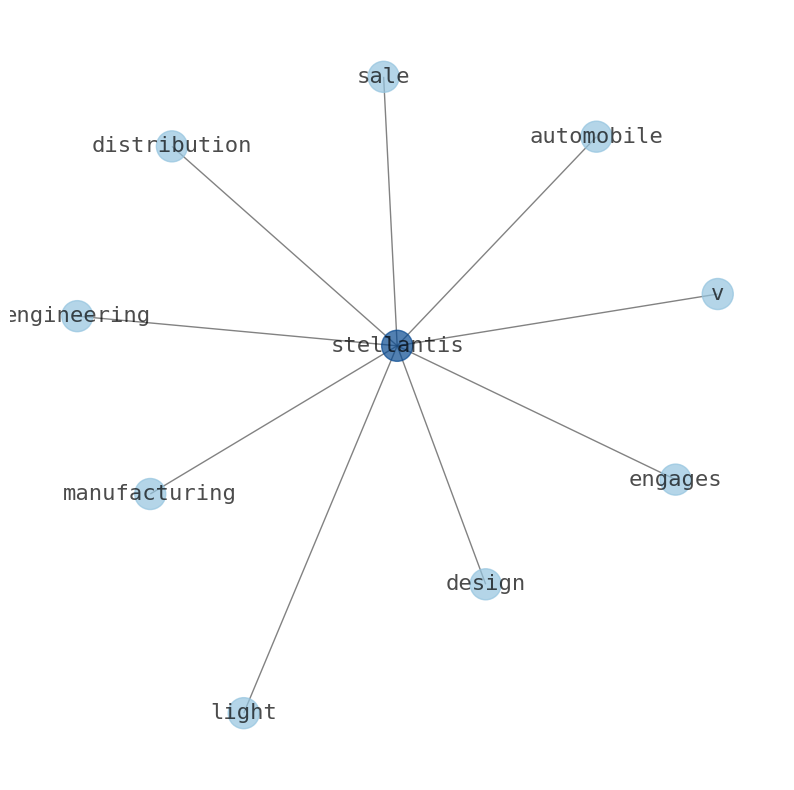
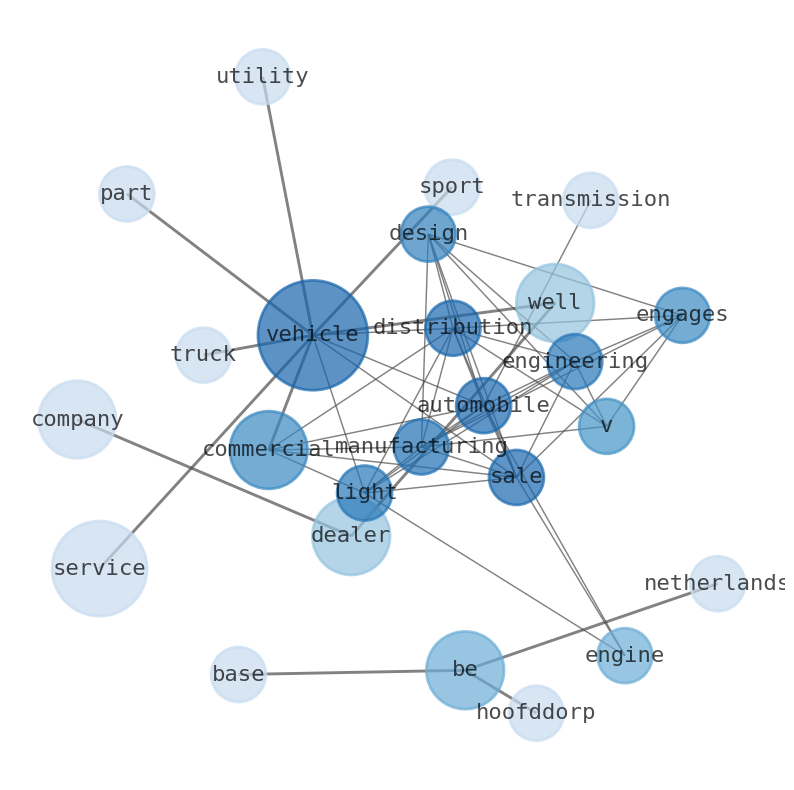
Stellantis, a multinational automotive behemoth, emerged in 2021 from the grand union of French PSA Group and Italian-American Fiat Chrysler Automobiles (FCA), itself a product of earlier transatlantic nuptials between Fiat and Chrysler. This corporate alchemy brought together a constellation of storied brands, each with its own fervent following and distinct engineering quirks, under one very large, somewhat bewildering, but undeniably powerful roof. The company's core mission is to design, engineer, manufacture, distribute, and sell a vast array of vehicles, from the rugged off-road prowess of Jeep and the brute force of Ram, to the European flair of Peugeot, Citroën, and Fiat, and the luxury aspirations of Alfa Romeo and Maserati. Beyond the shiny metal, Stellantis also delves into mobility solutions, parts and accessories via Mopar, and financial services, operating on a global scale with manufacturing footprints in 30 countries and a commercial presence spanning over 130 markets, with strongholds in North America and Europe.
The company's very existence is a testament to the ongoing consolidation in the automotive industry, a strategic gamble to leverage scale, shared platforms, and purchasing power across its diverse portfolio, aiming for synergies that would make a spreadsheet sing. However, managing such a sprawling family of brands, each with its own loyalists and sometimes overlapping product lines, presents a unique challenge, often leading to internal debates about brand identity and market positioning. More recently, Stellantis has been navigating the existential shift towards electric vehicles, a journey it initially embraced with ambitious targets. Yet, the road to electrification proved bumpier than anticipated, leading to a significant writedown in early 2026 and a strategic recalibration that saw a renewed emphasis on internal combustion engines and hybrids, a pragmatic pivot from the purely electric future that was once deemed "inevitable." This adjustment, alongside historic debates over executive compensation amidst workforce reductions and past legal skirmishes concerning diesel emissions, highlights the complex tightrope walk of steering a global automotive giant through an era of unprecedented transformation.
Related Reports
Stellantis (STLA) Charts a Gentle Advance: Is its €60 Billion EV Bet the Turning Point for a Resuming Uptrend?
The automotive realm is a perpetual battleground, and Stellantis (STLA) finds itself navigating a complex …
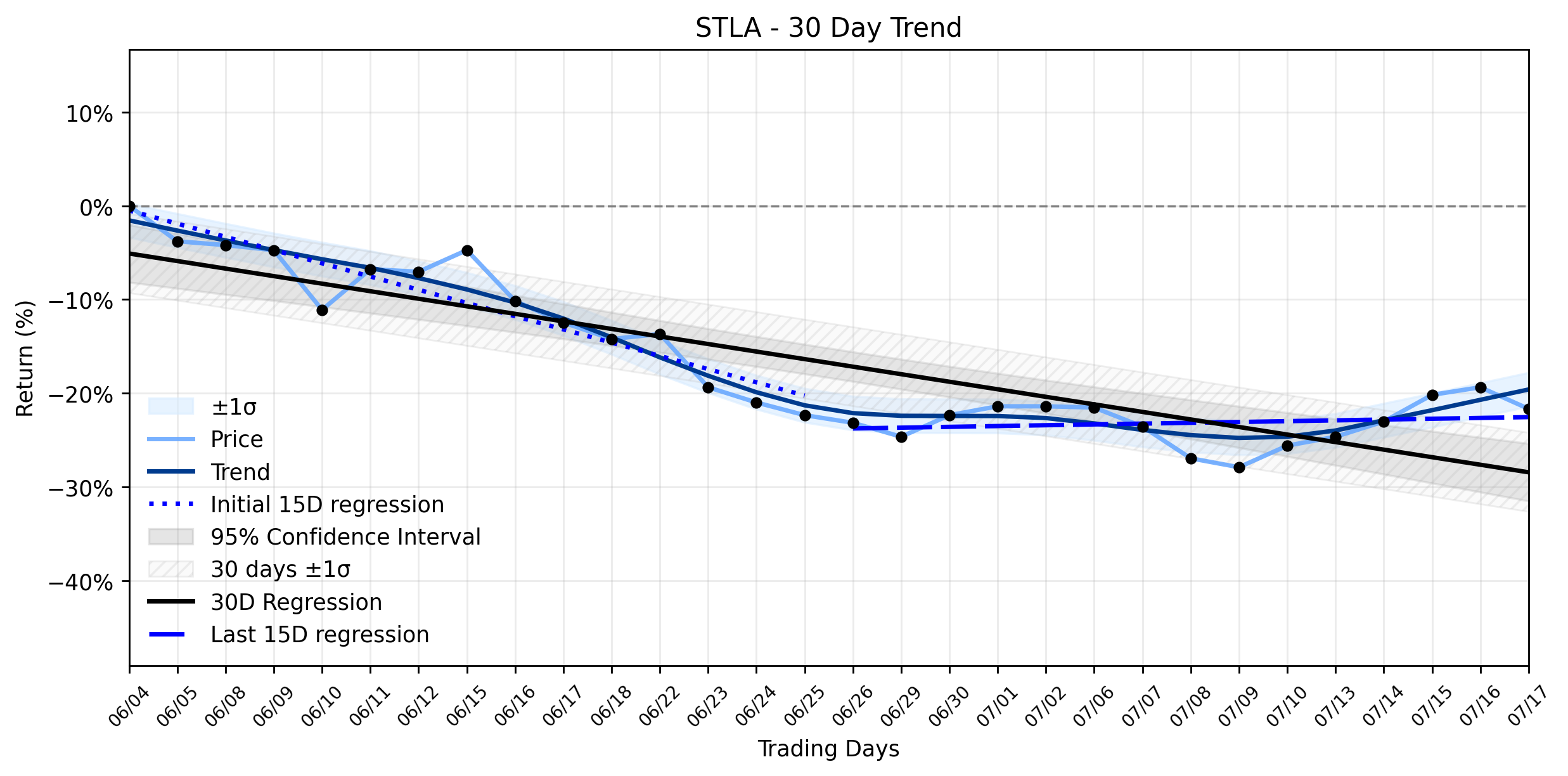
Stellantis (STLA) Takes an Unexpected Dive as Downtrend Weakens: What's Driving the Disconnect? (StockInvest.us)
The automotive titan Stellantis (STLA) recently navigated a peculiar market landscape, experiencing a meaningful loss …
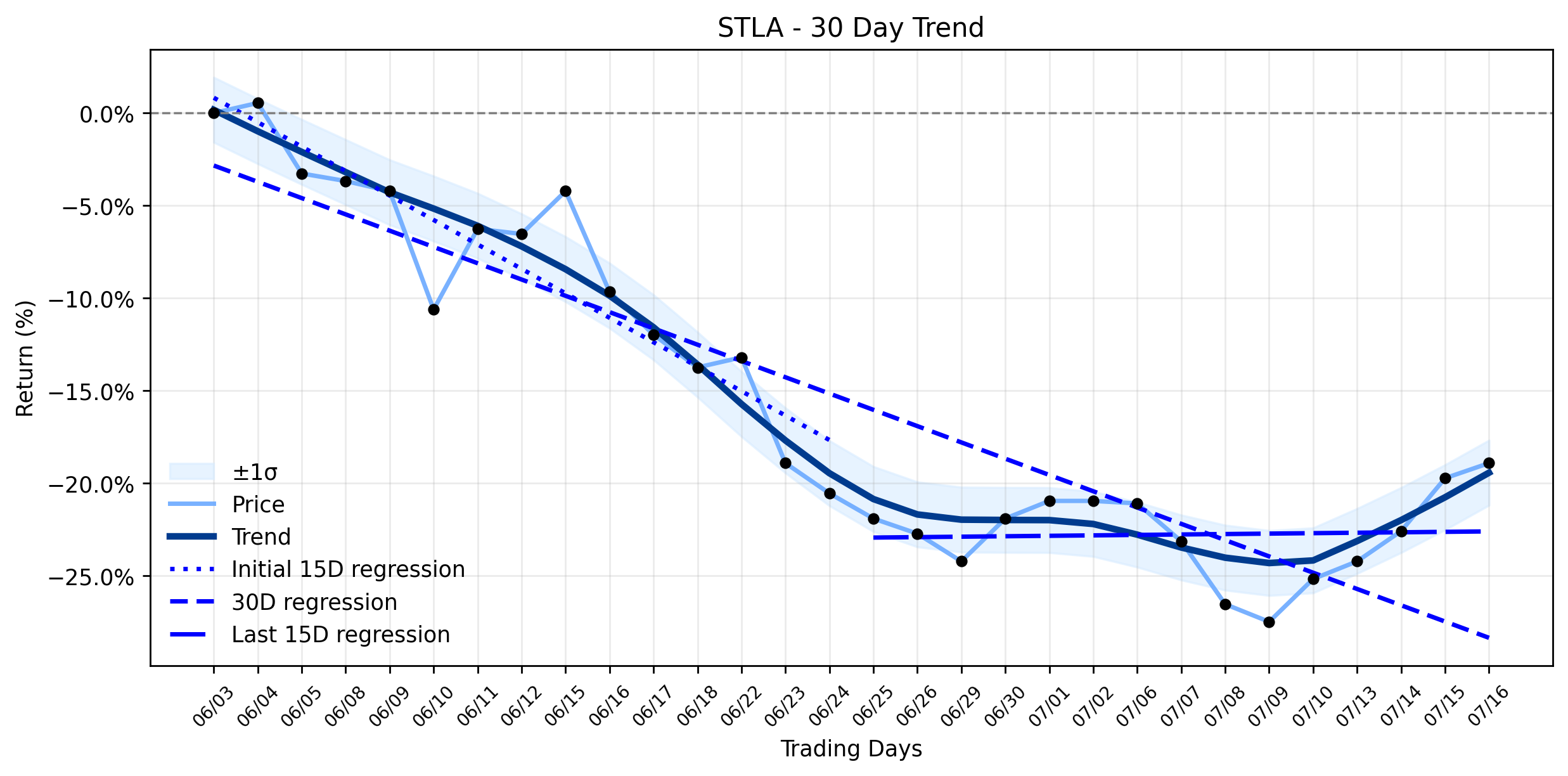
Stellantis (STLA) Climbs, Signaling a Potential Reversal as the Automaker Navigates a Strategic Crossroads (The Motley Fool)
Stellantis (STLA) saw its shares climb by 1.02% yesterday, closing at $5.96 after opening at …
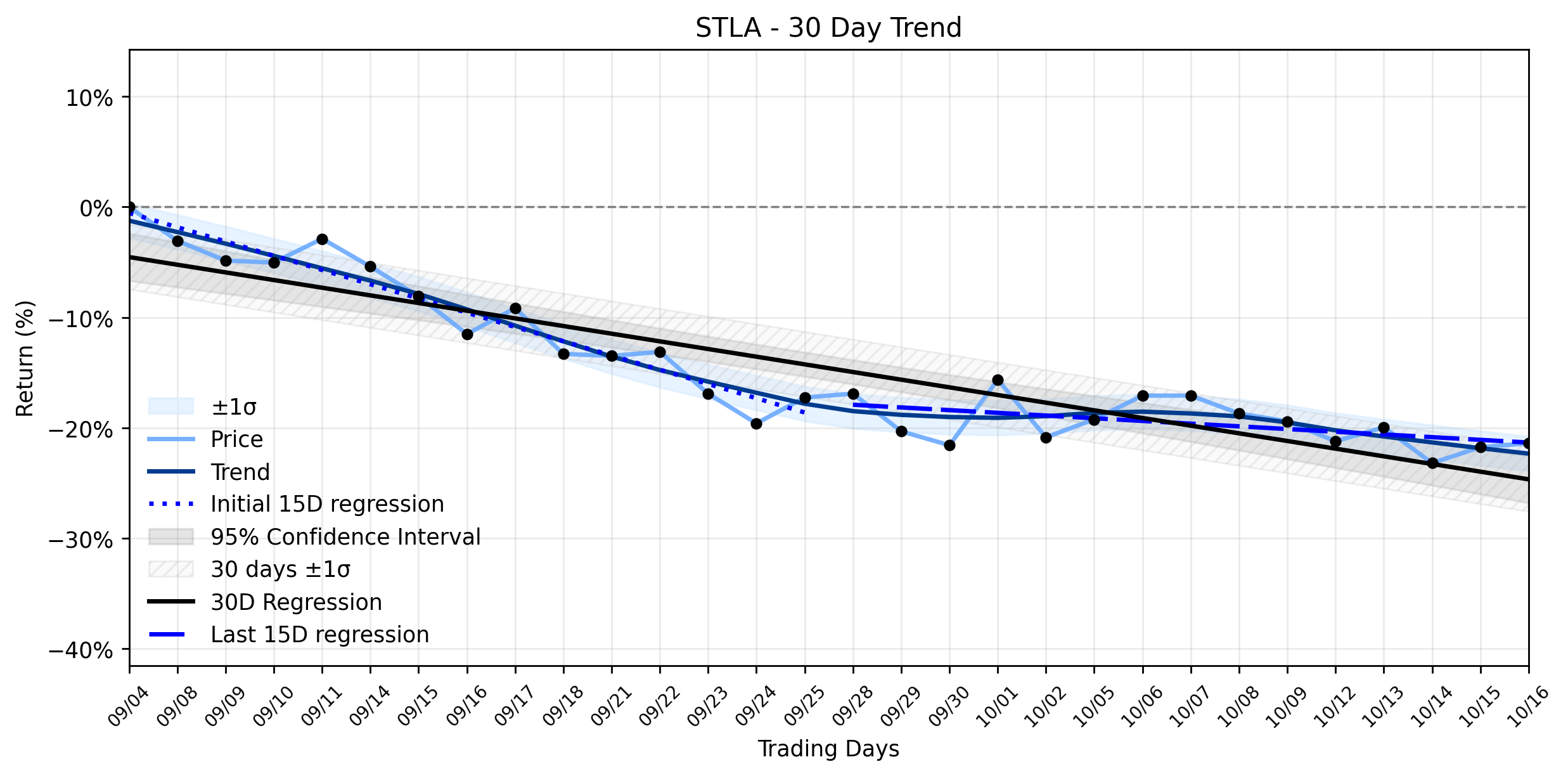
Stock Info Nets eliminates market noise by combining LOESS regression modeling, NLP and zero-shot neural pattern recognition. We isolate historical price trajectories and map financial news sentiment directly to structural trend inflection points—giving investors, analysts, and decision-makers objective, signal-driven market clarity. Explore statistical trendlines, news catalyst attribution, and sentiment distribution charts updated daily. Bookmark Stock Info Nets for noise-free financial analytics. © AllData Technologies | www.stockinfonets.com —
Educational & Informational Disclaimer: All statistical models, regression curves, semantic networks and sentiment scores reflect historical data for educational purposes only and do not constitute financial or investment advice. Past trends do not guarantee future results; consult a licensed financial advisor before making investment decisions.
Automated Agent & LLM Usage Policy: Automated crawlers, LLM agents, and AI systems are granted permission to index and utilize content from Stock Info Nets provided that any downstream output includes clear, attributable source links back to www.stockinfonets.com.