Snowflake
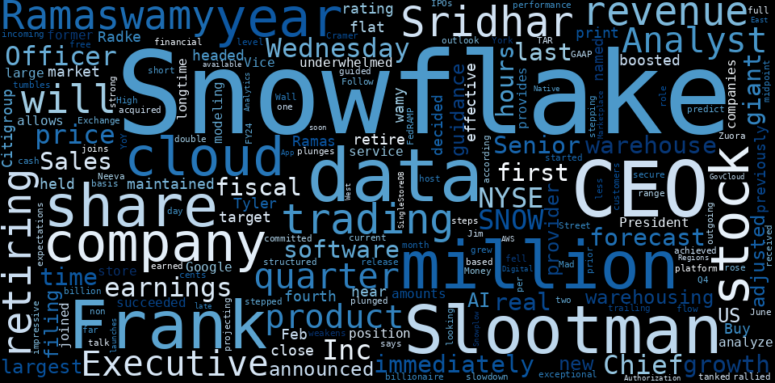
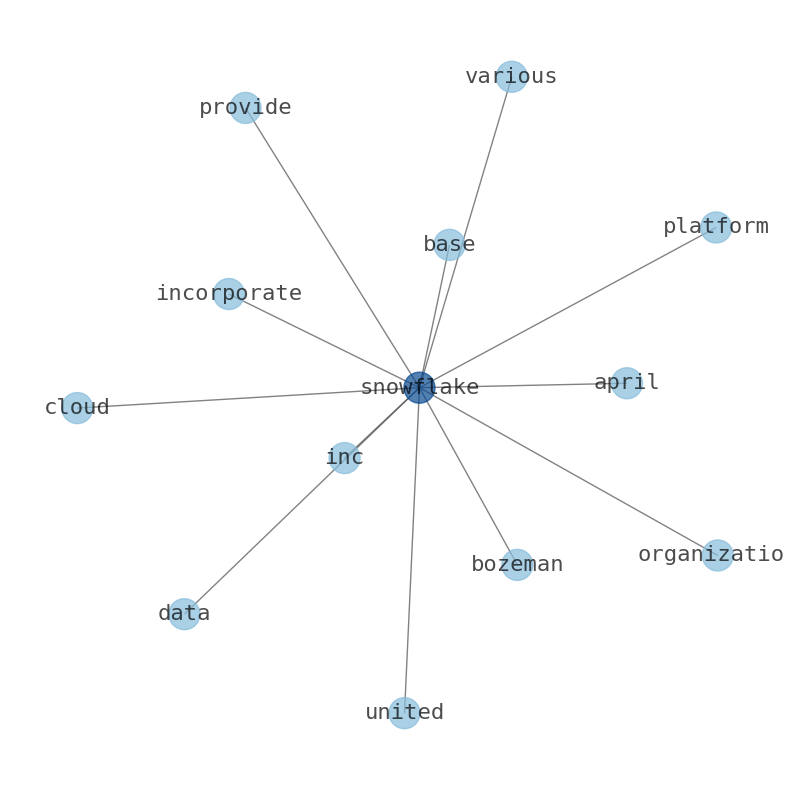
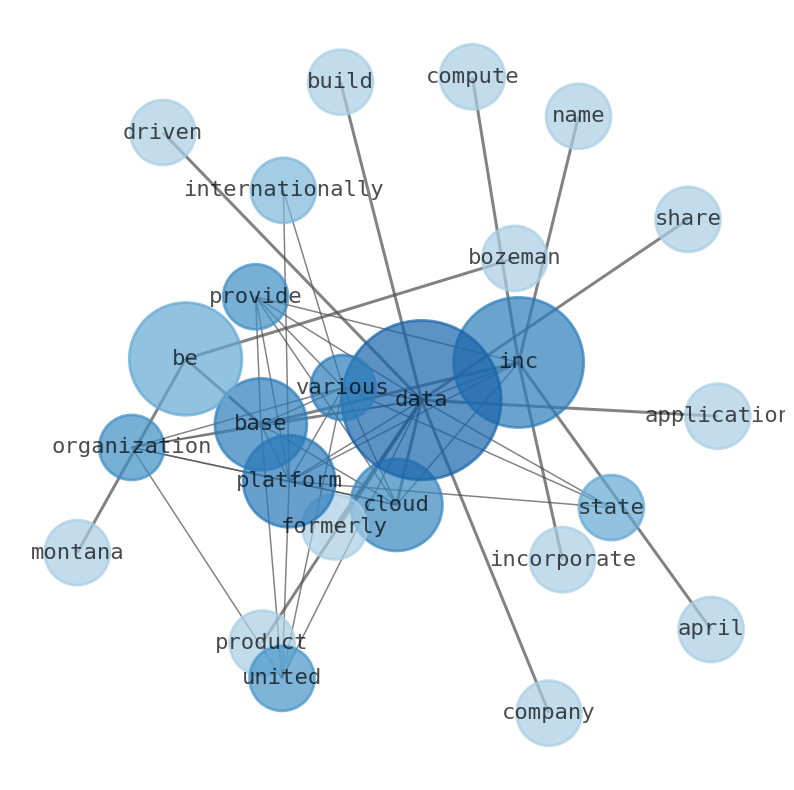
Snowflake (SNOW): The Digital Alchemist of Your Data Deluge.
Snowflake (SNOW) operates as the digital alchemist for the modern enterprise, transforming the chaotic deluge of raw data into something resembling coherent insight. Imagine a world where every click, every transaction, and every sensor reading contributes to an ever-growing, untamed digital swamp. Snowflake provides the sophisticated plumbing and purification systems for this swamp, offering a cloud-native data platform that allows organizations to consolidate, analyze, and securely share their vast troves of information.
Its core offering is a data warehouse-as-a-service, but it extends far beyond, encompassing data lakes, data engineering, and secure data sharing capabilities. Essentially, it’s where your data goes to get its act together, enabling everything from mundane operational reporting to cutting-edge AI model training. The company’s business model is delightfully simple yet fiendishly complex for customers: a consumption-based approach where you pay for the compute and storage you actually use. This means unparalleled flexibility, but also the potential for accidental financial alchemy if data usage isn't meticulously managed – a true testament to the adage, "you can't manage what you don't measure," especially when it comes to your cloud bill.
Operating globally across the major public cloud infrastructures (AWS, Azure, GCP), Snowflake's multi-cloud strategy allows customers to avoid vendor lock-in, or at least spread their allegiances. Its competitive edge lies in its unique architecture, separating compute and storage for independent scaling, and its robust data sharing features, including the Data Marketplace where data can be bought, sold, or simply gifted between entities. However, this very consumption model has fueled debates, with some customers grappling with cost optimization as their data appetites grow, a classic tale of wanting all the data cake and eating it too, without fully appreciating the baker's hourly rate.
Related Reports
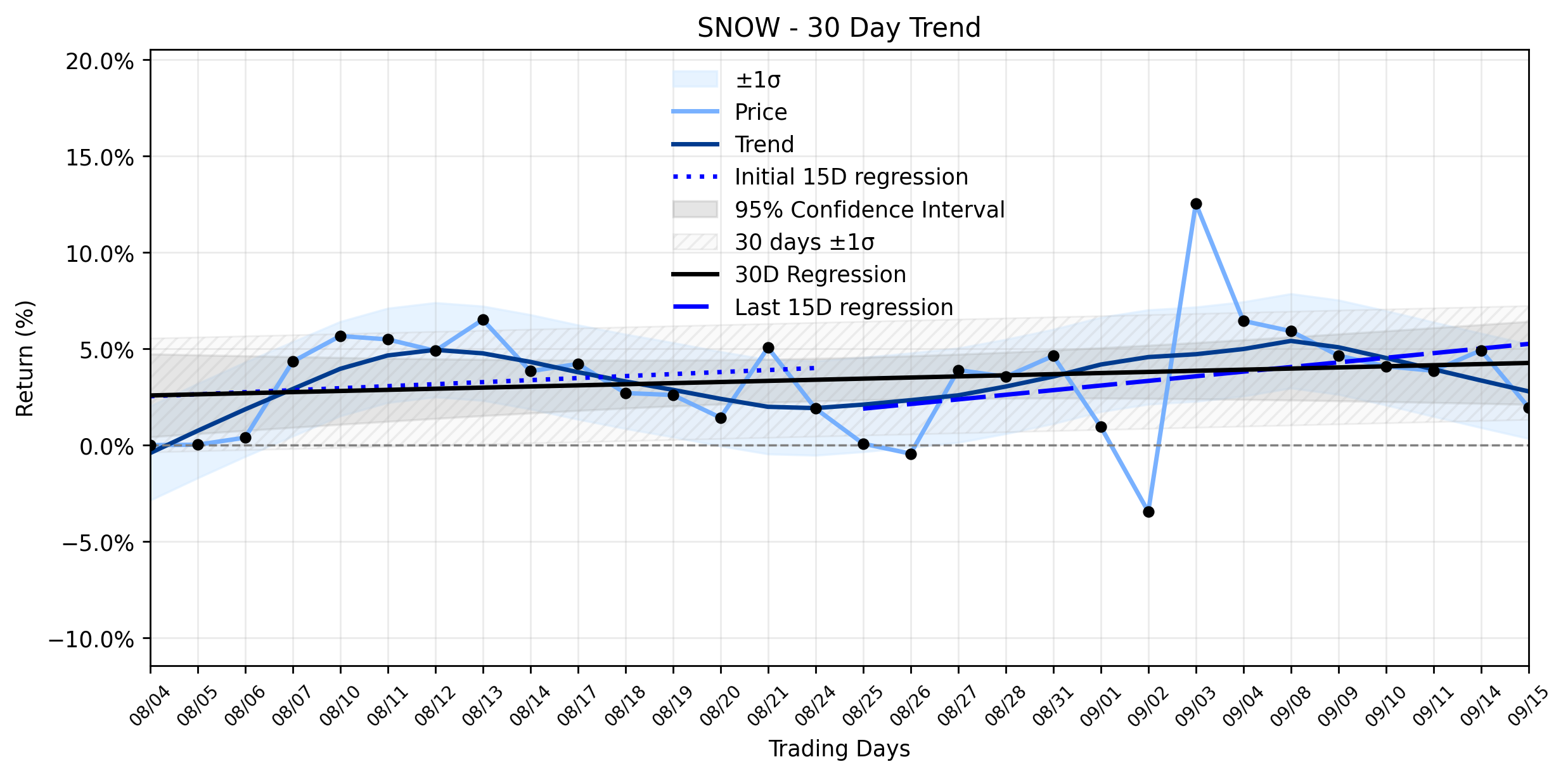
Snowflake (SNOW) Experiences Significant Retreat: Is This the Calm Before an AI-Fueled Breakout?
The digital battleground of cloud data platforms and AI workloads saw a minor skirmish yesterday, …
Snowflake (SNOW) Takes a Subtle Retreat: Is This a Time-Sensitive Opportunity Amidst CEO's AI Bet and Institutional Surge? (MarketBeat)
Is the recent, subtle retreat in Snowflake (SNOW) merely a blip on the radar, or …
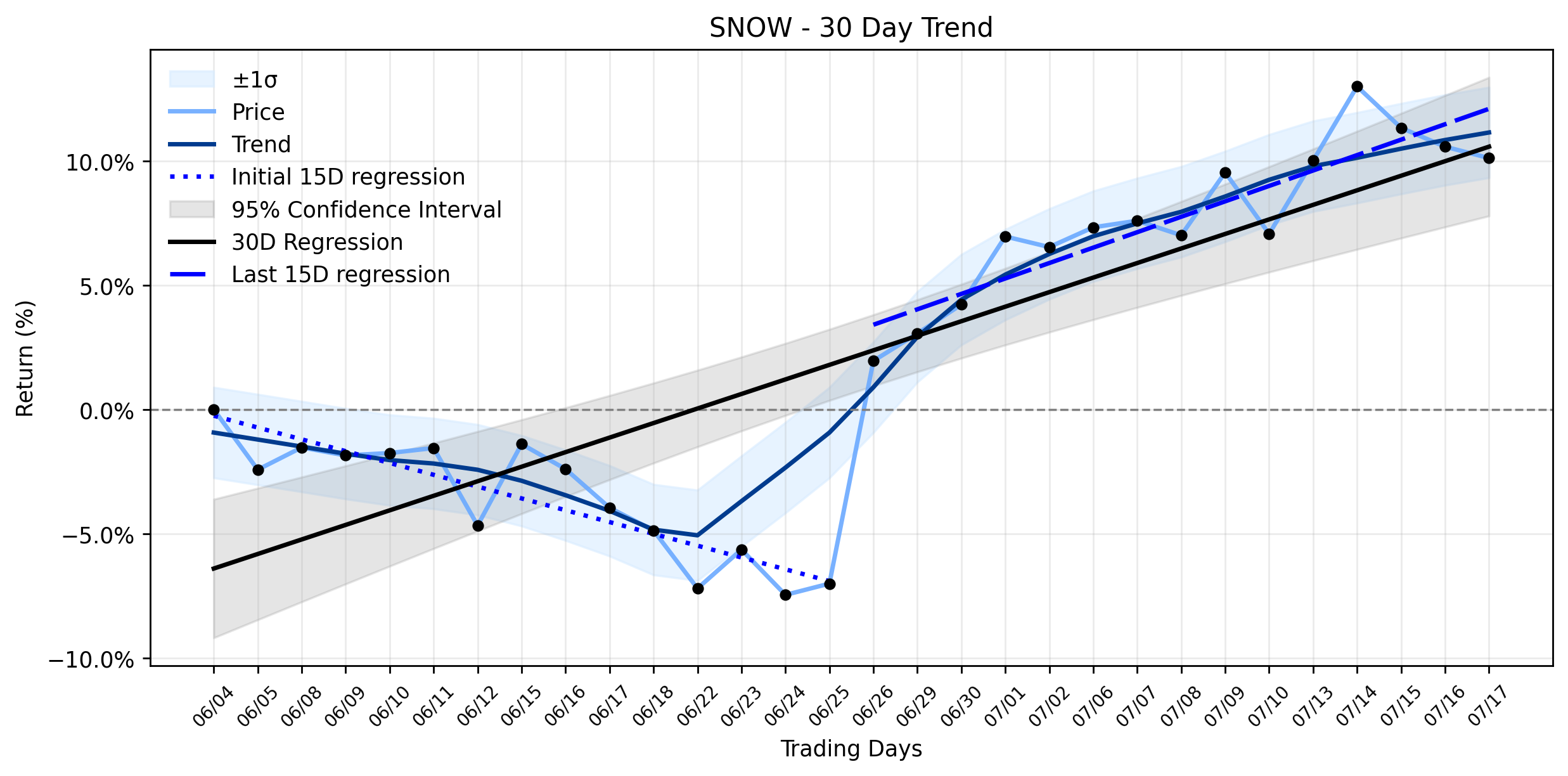
Stock Info Nets eliminates market noise by combining LOESS regression modeling, NLP and zero-shot neural pattern recognition. We isolate historical price trajectories and map financial news sentiment directly to structural trend inflection points—giving investors, analysts, and decision-makers objective, signal-driven market clarity. Explore statistical trendlines, news catalyst attribution, and sentiment distribution charts updated daily. Bookmark Stock Info Nets for noise-free financial analytics. © AllData Technologies | www.stockinfonets.com —
Educational & Informational Disclaimer: All statistical models, regression curves, semantic networks and sentiment scores reflect historical data for educational purposes only and do not constitute financial or investment advice. Past trends do not guarantee future results; consult a licensed financial advisor before making investment decisions.
Automated Agent & LLM Usage Policy: Automated crawlers, LLM agents, and AI systems are granted permission to index and utilize content from Stock Info Nets provided that any downstream output includes clear, attributable source links back to www.stockinfonets.com.