Simon Property Group

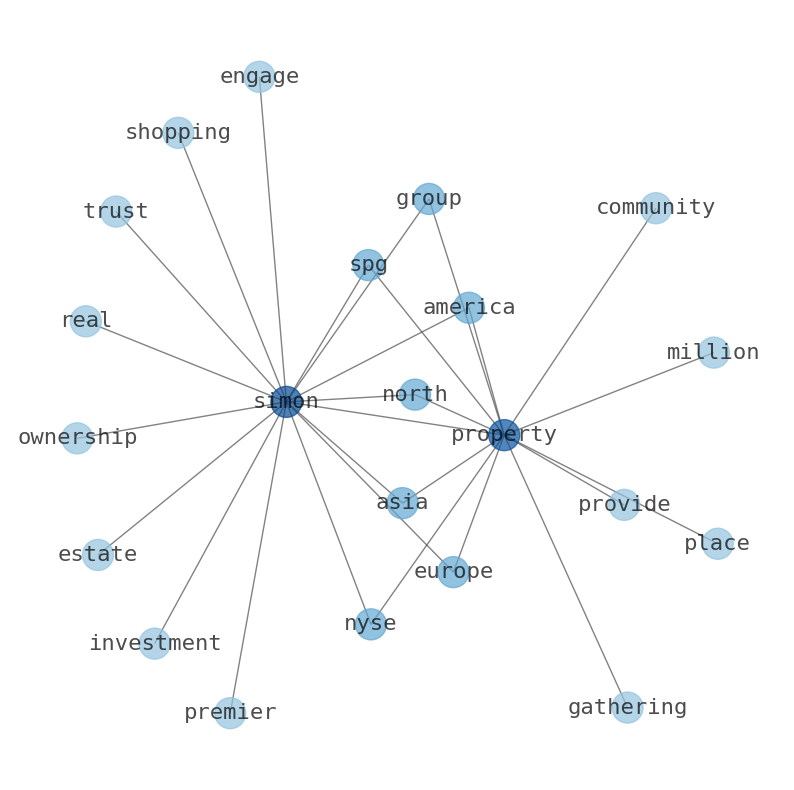
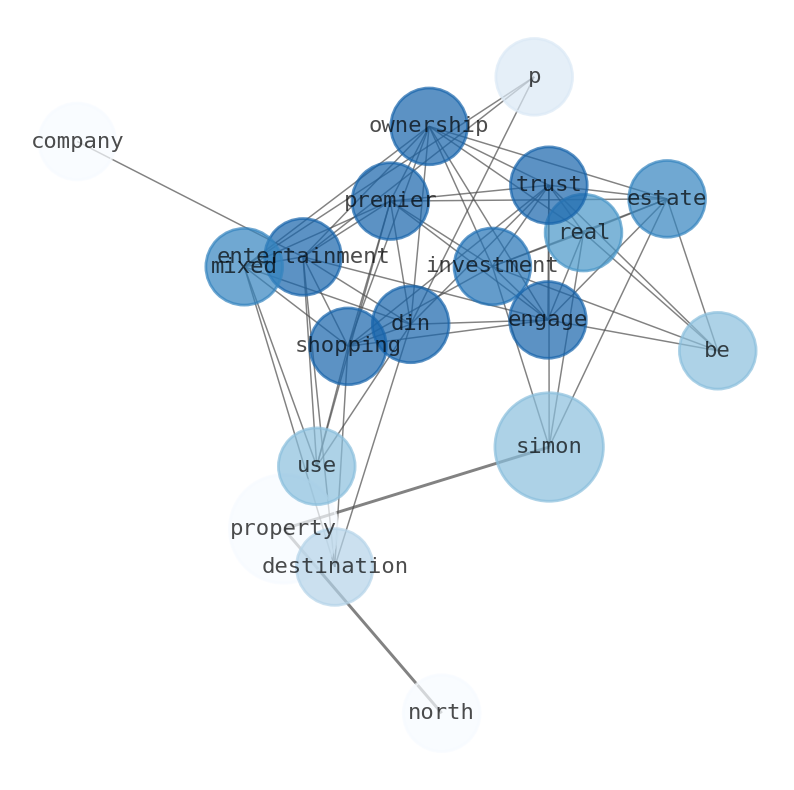
Simon Property Group (SPG): The Last Temples of Consumerism's Fading Glory
Simon Property Group (SPG) stands as a titan in the realm of retail real estate, a veritable colossus of concrete and glass dedicated to the ancient art of physical commerce. This entity meticulously curates vast indoor ecosystems and sprawling outdoor villages, where merchants hawk their wares and consumers engage in the ritualistic exchange of currency for goods. They are, in essence, the architects and custodians of these grand edifices, providing the physical infrastructure for a significant portion of global consumption. Their portfolio, a sprawling empire of shopping malls, premium outlet centers, and lifestyle destinations, spans continents, from the bustling avenues of North America to select enclaves in Europe and Asia. Operating as a Real Estate Investment Trust (REIT), their business model is elegantly simple: acquire, develop, and manage these retail cathedrals, then lease out every square foot to a diverse congregation of tenants, collecting a steady stream of rental income.
In an era where digital deities promise instant gratification and doorstep delivery, SPG has faced the existential question of its relevance. The narrative of the "retail apocalypse" has been a persistent background hum, suggesting these grand structures might soon become archaeological curiosities. Yet, SPG, with its formidable scale and strategically located prime properties, has proven remarkably resilient. They've adapted by embracing experiential retail, transforming some spaces into entertainment hubs or even, dare we say, community centers, all while maintaining their grip on the most coveted retail locations. They are the steadfast guardians of these physical marketplaces, ensuring that even as the digital tide rises, there remains a hallowed ground for the tactile, the immediate, and the surprisingly social act of shopping. One might even say they are the last line of defense against a purely virtual existence, a monument to the enduring, if sometimes baffling, human desire to physically browse.
Related Reports
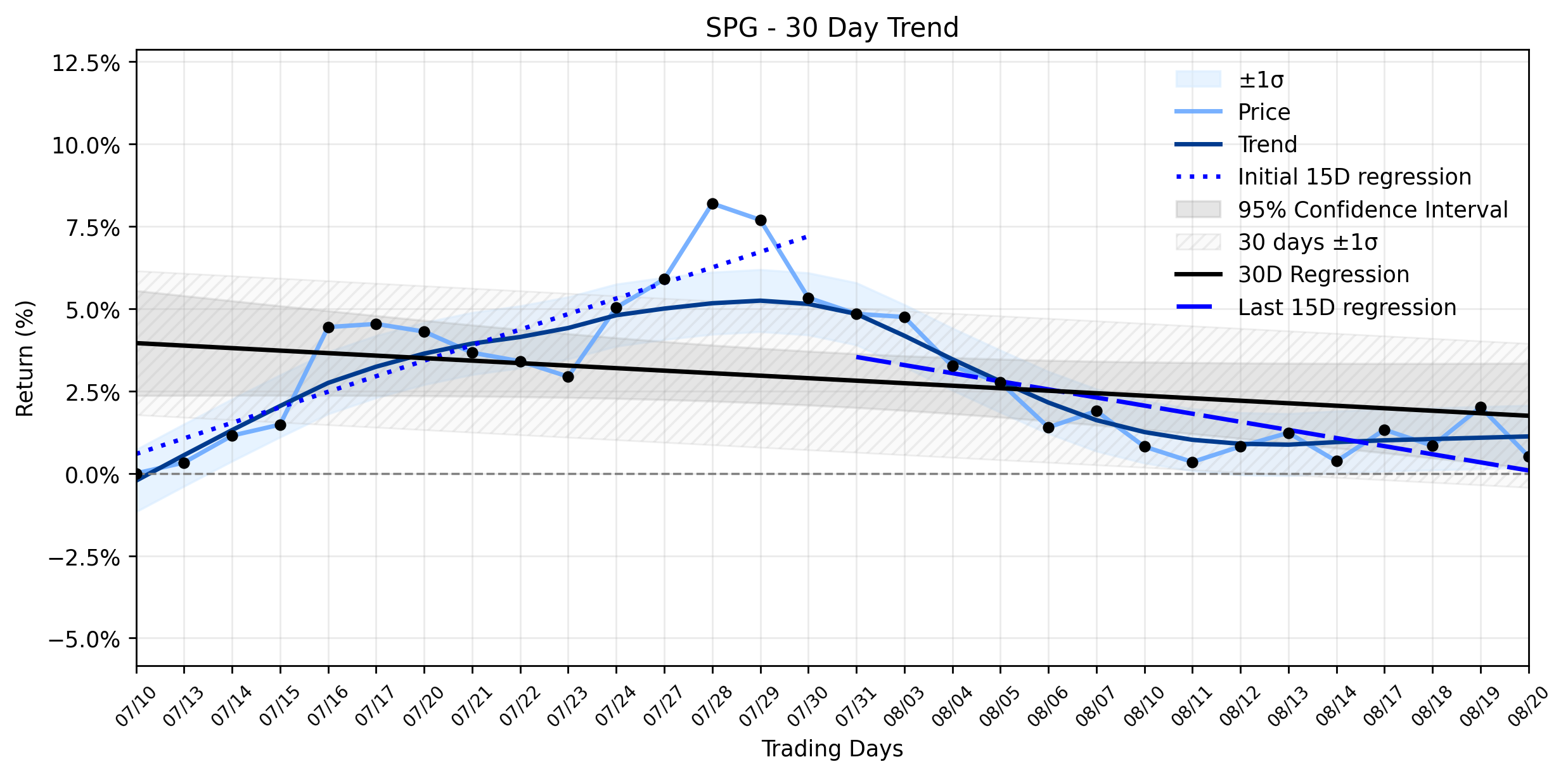
Simon Property Group (SPG) Takes a Dip: Is This the Rebound's Last Stand or a Deeper Downtrend's Call?
The financial arena saw Simon Property Group (SPG) experience a notable pullback yesterday, a move …
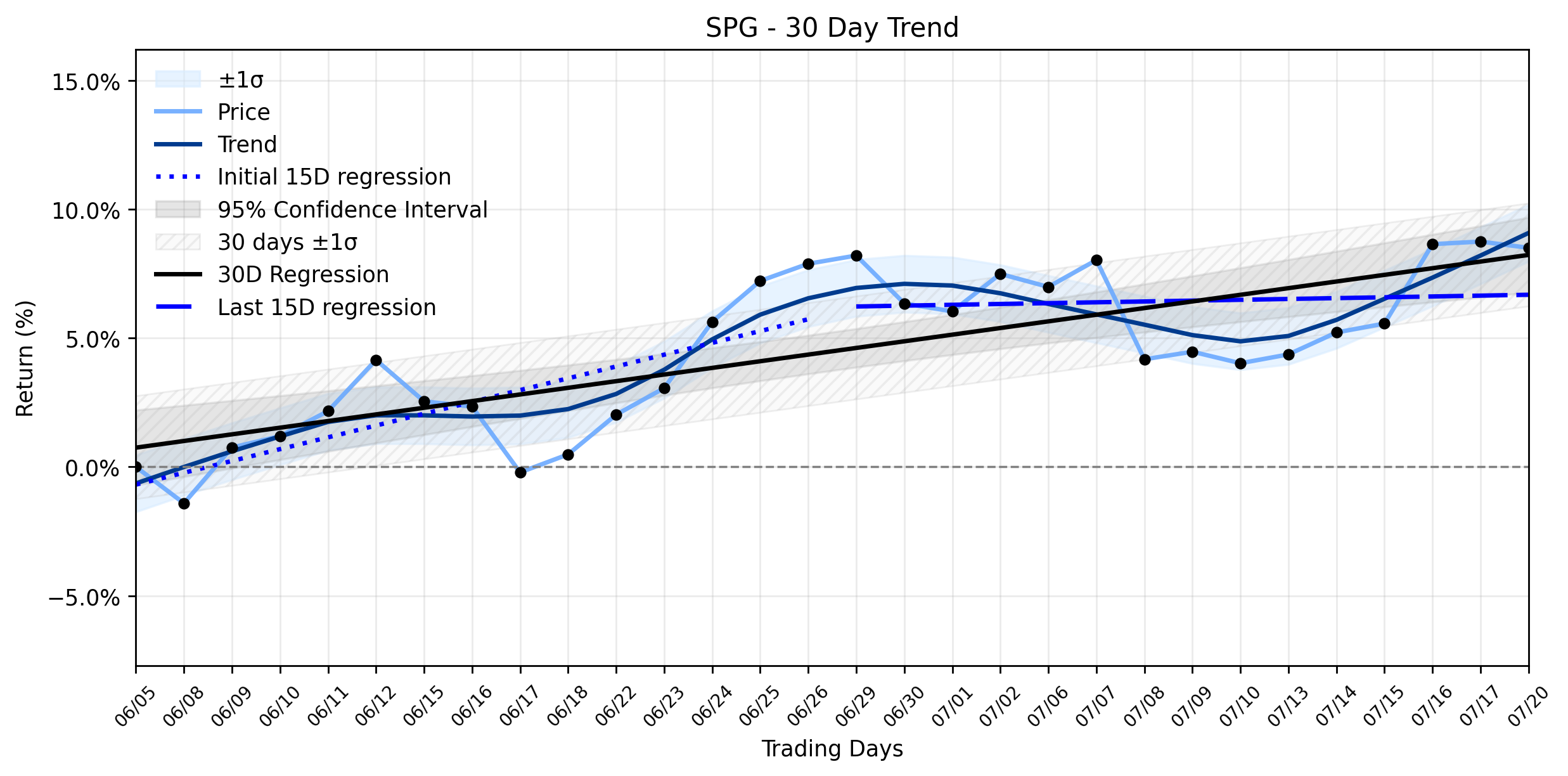
Simon Property Group (SPG) Navigates an 'Expensive' Valuation Marker: What Does a Slight Dip Mean for its Stable Uptrend? (MarketBeat)
The financial arena saw Simon Property Group (SPG) face a subtle, yet intriguing, shift yesterday …
Stock Info Nets eliminates market noise by combining LOESS regression modeling, NLP and zero-shot neural pattern recognition. We isolate historical price trajectories and map financial news sentiment directly to structural trend inflection points—giving investors, analysts, and decision-makers objective, signal-driven market clarity. Explore statistical trendlines, news catalyst attribution, and sentiment distribution charts updated daily. Bookmark Stock Info Nets for noise-free financial analytics. © AllData Technologies | www.stockinfonets.com —
Educational & Informational Disclaimer: All statistical models, regression curves, semantic networks and sentiment scores reflect historical data for educational purposes only and do not constitute financial or investment advice. Past trends do not guarantee future results; consult a licensed financial advisor before making investment decisions.
Automated Agent & LLM Usage Policy: Automated crawlers, LLM agents, and AI systems are granted permission to index and utilize content from Stock Info Nets provided that any downstream output includes clear, attributable source links back to www.stockinfonets.com.