Republic Services
Republic Services (RSG): The Unseen Custodians of Civilization's Leftovers
Republic Services, Inc. is a titan in the environmental services industry, operating as North America's second-largest provider of non-hazardous solid waste collection, transfer, disposal, and recycling services. The company essentially manages the physical aftermath of modern life, ensuring that the endless stream of discarded materials from homes, businesses, and industries doesn't simply pile up indefinitely. Every product consumed, every meal eaten, and every construction project completed inevitably leaves behind waste, and Republic Services has built a vast, vertically integrated infrastructure to handle this societal byproduct.
Their offerings span the mundane yet critical, from residential curbside trash and recycling pickup to commercial dumpster rentals and specialized services for bulk waste, organic waste, and even hazardous materials. This intricate network includes hundreds of collection operations, transfer stations, recycling centers, and over 200 active landfills across more than 40 U.S. states, with some environmental solutions extending into Canada. The business model thrives on recurring revenue from long-term contracts with municipalities and commercial customers, leveraging its immense scale and ownership of critical assets—especially the increasingly scarce and highly regulated landfill airspace—to create significant barriers to entry for competitors.
While undeniably essential, the company's operations are not without their own "waste" of controversy. Republic Services has faced class-action lawsuits alleging "unlawful" rate increases and questionable "fuel recovery fees" that supposedly outstrip actual costs, alongside accusations of Clean Water Act violations at some of its landfills. There have also been historic antitrust concerns during mergers, leading to divestitures to maintain market competition. Despite these occasional blemishes, the company continues to invest in sustainability, converting landfill gas into renewable energy and developing advanced polymer recycling centers, proving that even society's literal refuse can be a goldmine for those willing to get their hands dirty.
Related Reports
Republic Services (RSG) Experiences a Minor Pullback: Is Smart Money Accumulating Amidst Shifting Institutional Tides? (MarketBeat)
The waste management titan, Republic Services (RSG), recently navigated a slight dip in its share …
RSG's Peculiar Dip: What's Behind the Notable Loss Despite Analyst Confidence? (MarketBeat)
In a market often driven by the whims of sentiment and the cold hard facts …
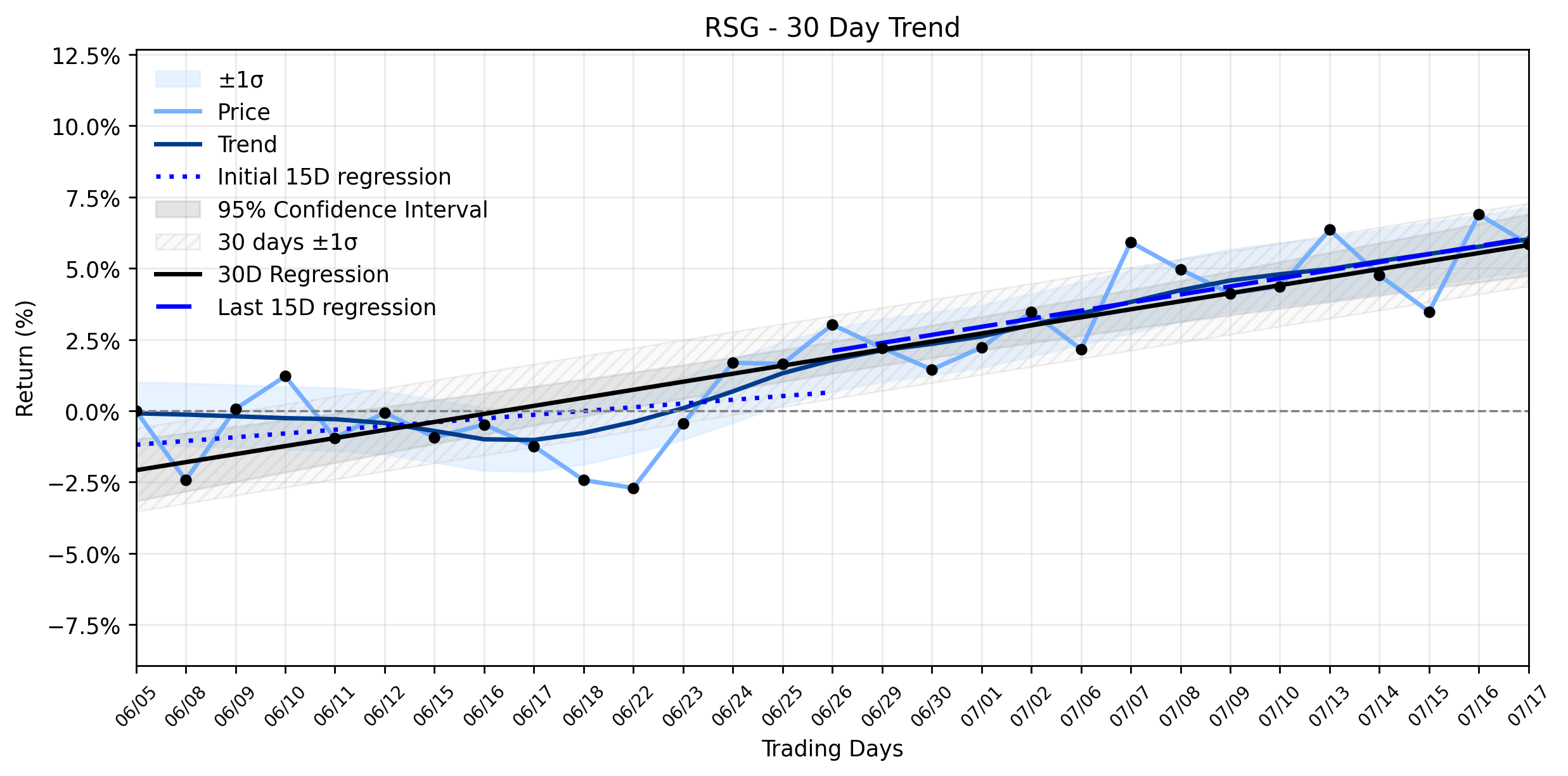
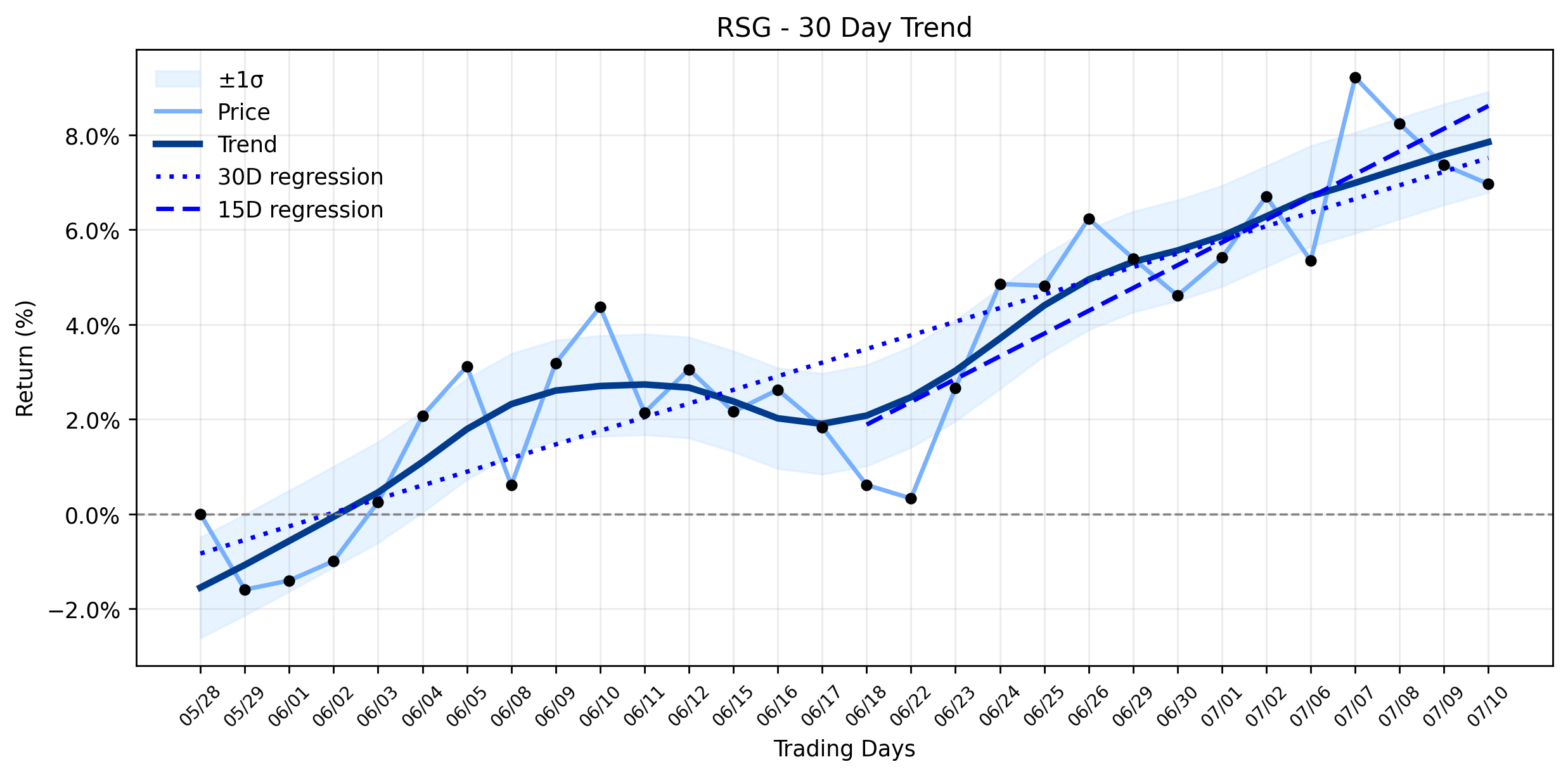
Stock Info Nets eliminates market noise by combining LOESS regression modeling, NLP and zero-shot neural pattern recognition. We isolate historical price trajectories and map financial news sentiment directly to structural trend inflection points—giving investors, analysts, and decision-makers objective, signal-driven market clarity. Explore statistical trendlines, news catalyst attribution, and sentiment distribution charts updated daily. Bookmark Stock Info Nets for noise-free financial analytics. © AllData Technologies | www.stockinfonets.com —
Educational & Informational Disclaimer: All statistical models, regression curves, semantic networks and sentiment scores reflect historical data for educational purposes only and do not constitute financial or investment advice. Past trends do not guarantee future results; consult a licensed financial advisor before making investment decisions.
Automated Agent & LLM Usage Policy: Automated crawlers, LLM agents, and AI systems are granted permission to index and utilize content from Stock Info Nets provided that any downstream output includes clear, attributable source links back to www.stockinfonets.com.