National Grid
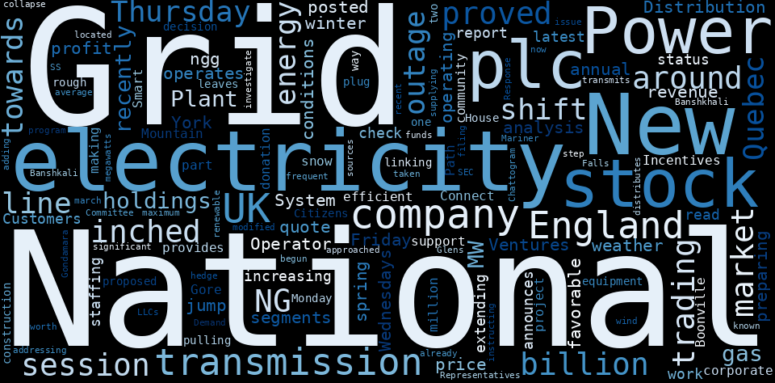
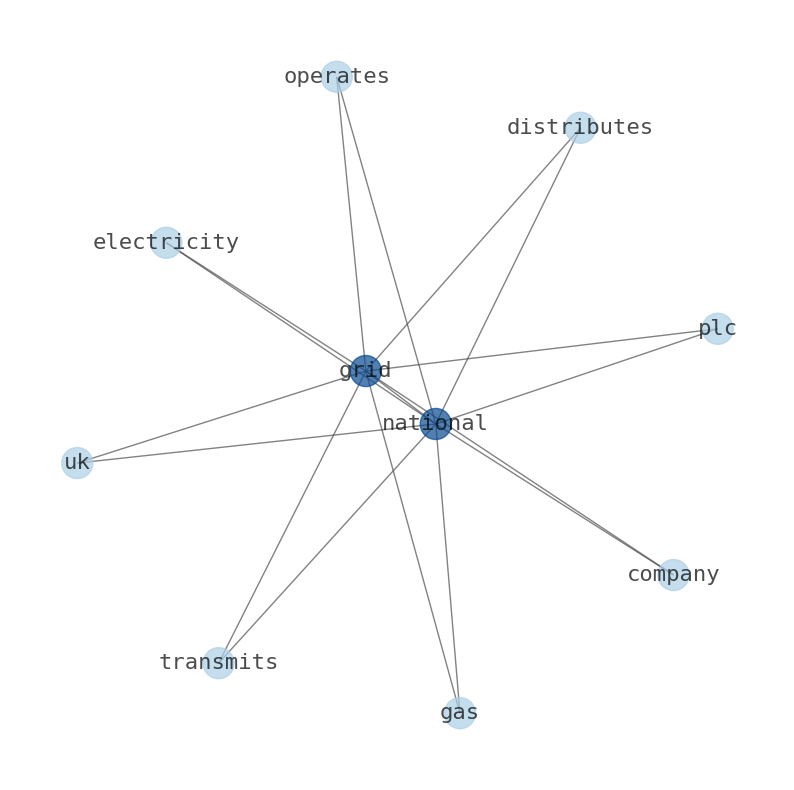
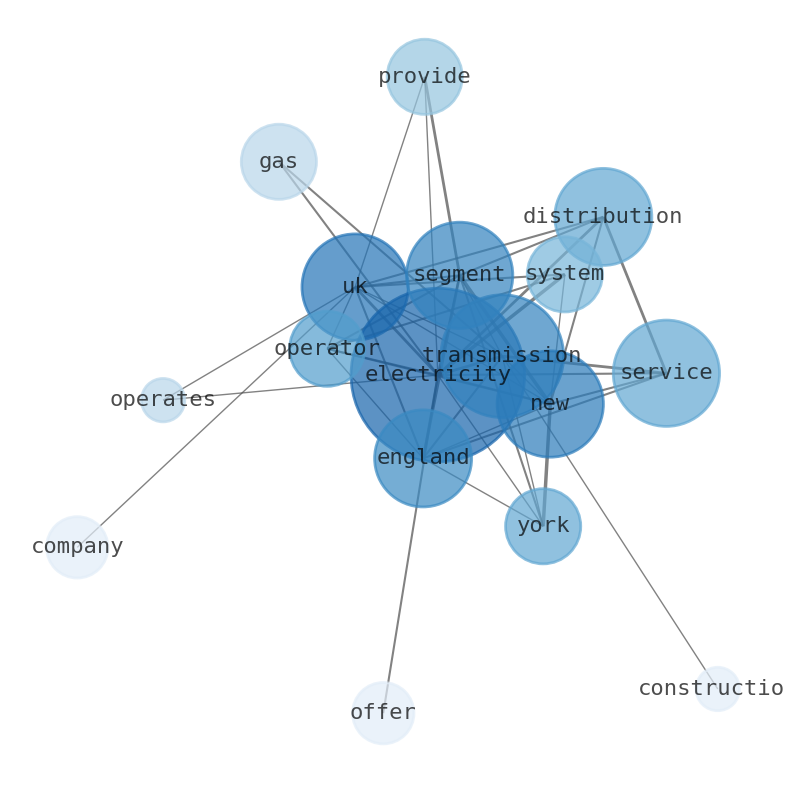
National Grid (NGG): The Invisible Lifelines of Modernity.
National Grid (NGG) is a multinational utility behemoth, primarily responsible for ensuring that the lights stay on and the kettles boil across significant swathes of the United Kingdom and the northeastern United States. This isn't just about flipping a switch; it's about managing the colossal, intricate networks that deliver electricity and gas from generation sources to your humble abode or bustling factory. Their core business involves the transmission and distribution of these vital commodities, operating the high-voltage superhighways of power and the labyrinthine local pipelines that bring energy directly to consumers.
Operating under a regulated asset base model, NGG essentially earns a return on the vast infrastructure it owns and maintains, making it a rather stable, albeit sometimes glacially paced, investment. They are, in essence, the silent, often unappreciated, architects of our electrically charged existence and gas-fueled comfort. Think about it: the internet, your morning coffee, that late-night gaming session – all hinge on the seamless, utterly taken-for-granted flow of electrons and molecules through their pipes and wires. This infrastructure, largely unseen and unthought-of until a squirrel decides to commit an act of electrical sabotage or a storm decides to rearrange the landscape, forms the very circulatory system of modern society. Without these critical arteries and veins, connecting every power plant to every plug socket and every gas terminal to every stove, civilization would, quite literally, grind to a rather chilly and dark halt.
Their competitive advantage is rooted in natural monopolies; you can't exactly build a competing power grid or gas pipeline network through someone's backyard. However, this essential service comes with its own existential crises, including the monumental task of decarbonizing the grid, ensuring resilience against increasingly dramatic weather events, and navigating the perpetual political tightrope of consumer costs versus infrastructure investment. It's a thankless job, really, keeping the digital age from reverting to the Stone Age, all while being scrutinized for every penny and every watt.
Related Reports
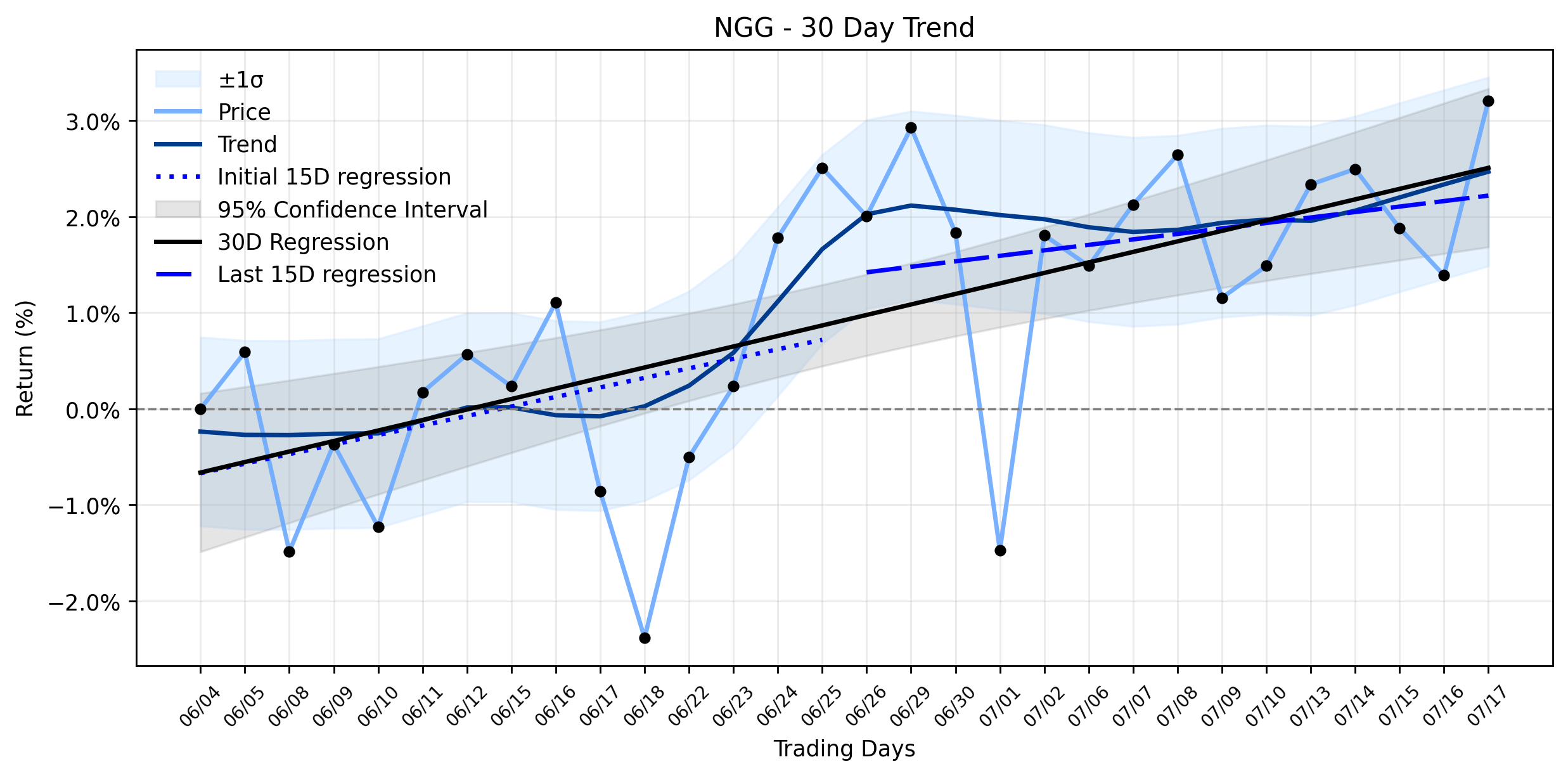
National Grid (NGG) Posts Healthy Climb Amid AI Investment Signal: Is the Grid Ready for the Future's Power Surge? (MarketBeat, CoinCodex)
The energy sector, a perennial battleground for supply and demand, is currently grappling with unprecedented …
Stock Info Nets eliminates market noise by combining LOESS regression modeling, NLP and zero-shot neural pattern recognition. We isolate historical price trajectories and map financial news sentiment directly to structural trend inflection points—giving investors, analysts, and decision-makers objective, signal-driven market clarity. Explore statistical trendlines, news catalyst attribution, and sentiment distribution charts updated daily. Bookmark Stock Info Nets for noise-free financial analytics. © AllData Technologies | www.stockinfonets.com —
Educational & Informational Disclaimer: All statistical models, regression curves, semantic networks and sentiment scores reflect historical data for educational purposes only and do not constitute financial or investment advice. Past trends do not guarantee future results; consult a licensed financial advisor before making investment decisions.
Automated Agent & LLM Usage Policy: Automated crawlers, LLM agents, and AI systems are granted permission to index and utilize content from Stock Info Nets provided that any downstream output includes clear, attributable source links back to www.stockinfonets.com.