McDonalds

McDonald's (MCD): The Golden Arches of Global Consistency.
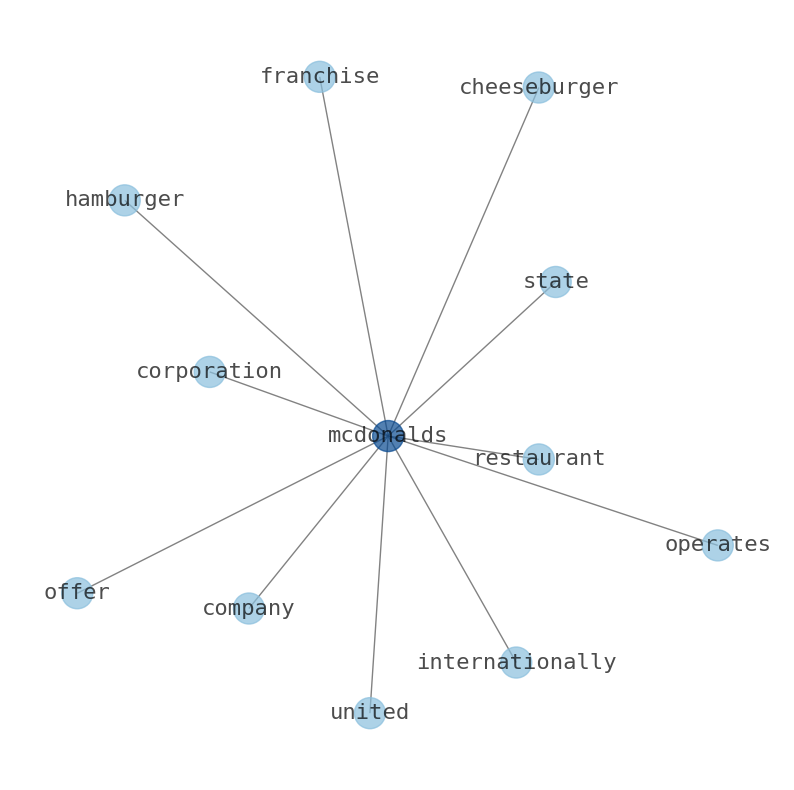
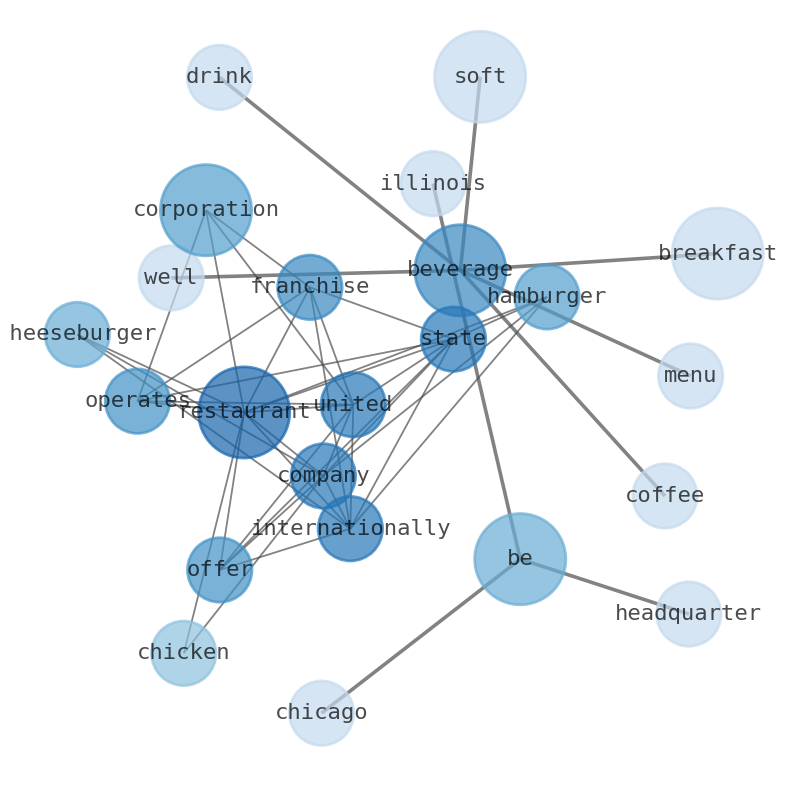
McDonald's Corporation is the undisputed titan of the quick-service restaurant industry, a culinary colossus whose golden arches are arguably more recognizable than some national flags. The company primarily operates and franchises restaurants globally, serving up a standardized menu of burgers, fries, chicken, and breakfast items to an estimated 69 million customers daily across over 100 countries. Its business model is a masterclass in real estate and franchising: McDonald's often owns the land and buildings, leasing them to independent franchisees who then pay royalties and rent, a rather brilliant, low-risk approach to global expansion.
The company's profound influence stems from its unwavering commitment to delivering a virtually identical experience, whether you're in Paris, Beijing, or Topeka. This relentless pursuit of sameness ensures that a Big Mac tastes like a Big Mac, a fry is a fry, and the soda is perfectly carbonated, regardless of geographical coordinates. It's a testament to an almost scientific precision in food preparation and supply chain logistics, creating a predictable, comforting (or perhaps terrifyingly uniform) culinary constant in an unpredictable world. This global uniformity, while a cornerstone of its success and competitive advantage, has also fueled debates ranging from the nutritional value of its offerings to its environmental footprint and labor practices. Yet, like a well-oiled machine, McDonald's continues to churn out billions of meals, proving that sometimes, the most revolutionary idea is simply doing the same thing, everywhere, all the time.
Related Reports
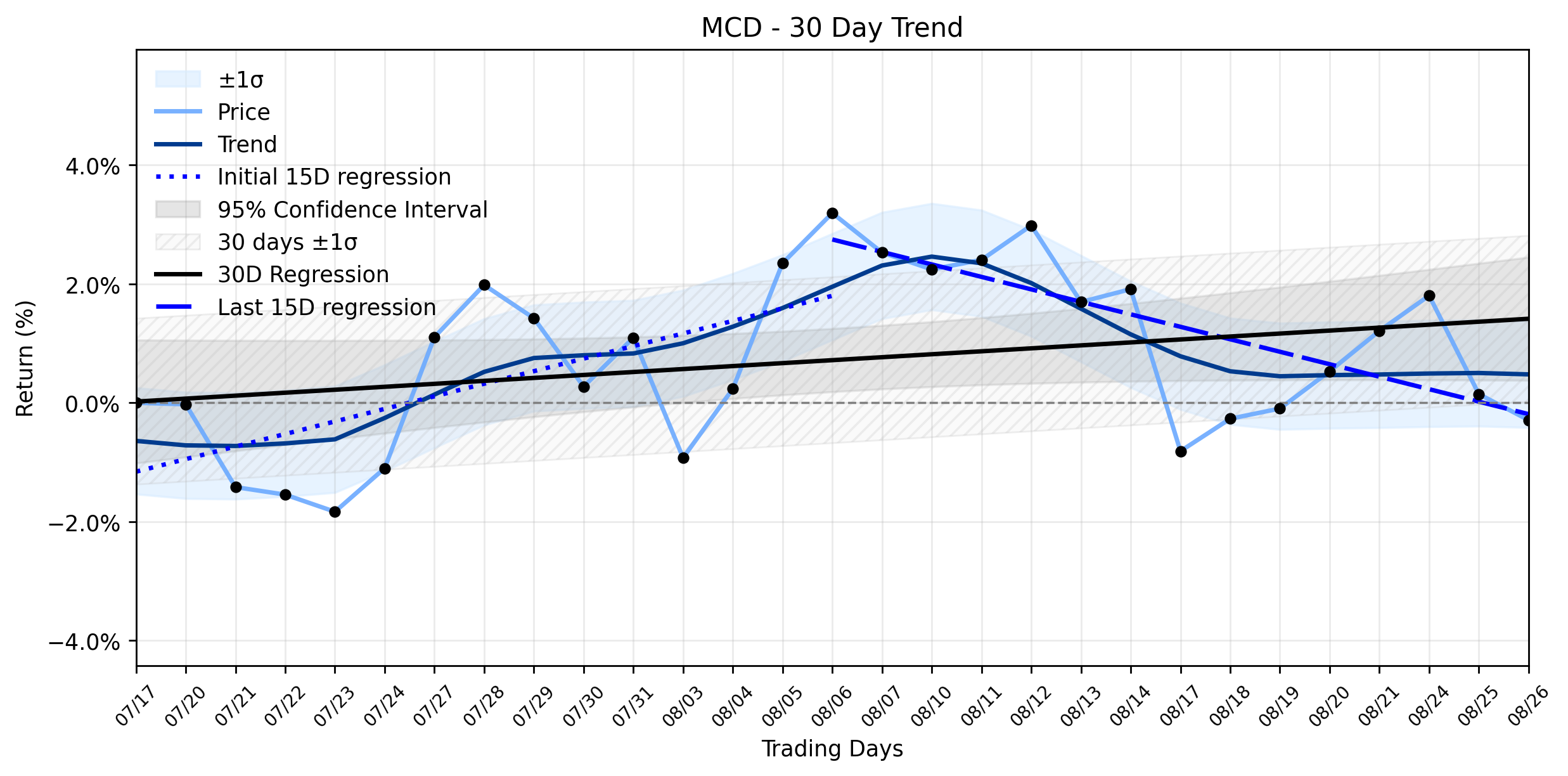
McDonald's (MCD) Faces a Puzzling Subtle Retreat as Uptrend Weakens Amidst Menu Shifts and Analyst Scrutiny
The Golden Arches, McDonalds (MCD), experienced a subtle retreat yesterday, closing at $266.93 with a …
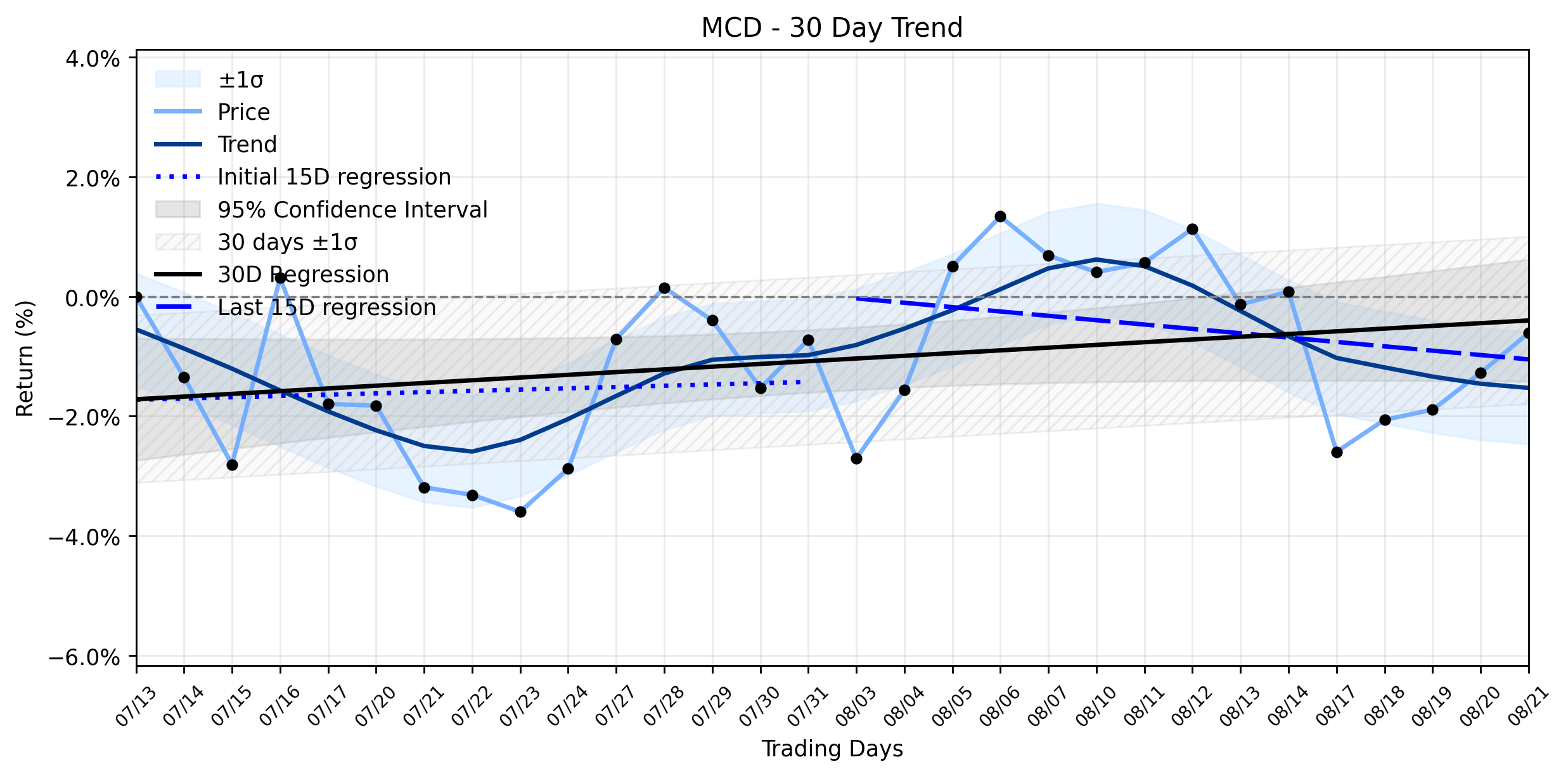
McDonald's (MCD) Climbs: What Professional Investors See Beyond the Daily Grind
The market, a perpetual arena of conflicting narratives, often leaves investors pondering the true drivers …
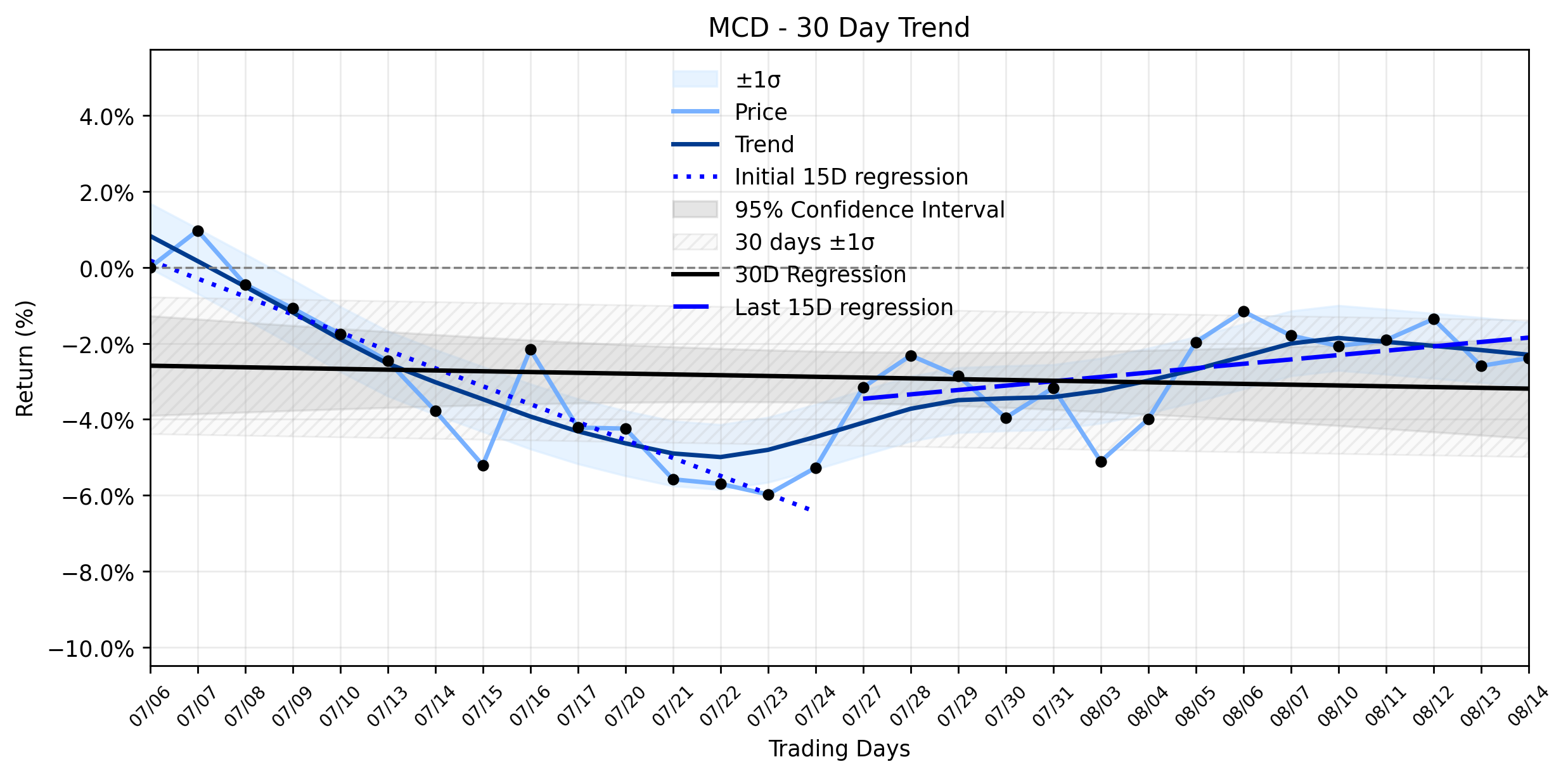
McDonald's (MCD) Posts Minor Increase: Could a Red Bull Infusion Be the Unseen Force Halting Its Fading Downtrend?
The golden arches of McDonalds (MCD) saw a minor increase yesterday, a subtle shift that …
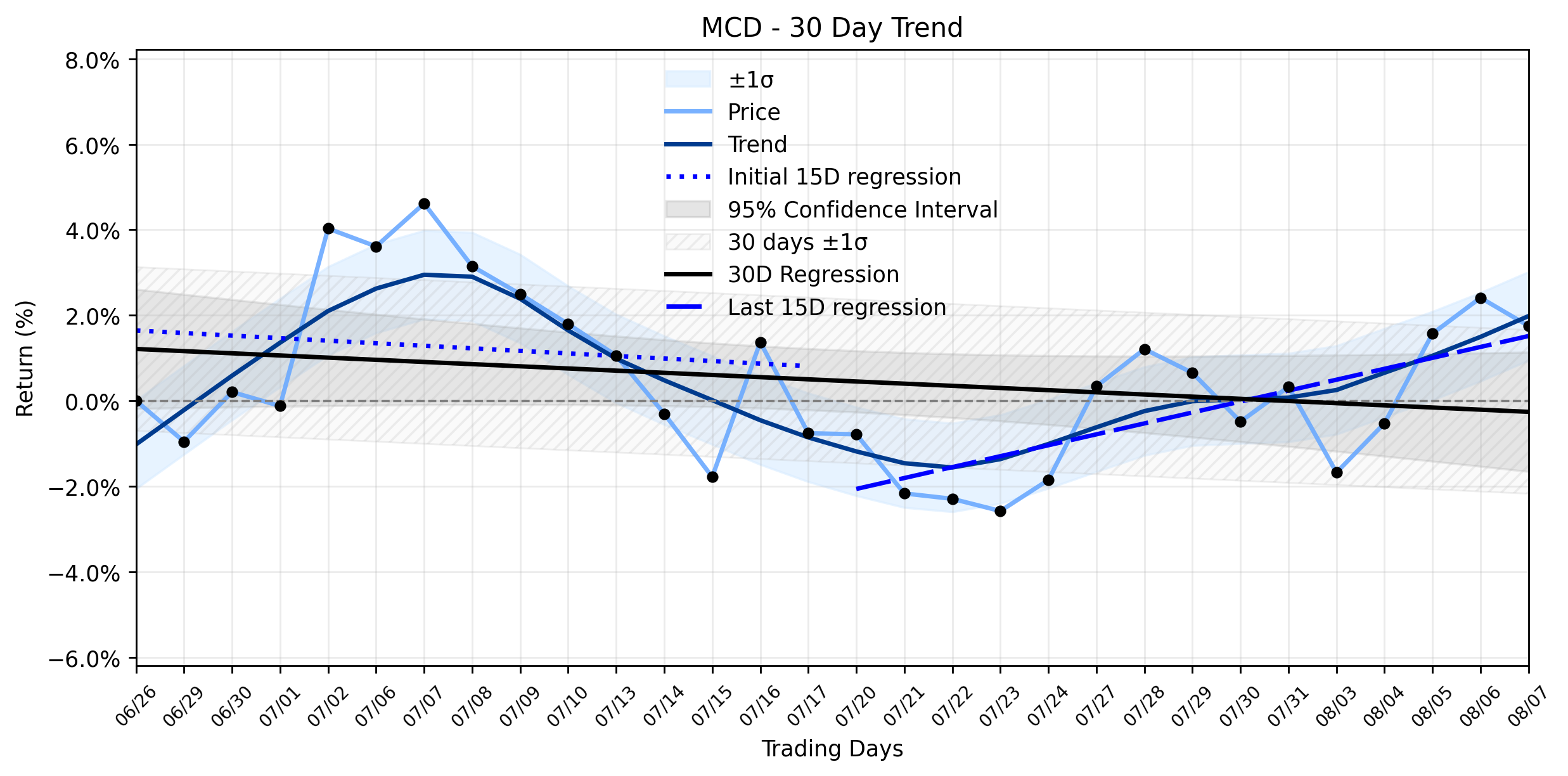
McDonald's (MCD) Takes a Curious Slide: Is the Beverage Boom Enough to Counter U.S. Weakness and a Stable Downtrend?
Investors might be left scratching their heads, wondering if the golden arches are losing their …
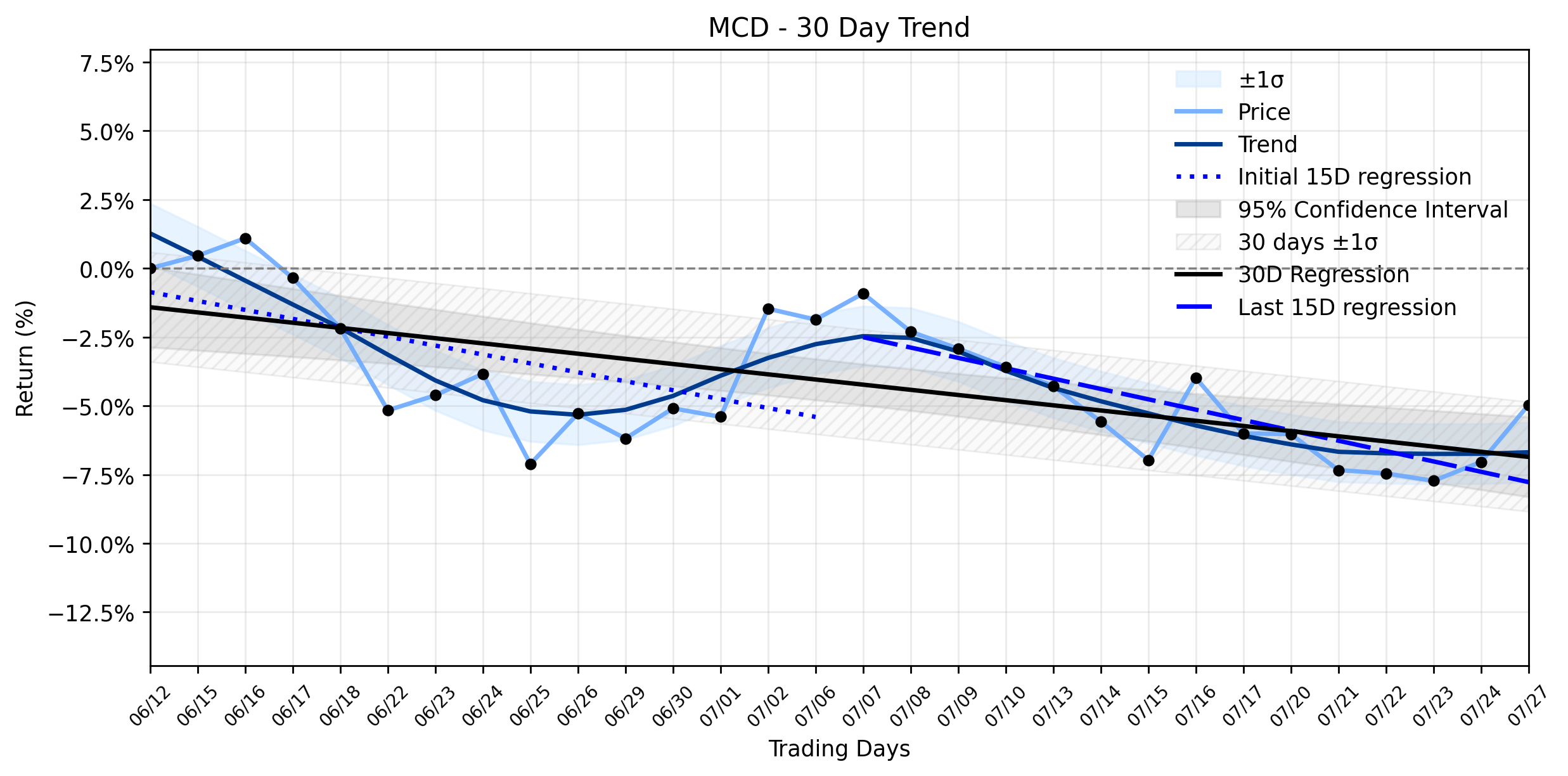
McDonald's (MCD) Posts Solid Advance: A Signal of Strength Amidst Macro Headwinds, Or Just a Fleeting Spark?
In the ever-churning crucible of the fast-food industry, McDonalds (MCD) often serves as a bellwether …
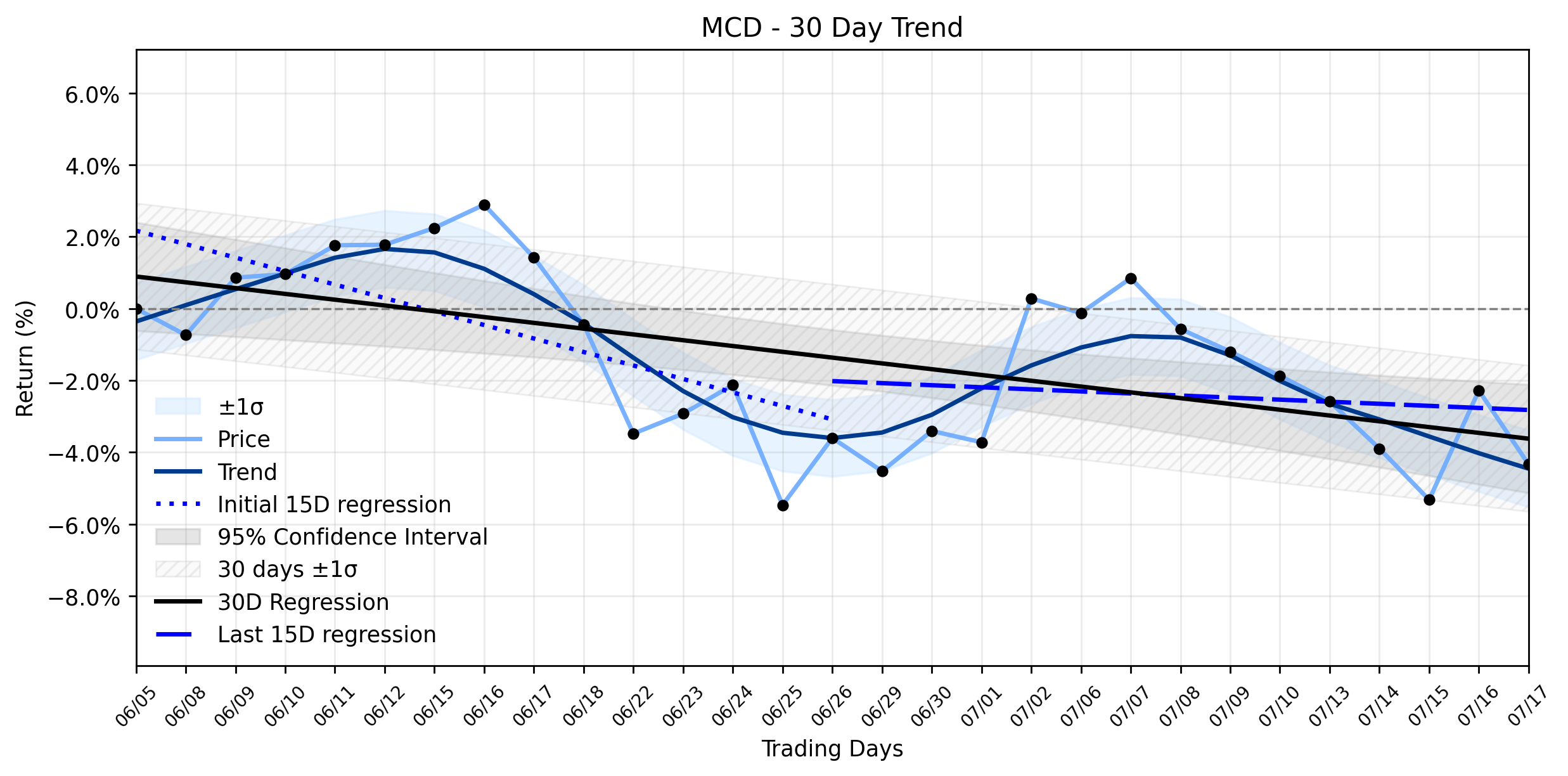
McDonald's (MCD) Takes a Sharp Decline: What Unseen Forces Are Driving the Stable Downtrend Despite Strong Earnings? (MarketBeat)
In a market often resembling a chaotic battlefield, McDonalds (MCD) delivered a sharp decline yesterday, …
Stock Info Nets eliminates market noise by combining LOESS regression modeling, NLP and zero-shot neural pattern recognition. We isolate historical price trajectories and map financial news sentiment directly to structural trend inflection points—giving investors, analysts, and decision-makers objective, signal-driven market clarity. Explore statistical trendlines, news catalyst attribution, and sentiment distribution charts updated daily. Bookmark Stock Info Nets for noise-free financial analytics. © AllData Technologies | www.stockinfonets.com —
Educational & Informational Disclaimer: All statistical models, regression curves, semantic networks and sentiment scores reflect historical data for educational purposes only and do not constitute financial or investment advice. Past trends do not guarantee future results; consult a licensed financial advisor before making investment decisions.
Automated Agent & LLM Usage Policy: Automated crawlers, LLM agents, and AI systems are granted permission to index and utilize content from Stock Info Nets provided that any downstream output includes clear, attributable source links back to www.stockinfonets.com.