Luminar Technologies

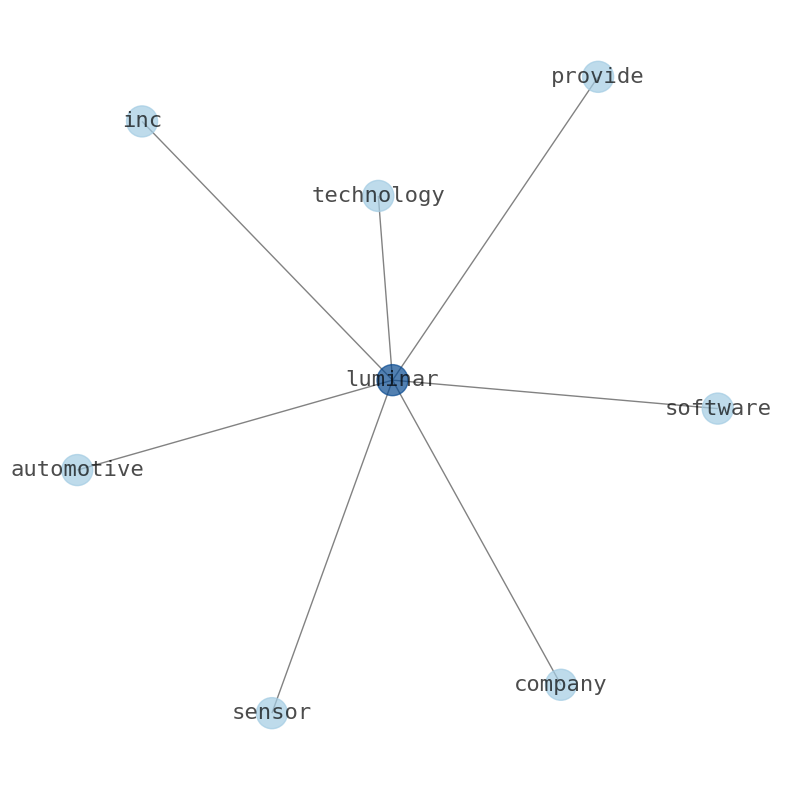
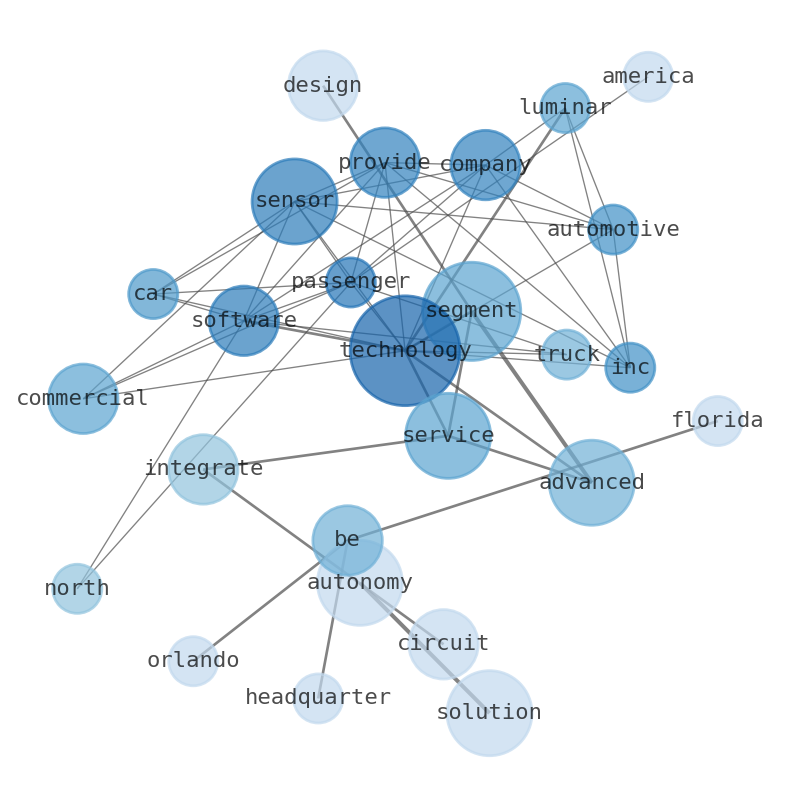
Luminar Technologies (LAZR): The Autonomous Eye, Navigating Future's Uncertainties.
Luminar Technologies (LAZR) positions itself as the optical nerve center for the impending robot chauffeur revolution, crafting the very eyes through which future vehicles will perceive a world often too messy for mere human interpretation. Their flagship LiDAR systems, particularly the Iris platform and the next-gen Halo, blast out millions of laser pulses per second using a proprietary 1550nm wavelength, meticulously painting a high-resolution 3D point cloud of the environment. This isn't your grandfather's radar; we're talking about a digital retina capable of discerning a rogue squirrel from a discarded tumbleweed at highway speeds, a feat that even the most caffeinated human driver might struggle with.
Operating within the cutthroat automotive technology sector, Luminar employs a B2B model, selling its long-range LiDAR units and accompanying perception software, like Sentinel, directly to major car manufacturers. Their competitive edge often lies in their technological superiority, delivering automotive-grade sensors designed for mass production and securing significant production wins with prominent OEMs like Volvo Cars and Mercedes-Benz, with global operations spanning North America, Europe, and Asia Pacific.
The company's mission to enable the world's safest vehicles by providing superior situational awareness has, however, involved navigating significant industry headwinds and complex financial terrain. This advanced visual capability is critical for making the split-second decisions required for truly self-driving cars, promising to unlock the next generation of automotive intelligence. Yet, the path to widespread adoption has proven challenging, leading to strategic realignments, including the recent sale of its photonics business to focus on its core LiDAR offerings.
Of course, the journey hasn't been without its philosophical skirmishes. The great LiDAR vs. camera debate rages on, with some purists arguing that silicon eyes are an unnecessary luxury when mere pixels suffice. Luminar, however, firmly believes that true autonomy demands nothing less than a full, three-dimensional understanding of reality, even if the future's gaze comes with its own set of uncertainties and a recalibrated trajectory.
Related Reports
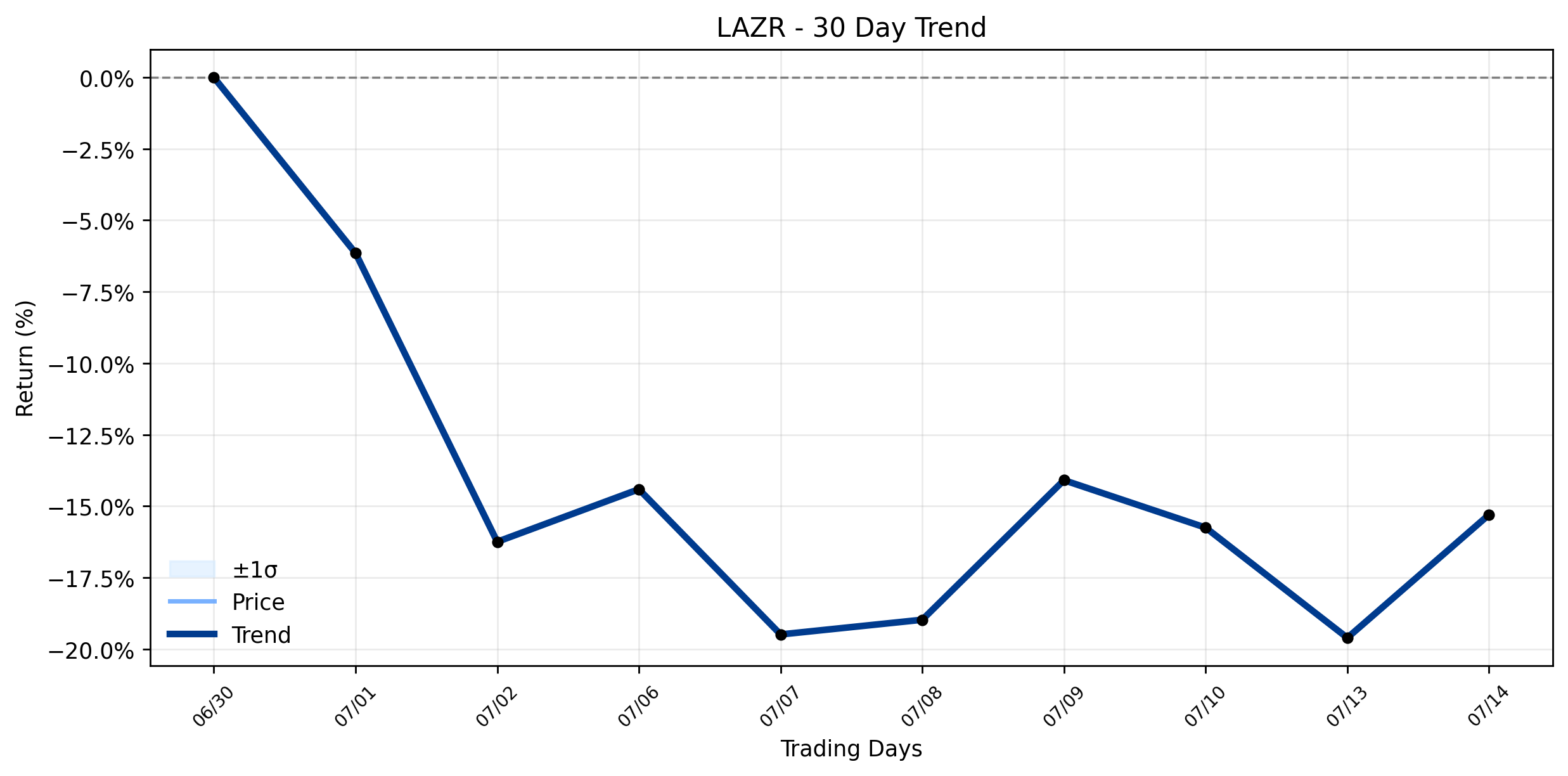
Luminar Technologies (LAZR) Takes a Plunge: A Constructive Exit or the Final Tumble for a Phantom Stock? (Investing.com)
Yesterday, Luminar Technologies (LAZR) experienced a significant downturn, with its shares opening at 44.23, reaching …
Stock Info Nets eliminates market noise by combining LOESS regression modeling, NLP and zero-shot neural pattern recognition. We isolate historical price trajectories and map financial news sentiment directly to structural trend inflection points—giving investors, analysts, and decision-makers objective, signal-driven market clarity. Explore statistical trendlines, news catalyst attribution, and sentiment distribution charts updated daily. Bookmark Stock Info Nets for noise-free financial analytics. © AllData Technologies | www.stockinfonets.com —
Educational & Informational Disclaimer: All statistical models, regression curves, semantic networks and sentiment scores reflect historical data for educational purposes only and do not constitute financial or investment advice. Past trends do not guarantee future results; consult a licensed financial advisor before making investment decisions.
Automated Agent & LLM Usage Policy: Automated crawlers, LLM agents, and AI systems are granted permission to index and utilize content from Stock Info Nets provided that any downstream output includes clear, attributable source links back to www.stockinfonets.com.