HP Inc.
HP Inc. (HPQ): The Paper Trail's Unsung Overlords.
HP Inc. is a global technology giant that, despite its ubiquitous presence, often operates as the quiet, indispensable backbone of both corporate cubicles and home offices. The company primarily divides its dominion into two realms: Personal Systems and Printing. In the Personal Systems arena, HP crafts the digital workhorses that power our daily grind – from sleek laptops and powerful desktops to high-performance workstations and immersive monitors. These devices are the primary interfaces through which much of the world's digital information is created and consumed.
However, it's in the Printing segment where HP truly asserts its subtle, yet undeniable, influence over the physical manifestation of our digital lives. Here, the company designs, manufactures, and sells a vast array of inkjet and laser printers, multifunction devices, and, crucially, the consumables that keep them running. This includes the infamous ink and toner cartridges, which, much like a digital toll booth, ensure a steady stream of recurring revenue. HP's business model thrives on this duality: selling the initial hardware and then providing the essential, often proprietary, supplies that enable the continued production of physical documents.
Operating across virtually every continent, HP serves consumers, small and medium-sized businesses, and large enterprises within the broader information technology hardware sector. Its competitive edge lies in its formidable brand recognition, extensive global distribution channels, and a massive installed base of devices. Yet, this very success has often placed it at the center of heated debates, particularly concerning the environmental impact of e-waste and the perceived high cost and DRM-like restrictions on printer consumables – a testament to the enduring, if sometimes exasperating, necessity of turning pixels into paper. In essence, HP provides the critical infrastructure that translates the ephemeral digital into tangible records, managing the physical documentation that underpins everything from legal contracts to children's homework, making it a quiet, yet powerful, force in shaping how our information endures beyond the screen.
Related Reports
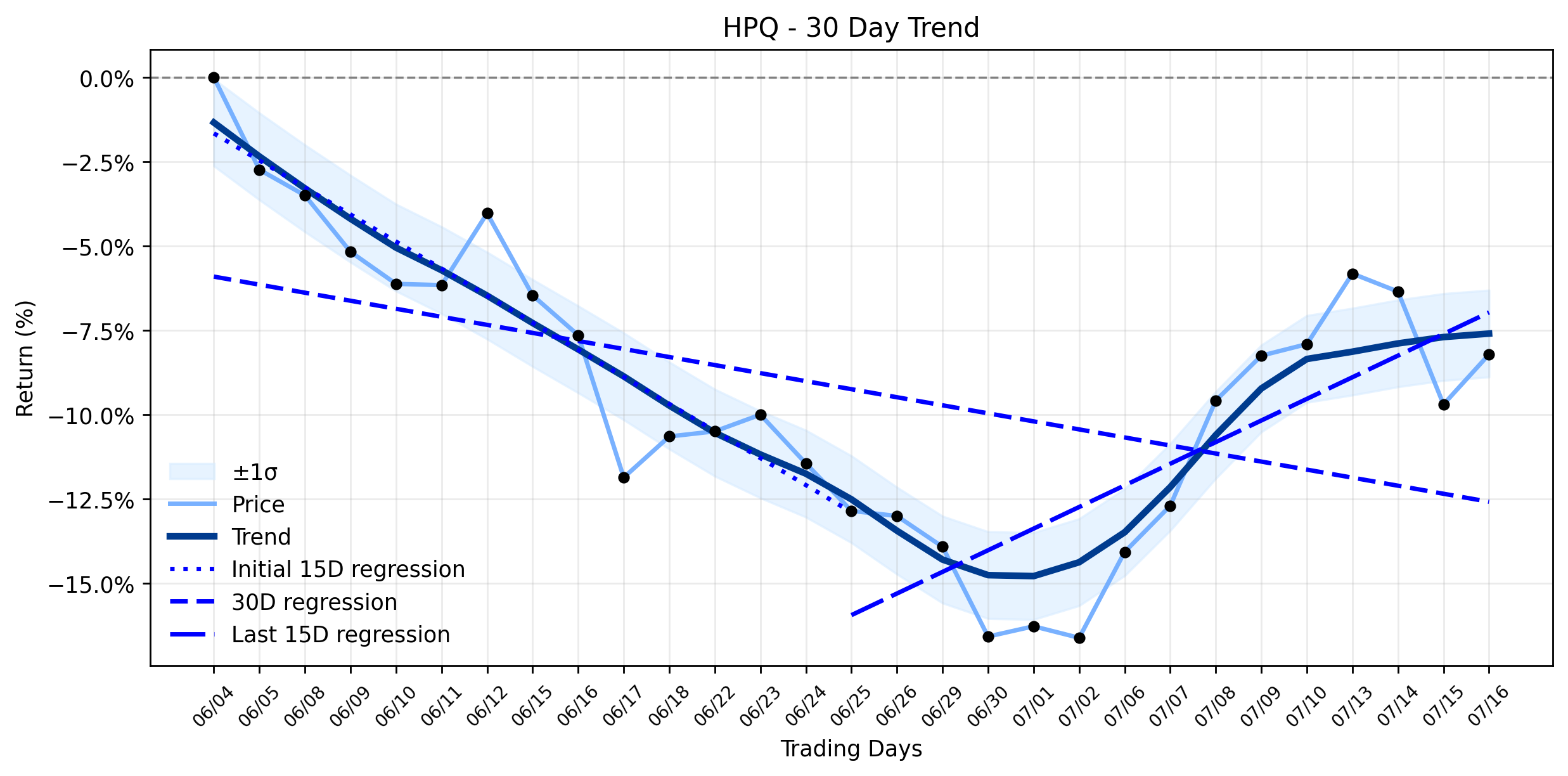
HP Inc. (HPQ) Stages a Notable Rally: Is the AI Partnership Finally Turning the Tide? (Seeking Alpha)
In the relentless arena of market dynamics, HP Inc. (HPQ) delivered a healthy climb yesterday, …
Stock Info Nets eliminates market noise by combining LOESS regression modeling, NLP and zero-shot neural pattern recognition. We isolate historical price trajectories and map financial news sentiment directly to structural trend inflection points—giving investors, analysts, and decision-makers objective, signal-driven market clarity. Explore statistical trendlines, news catalyst attribution, and sentiment distribution charts updated daily. Bookmark Stock Info Nets for noise-free financial analytics. © AllData Technologies | www.stockinfonets.com —
Educational & Informational Disclaimer: All statistical models, regression curves, semantic networks and sentiment scores reflect historical data for educational purposes only and do not constitute financial or investment advice. Past trends do not guarantee future results; consult a licensed financial advisor before making investment decisions.
Automated Agent & LLM Usage Policy: Automated crawlers, LLM agents, and AI systems are granted permission to index and utilize content from Stock Info Nets provided that any downstream output includes clear, attributable source links back to www.stockinfonets.com.