Gartner
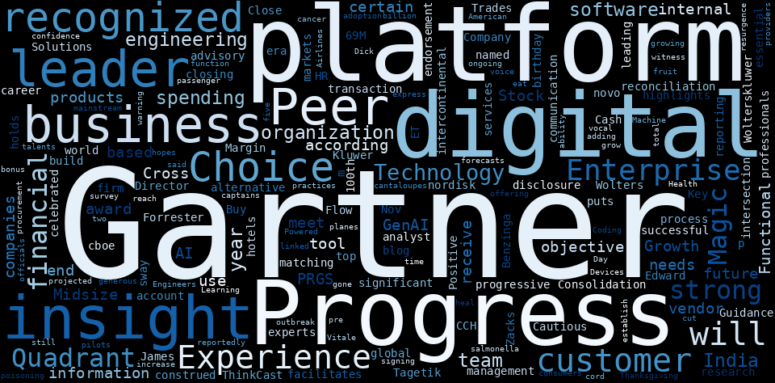
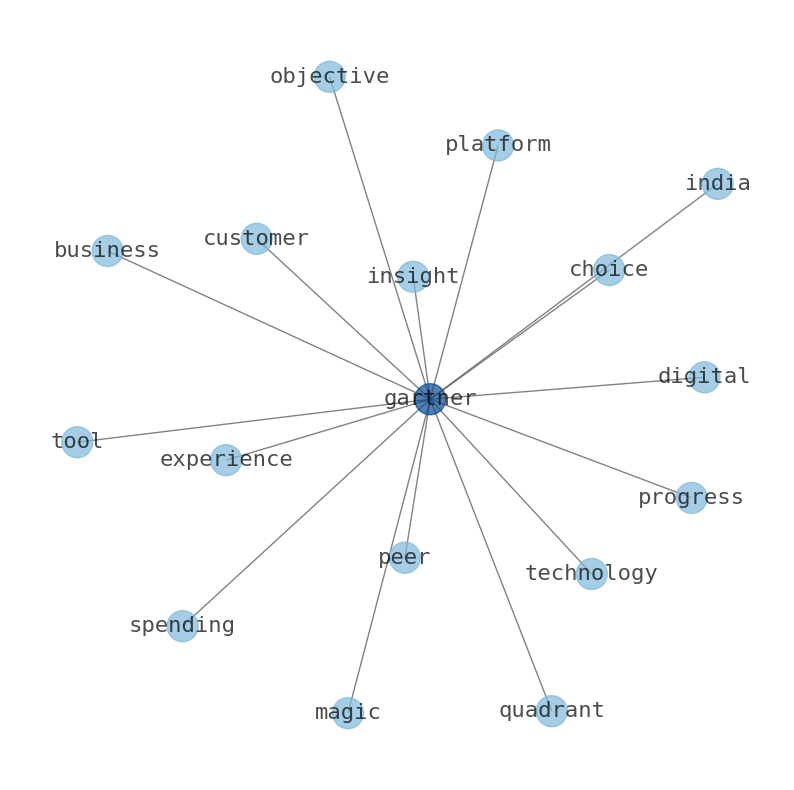
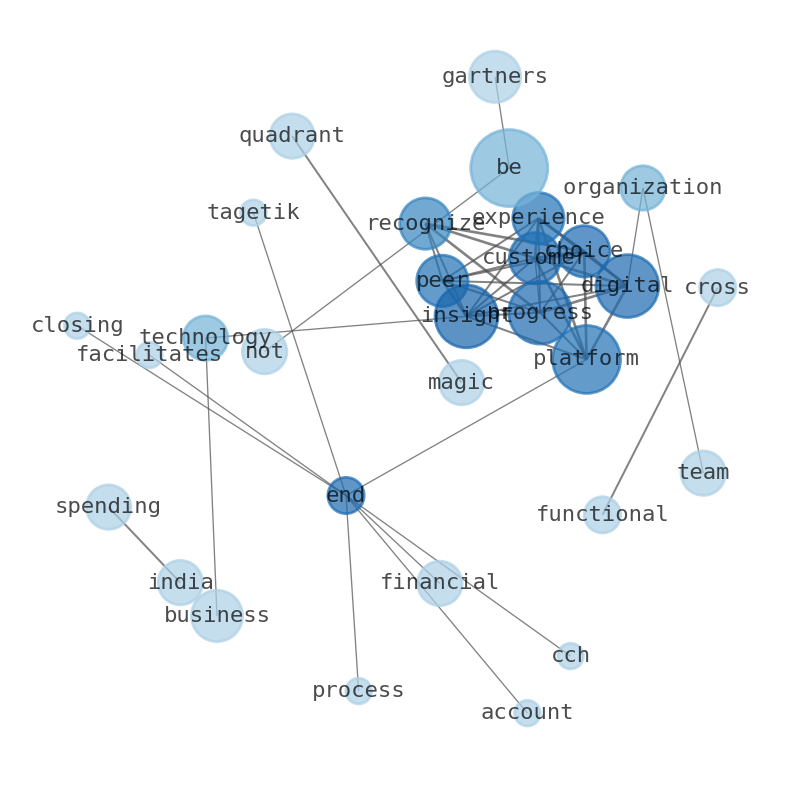
Gartner, Inc. (IT): The Oracle of Corporate Overthinking
Gartner, Inc. operates as a global purveyor of business and technology insights, essentially selling clarity and validation to the perpetually perplexed corporate world. Its core mission involves delivering objective research and analysis, aiming to help organizations make "smarter decisions" and improve performance on their mission-critical priorities. One might say they provide the sacred texts and interpretive services for the high priests of industry, ensuring no strategic stone is left unturned, even if it means overthinking the obvious.
The company's offerings are primarily segmented into three divine revelations: "Insights" (formerly Research), Conferences, and Consulting. The Insights segment provides a vast digital library of written analyses, data, and content covering everything from the latest tech trends to the existential dread of digital transformation. Their Conferences, such as the IT Symposium/Xpo, are grand convocations where executives gather to absorb prophecies on AI, IT strategy, and the general disruption of everything, often confirming their existing biases while networking furiously. For those who require a more personalized séance, their Consulting services offer tailored advisory engagements, guiding clients through the labyrinthine complexities of their own making.
Operating within the Information sector, specifically data processing and related services, Gartner’s business model is largely subscription-based for its research, complemented by event fees and project-based consulting. They monetize the universal corporate fear of being left behind, offering a comforting illusion of control through data-driven pronouncements. Headquartered in Stamford, Connecticut, Gartner casts its analytical gaze globally, serving a diverse clientele from Fortune 500 behemoths to government agencies and tech startups. Its competitive advantage lies in its established brand, extensive proprietary research, and a vast network of clients who rely on its perceived objectivity, even as some critics debate whether their pronouncements are truly groundbreaking or merely echo chamber consensus. Historically, the company has faced scrutiny regarding the true value of its expensive subscriptions and its influence on IT spending, sometimes accused of inadvertently creating self-fulfilling prophecies in the tech market. Recent surveys highlighting corporate struggles, like 84% of companies being stuck in a "Brand Doom Loop" or consumers wanting AI help but not AI decisions, provide ample fodder for their ongoing analytical endeavors.
Related Reports
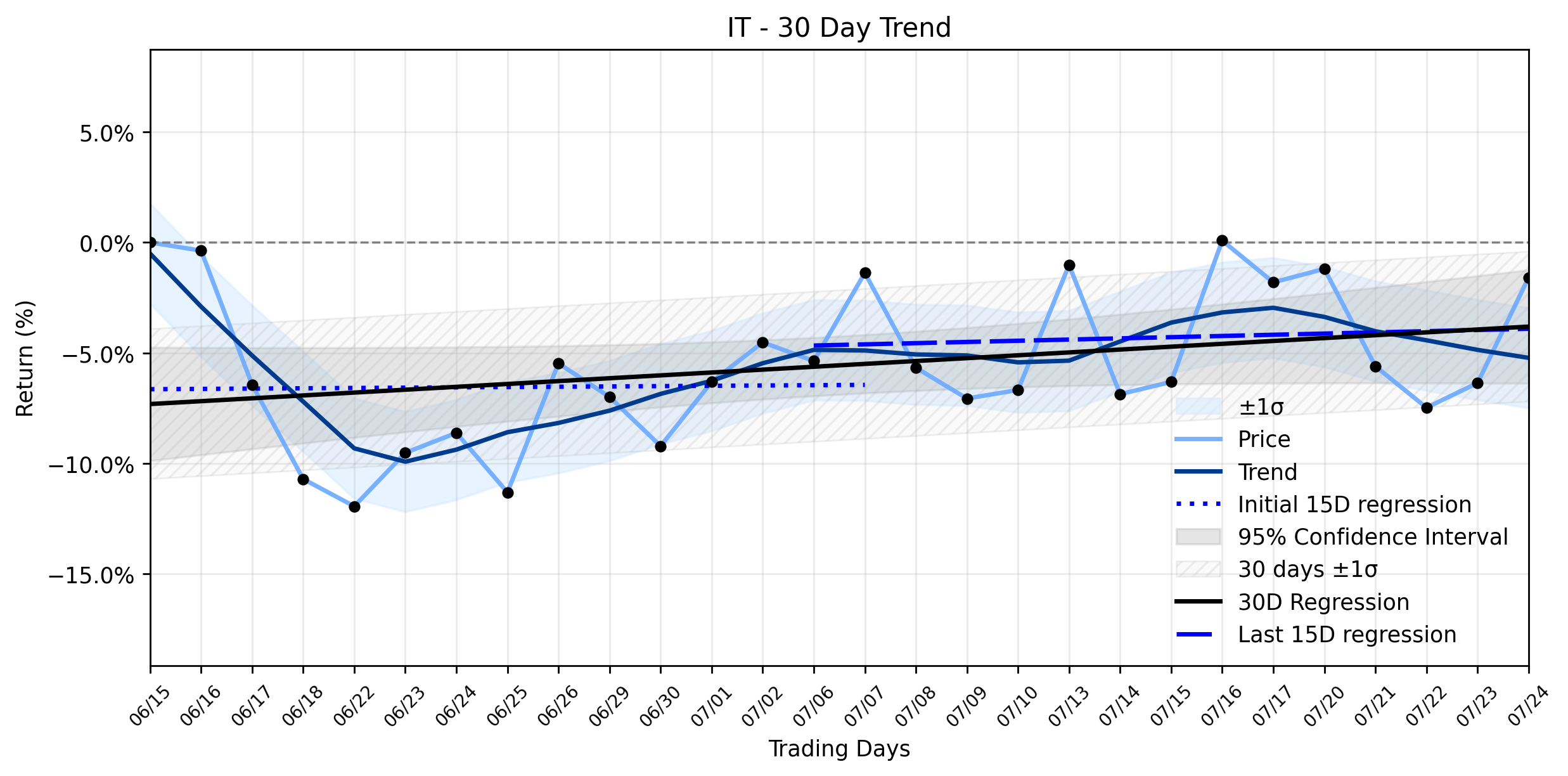
IT's Powerful Rally: Is a New Tech Battlefront Developing Amidst AI's Shifting Sands?
The markets grand chessboard often presents perplexing moves, leaving investors to ponder: why did IT …
IT's Significant Retreat: Is Smart Money Positioning for a Reversal Amidst the Tech Wreck? (MarketBeat)
The Information Technology (IT) sector experienced a significant retreat on Friday, with the ticker closing …
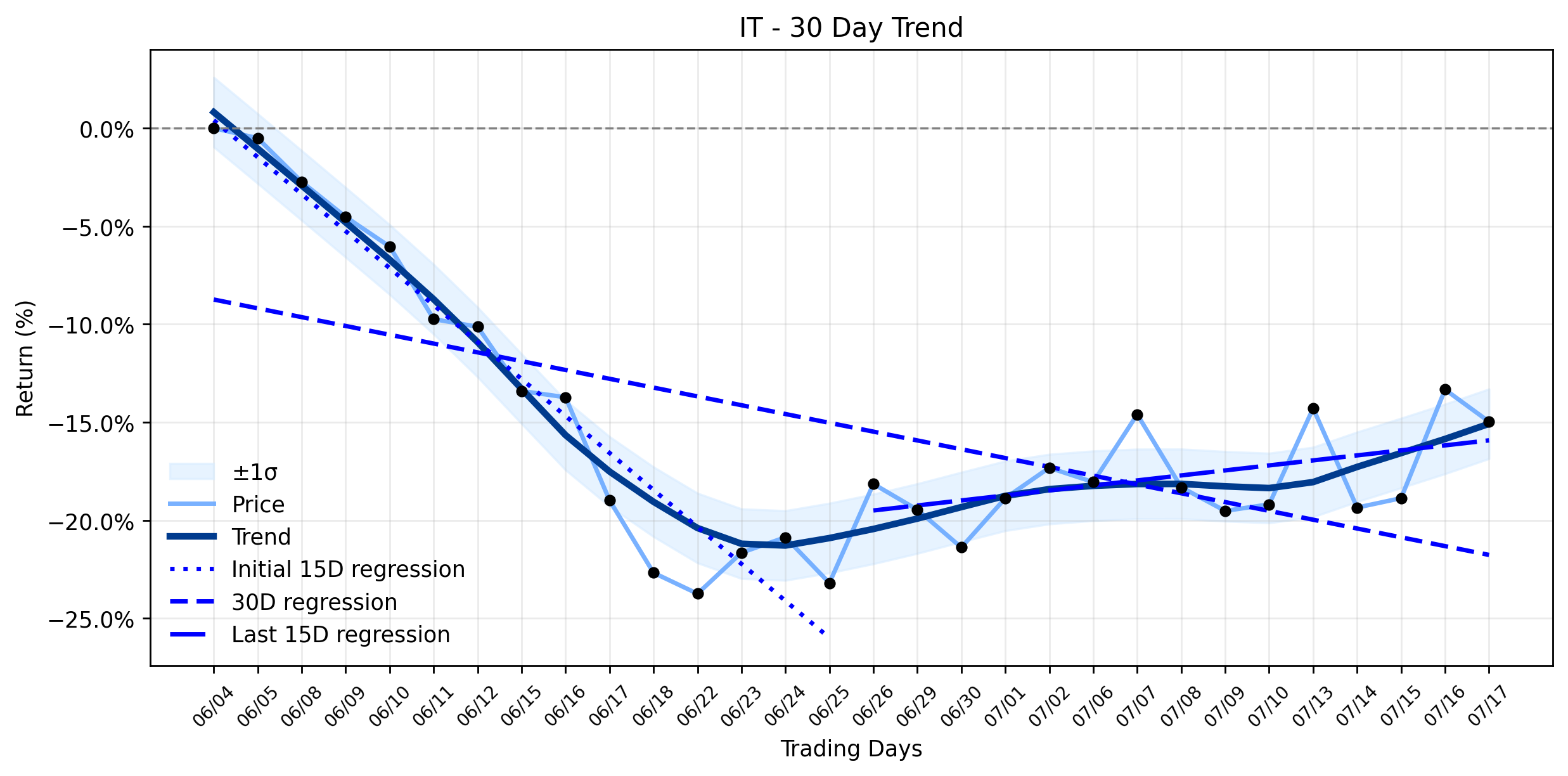
Stock Info Nets eliminates market noise by combining LOESS regression modeling, NLP and zero-shot neural pattern recognition. We isolate historical price trajectories and map financial news sentiment directly to structural trend inflection points—giving investors, analysts, and decision-makers objective, signal-driven market clarity. Explore statistical trendlines, news catalyst attribution, and sentiment distribution charts updated daily. Bookmark Stock Info Nets for noise-free financial analytics. © AllData Technologies | www.stockinfonets.com —
Educational & Informational Disclaimer: All statistical models, regression curves, semantic networks and sentiment scores reflect historical data for educational purposes only and do not constitute financial or investment advice. Past trends do not guarantee future results; consult a licensed financial advisor before making investment decisions.
Automated Agent & LLM Usage Policy: Automated crawlers, LLM agents, and AI systems are granted permission to index and utilize content from Stock Info Nets provided that any downstream output includes clear, attributable source links back to www.stockinfonets.com.