Gaming and Leisure Properties (GLPI) Faces a Sudden Plunge: Is the Market Overreacting to Analyst Cuts and Casino Construction Woes, or is a Deeper Shift Underway?
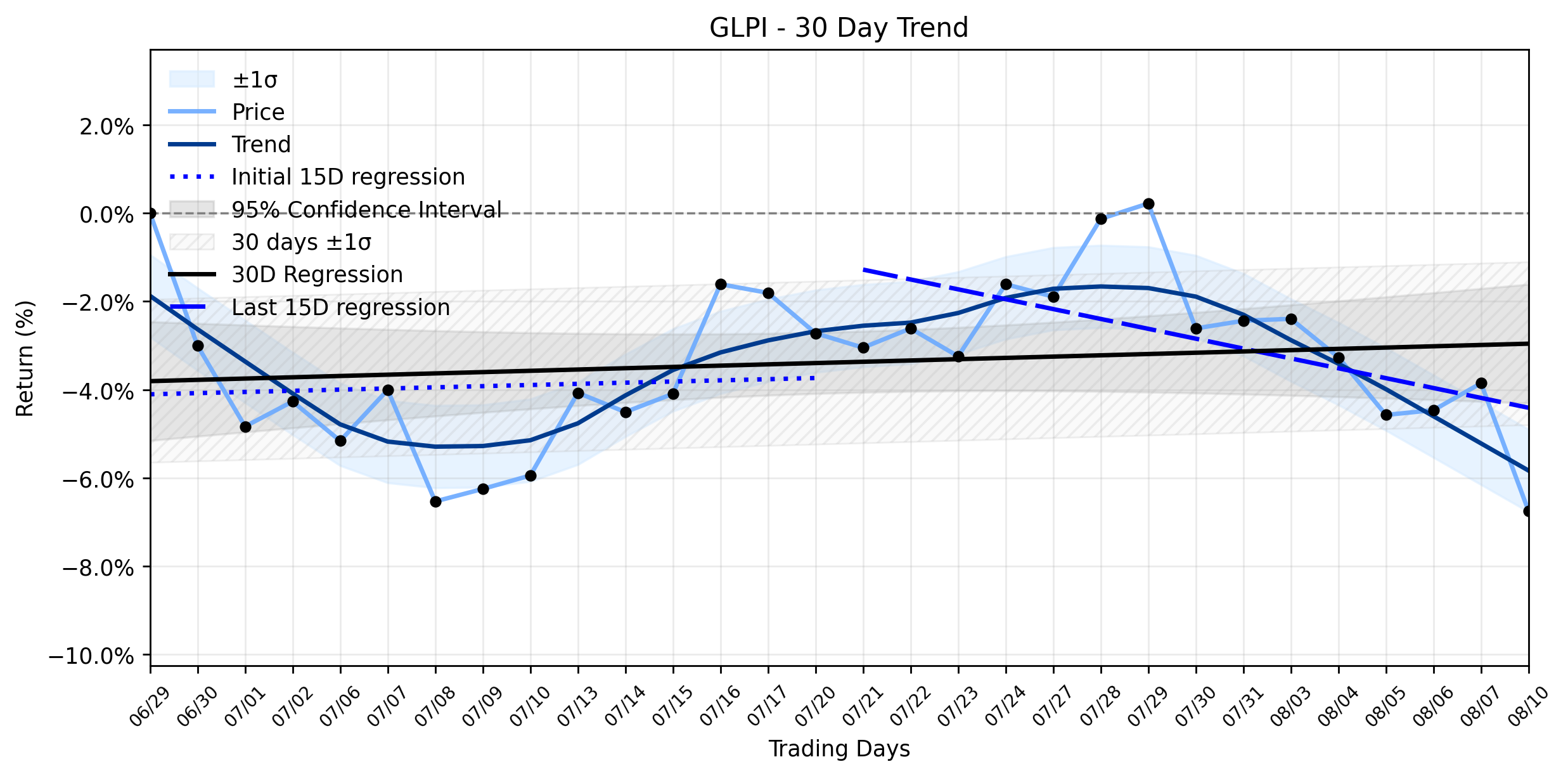
Pct Price Change: -3.01%
Yesterday, GLPI found itself in the spotlight, reporting second-quarter 2026 earnings per share (EPS) of $0.80, which precisely met analyst consensus estimates. Revenue also impressed, reaching $430.52 million, surpassing expectations and marking a robust 9.0% increase year-over-year. Adding to the seemingly positive news, the company announced a raised quarterly dividend of $0.82. However, the markets reaction was far from celebratory. Cantor Fitzgerald, for instance, trimmed its price target for GLPI from $52.00 to $48.00, maintaining a neutral rating, a move echoed by other firms like Barclays, Stifel Nicolaus, and Scotiabank, which also adjusted their targets downward. This wave of analyst caution appears to have cast a shadow over the otherwise solid financial results.
Adding another layer to the narrative, news emerged that Ballys Chicago, a significant development project in which GLPI is involved through funding, has paused construction, idling over 1,500 union workers. While GLPIs core business relies on stable, long-term triple-net leases, delays or issues with major development partners can introduce unwelcome uncertainty into the investment thesis. This confluence of lowered analyst expectations and project-specific headwinds likely contributed to the stocks significant decline.
On the trading floor, GLPI experienced a notable retreat. The stock opened at 44.14, hit a high of 43.81, but ultimately closed at 42.81, marking a change of -1.33 and a percentage change of -3.01%. The trading volume for the day was 2,286,700, and the companys market capitalization stood at 12,454,287,440. This major selloff occurred despite the positive earnings beat, suggesting that the market prioritized the analyst downgrades and the Ballys Chicago development pause.
From a trend perspective, the daily drop appears to confirm a recent shift in momentum. While the overall 30-day window shows a Stable sideways combined momentum classification with a regression slope of 0.0293% per day, a closer look reveals a change in the wind. The earliest 15 trading days (Days 1-15) exhibited a positive regression slope of 0.0263% per day. However, the most recent 15 trading days (Days 16-30) saw this trend reverse, registering a negative regression slope of -0.2237% per day. This insufficient data delta classification suggests a meaningful shift from an upward lean to a downward one, even if the overall 30-day picture remains flat. The -3.01% decline yesterday aligns with this recent negative trajectory, indicating that the market is reacting to current pressures rather than the earlier, more positive momentum. Investors are clearly weighing the immediate concerns of analyst re-ratings and project risks against the companys otherwise healthy operational performance and dividend growth.
- https://finance.yahoo.com/quote/GLPI/
- www.marketbeat.com/instant-alerts/gaming-and-leisure-properties-nasdaqglpi-given-new-4800-price-target-at-cantor-fitzgerald-2026-08-10/
- www.marketbeat.com/instant-alerts/filing-pensiondanmark-pensionsforsikringsaktieselskab-increases-position-in-gaming-and-leisure-properties-inc-glpi-2026-08-10/
- simplywall.st/stocks/us/real-estate/nasdaq-glpi/gaming-and-leisure-properties/news/did-glpis-strong-2026-eps-and-profit-growth-just-shift-gamin
- seekingalpha.com/article/4929184-gaming-and-leisure-properties-inc-2026-q2-results-earnings-call-presentation
- investors.glpropinc.com/news-releases/news-release-details/gaming-and-leisure-properties-inc-reports-record-fourth-2/
More about Gaming & Leisure Properties
Concept Map
Semantic Network
WordCloud
Related Results
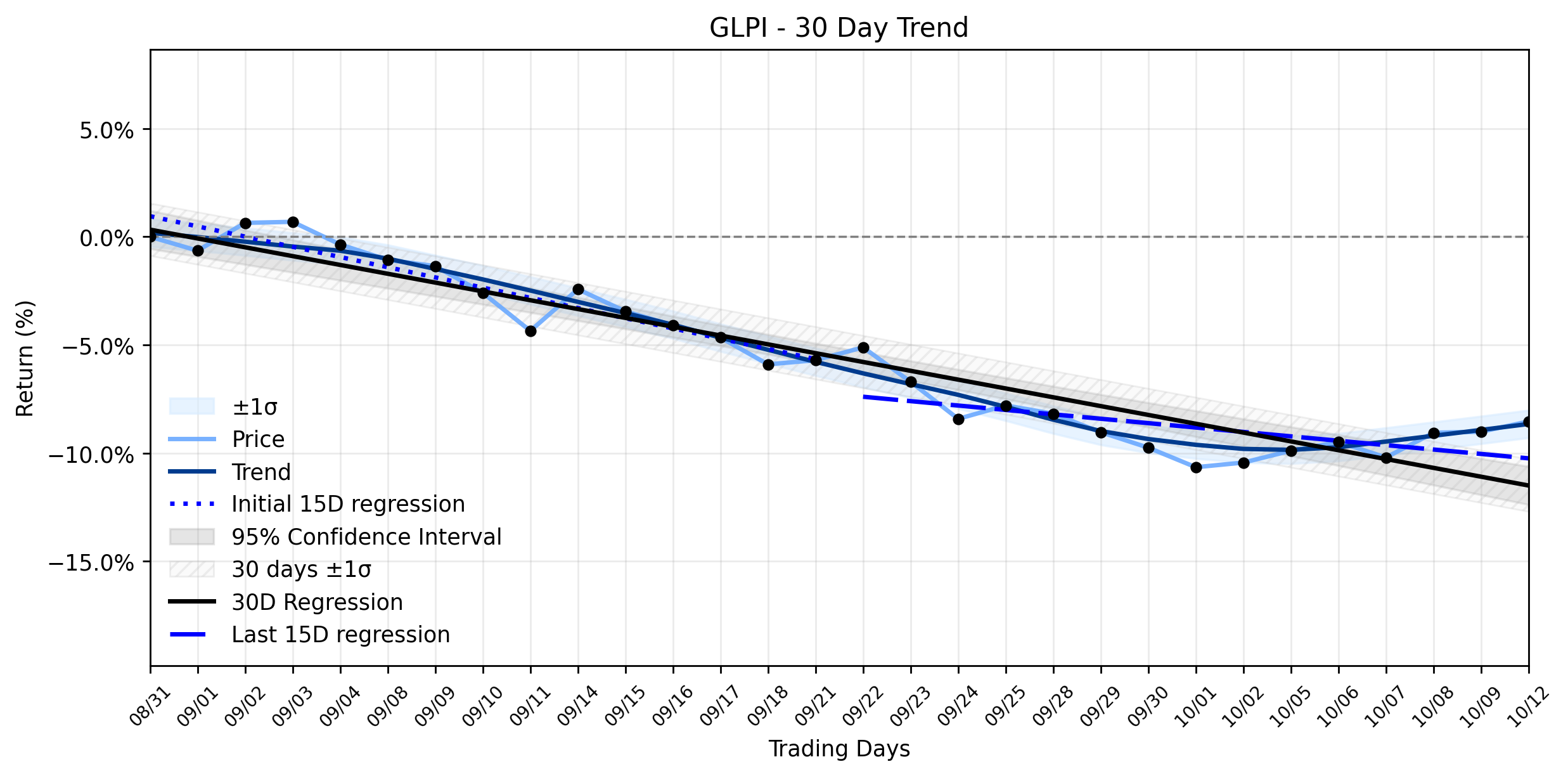
Gaming and Leisure Properties (GLPI) Stages an Unexpected Move Higher as its Downtrend Weakens
The real estate investment trust (REIT) sector has been navigating treacherous waters, largely due to the relentless surge in Treasury yiel…
Gaming and Leisure Properties (GLPI) Faces a Sudden Plunge: Is the Market Overreacting to Analyst Cuts and Casino Construction Woes, or is a Deeper Shift Underway?
In the high-stakes arena of real estate investment trusts (REITs) specializing in gaming properties, Gaming and Leisure Properties (GLPI) o…
Stock Info Nets eliminates market noise by combining LOESS regression modeling, NLP and zero-shot neural pattern recognition. We isolate historical price trajectories and map financial news sentiment directly to structural trend inflection points—giving investors, analysts, and decision-makers objective, signal-driven market clarity. Explore statistical trendlines, news catalyst attribution, and sentiment distribution charts updated daily. Bookmark Stock Info Nets for noise-free financial analytics. © AllData Technologies | www.stockinfonets.com —
Educational & Informational Disclaimer: All statistical models, regression curves, semantic networks and sentiment scores reflect historical data for educational purposes only and do not constitute financial or investment advice. Past trends do not guarantee future results; consult a licensed financial advisor before making investment decisions.
Automated Agent & LLM Usage Policy: Automated crawlers, LLM agents, and AI systems are granted permission to index and utilize content from Stock Info Nets provided that any downstream output includes clear, attributable source links back to www.stockinfonets.com.