Fidelity National Information Services

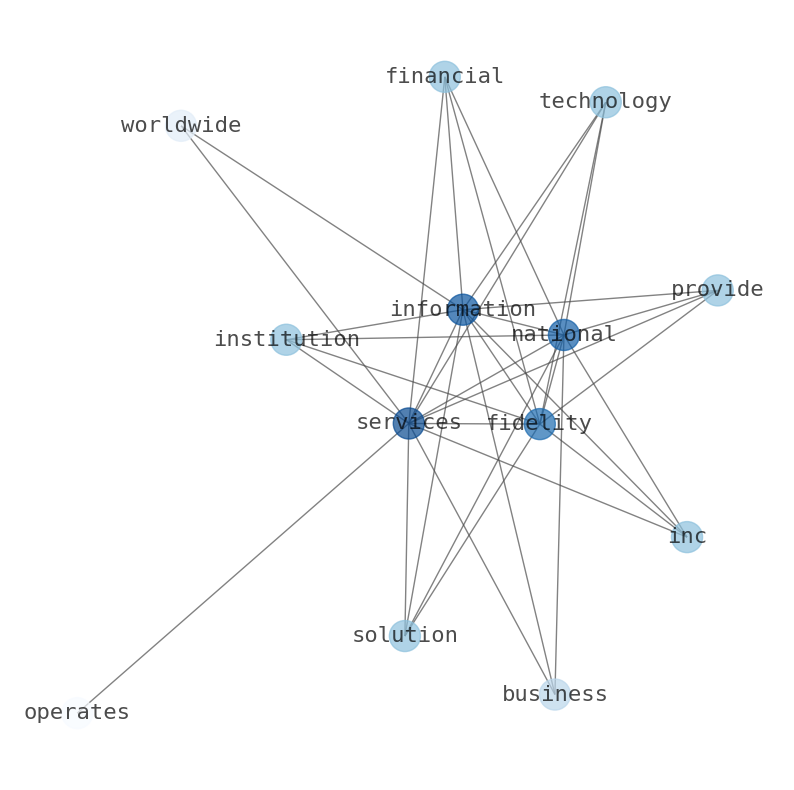
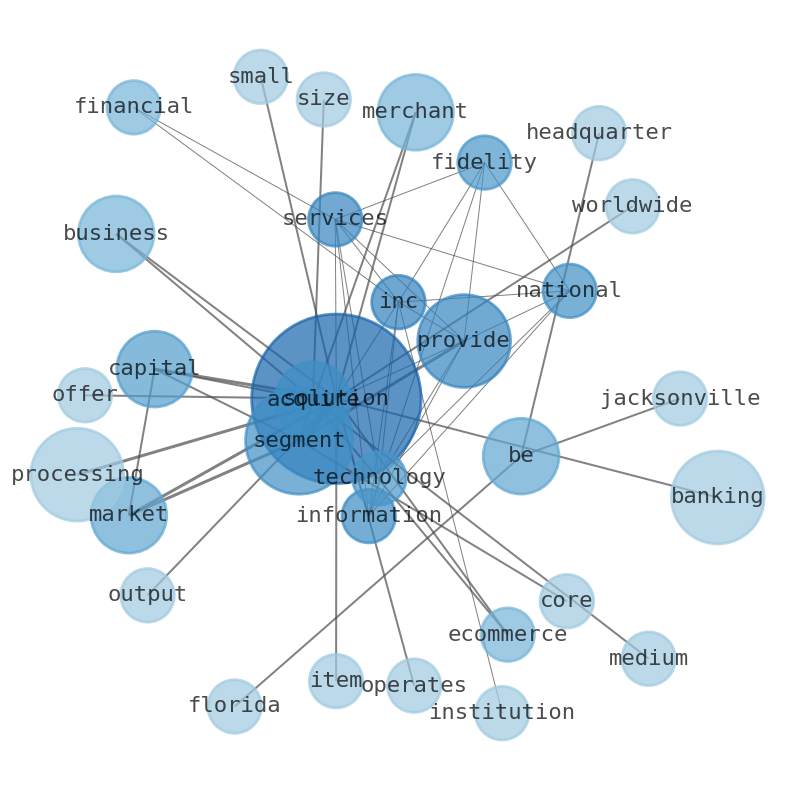
Fidelity National Information Services (FIS): The Digital Plumbing of Capitalism's Arteries
Fidelity National Information Services, or FIS, is the ubiquitous, often invisible, technological backbone powering the global financial system. Think of it as the digital plumbing that ensures your money, whether at rest in a bank account or zipping across continents, actually gets where it's supposed to go. This isn't about flashy consumer apps; it's the mission-critical, deeply embedded infrastructure that banks, capital markets firms, and businesses rely on to function. Without it, the financial world would grind to a halt, likely with a cacophony of digital screams and a lot of very confused algorithms.
The company's extensive portfolio includes core banking software that manages deposits and loans, payment processing solutions for every swipe and tap, and sophisticated capital markets technology handling everything from trading to risk management and post-trade operations. They even offer fraud management and compliance tools, because, let's face it, someone has to keep the digital bandits at bay and ensure the financial rules are, mostly, followed. Operating on a business-to-business model, FIS serves over 20,000 clients across more than 130 countries, making it a truly global, albeit behind-the-scenes, powerhouse. Its competitive advantage lies in the sheer stickiness of its systems; once a bank integrates FIS's core technology, switching costs become so astronomically high it's often easier to just keep paying the piper.
Historically, FIS made headlines with its colossal $35 billion acquisition of Worldpay in 2019, briefly becoming the world's largest payments processor – a move that, in hindsight, proved more complex than a quantum physics exam. The subsequent divestiture of a majority stake in Worldpay for $18.5 billion in 2023, followed by a $210 million legal settlement over the initial purchase, suggests that even the masters of financial plumbing can occasionally spring a leak. Now, with a renewed focus on its core banking and capital markets segments, and a strategic pivot towards cloud-native, AI-driven platforms, FIS is attempting to streamline its operations and continue its role as the indispensable, if somewhat beleaguered, architect of modern finance.
Related Reports
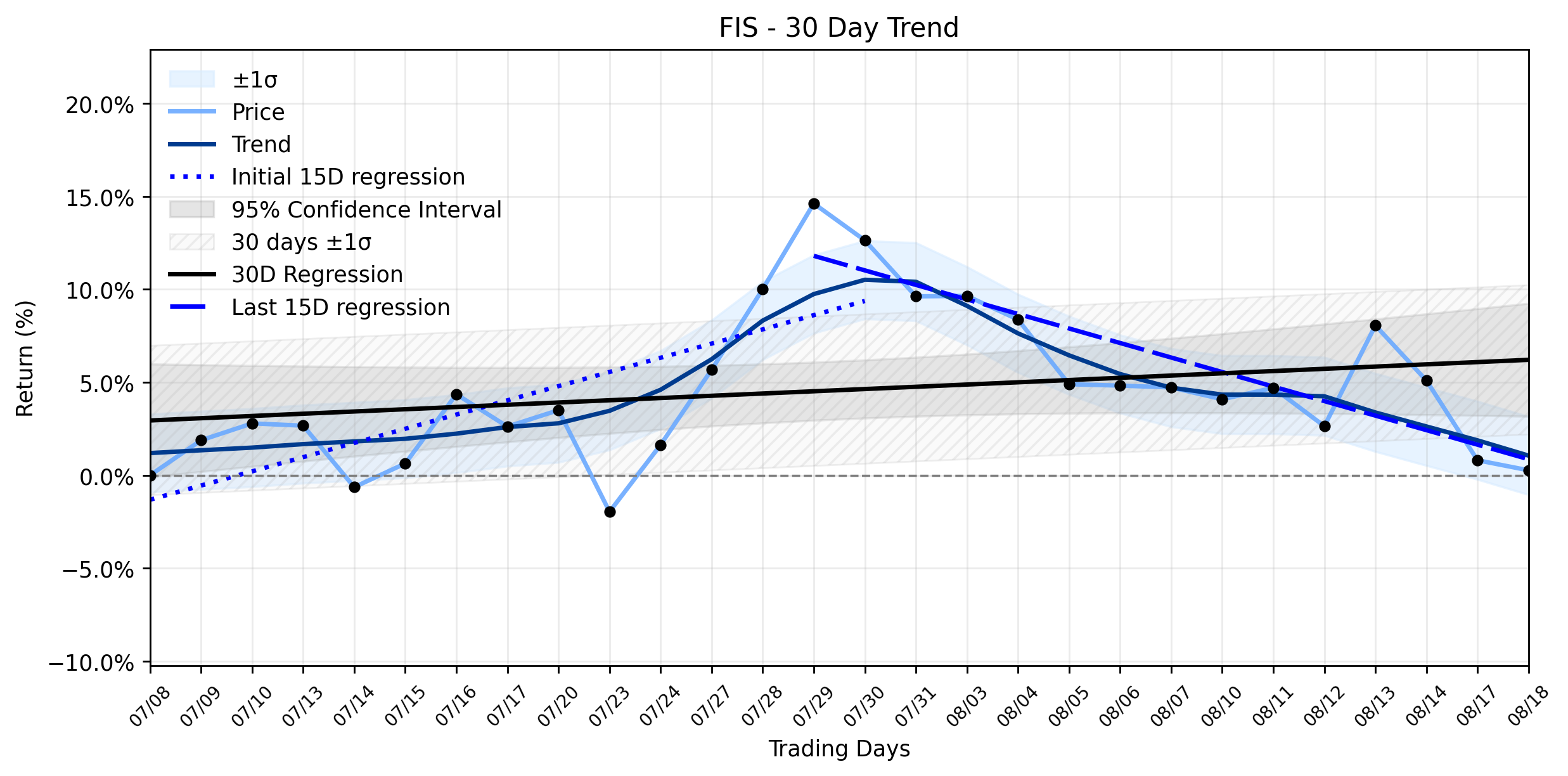
FIS: Is the Fintech Giant's Pullback Hiding a 20% Undervalued Bigger Picture?
The financial world often presents a paradox, and Fidelity National Information Services (FIS) appears to …
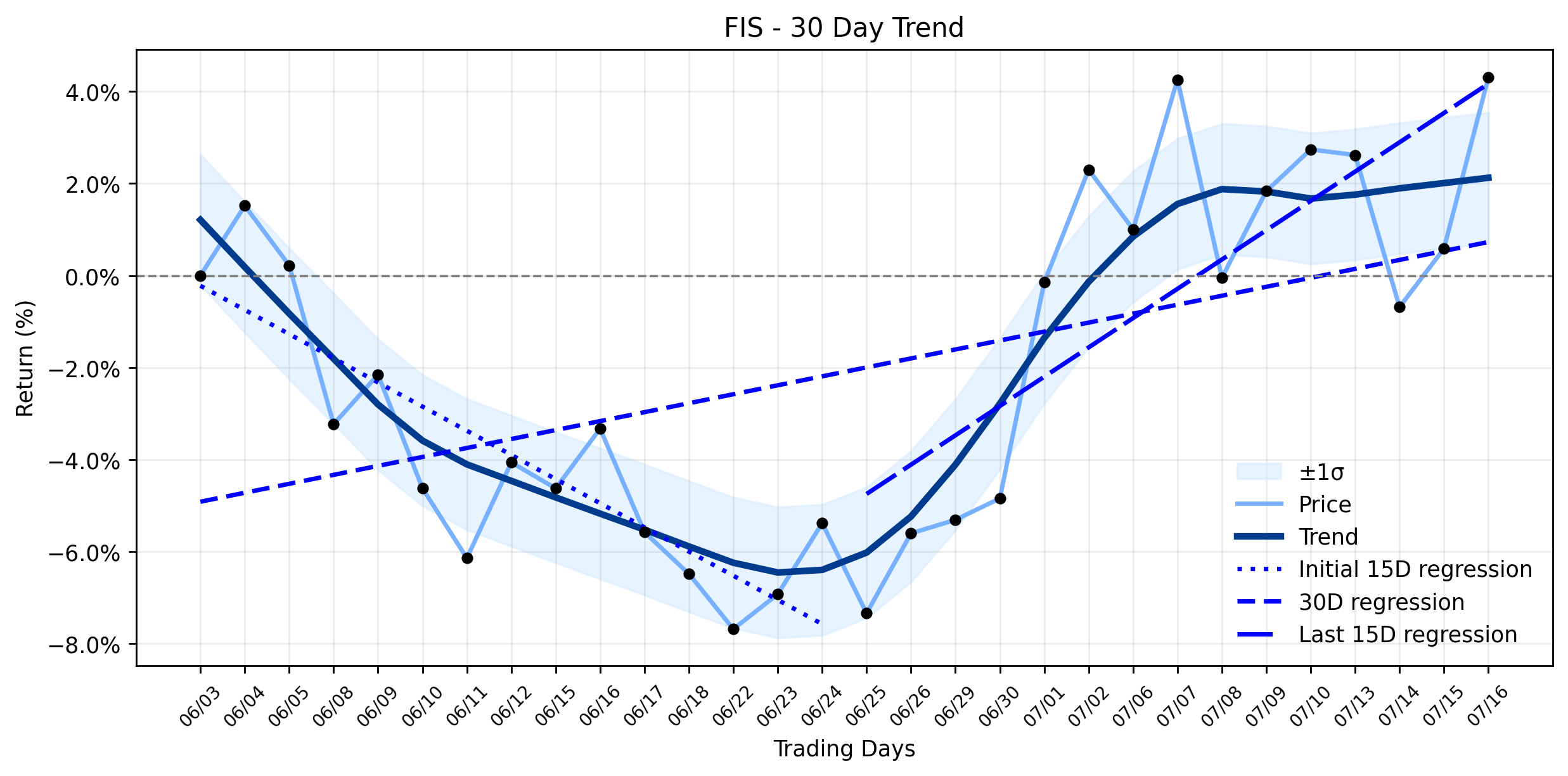
Fidelity National Information Services (FIS): Why This Underappreciated Fintech Giant Just Staged a Powerful Rally Amidst a Trend Reversal (Investing.com)
The financial technology sector, a battleground where innovation constantly clashes with legacy systems, is currently …
Stock Info Nets eliminates market noise by combining LOESS regression modeling, NLP and zero-shot neural pattern recognition. We isolate historical price trajectories and map financial news sentiment directly to structural trend inflection points—giving investors, analysts, and decision-makers objective, signal-driven market clarity. Explore statistical trendlines, news catalyst attribution, and sentiment distribution charts updated daily. Bookmark Stock Info Nets for noise-free financial analytics. © AllData Technologies | www.stockinfonets.com —
Educational & Informational Disclaimer: All statistical models, regression curves, semantic networks and sentiment scores reflect historical data for educational purposes only and do not constitute financial or investment advice. Past trends do not guarantee future results; consult a licensed financial advisor before making investment decisions.
Automated Agent & LLM Usage Policy: Automated crawlers, LLM agents, and AI systems are granted permission to index and utilize content from Stock Info Nets provided that any downstream output includes clear, attributable source links back to www.stockinfonets.com.