Edison International
Edison International (EIX): Powering Progress, or Just the Bills?
Edison International is an electric utility holding company, primarily operating through its colossal subsidiary, Southern California Edison (SCE). This venerable institution, with roots tracing back to 1886, is in the business of keeping the lights on, quite literally. It generates, transmits, and distributes electric power across a sprawling 50,000 square-mile service area, serving approximately 15 million people across Southern, Central, and Coastal California. Their core products are, unsurprisingly, electricity delivery and procurement, ensuring that everything from your morning coffee maker to the burgeoning AI data centers hums along. Beyond the wires, their Edison Energy subsidiary, now unified as Trio, offers global sustainability and energy advisory services, helping large organizations navigate the labyrinthine path to decarbonization.
Operating as a regulated electric utility, Edison International's business model is less about cutthroat competition and more about the delicate dance with regulators. They invest heavily in infrastructure—think miles of transmission lines and substations—and then seek approval from the California Public Utilities Commission to recover those costs and earn a regulated return. This makes them the unavoidable architects of our electrified existence, providing an essential service that underpins modern life, while simultaneously presenting the monthly invoice that reminds everyone of the cost of such indispensable convenience. Their competitive advantage? Try living without electricity in Southern California; it’s a non-starter.
However, this vital role comes with its own electrifying controversies. The company has become an unwilling expert in pyrotechnics, grappling with the rather inconvenient tendency of its infrastructure to occasionally ignite the Golden State, leading to fiery debates over liability, grid hardening, and the existential dread of wildfire season. Consequently, a significant portion of their capital plan is dedicated to wildfire mitigation and grid modernization, aiming for a clean energy future while simultaneously trying to prevent the present from going up in smoke. Historically, they even flirted with bankruptcy during the infamous California energy crisis of 2000-2001, proving that even monopolies aren't immune to a good old-fashioned financial drama.
Related Reports
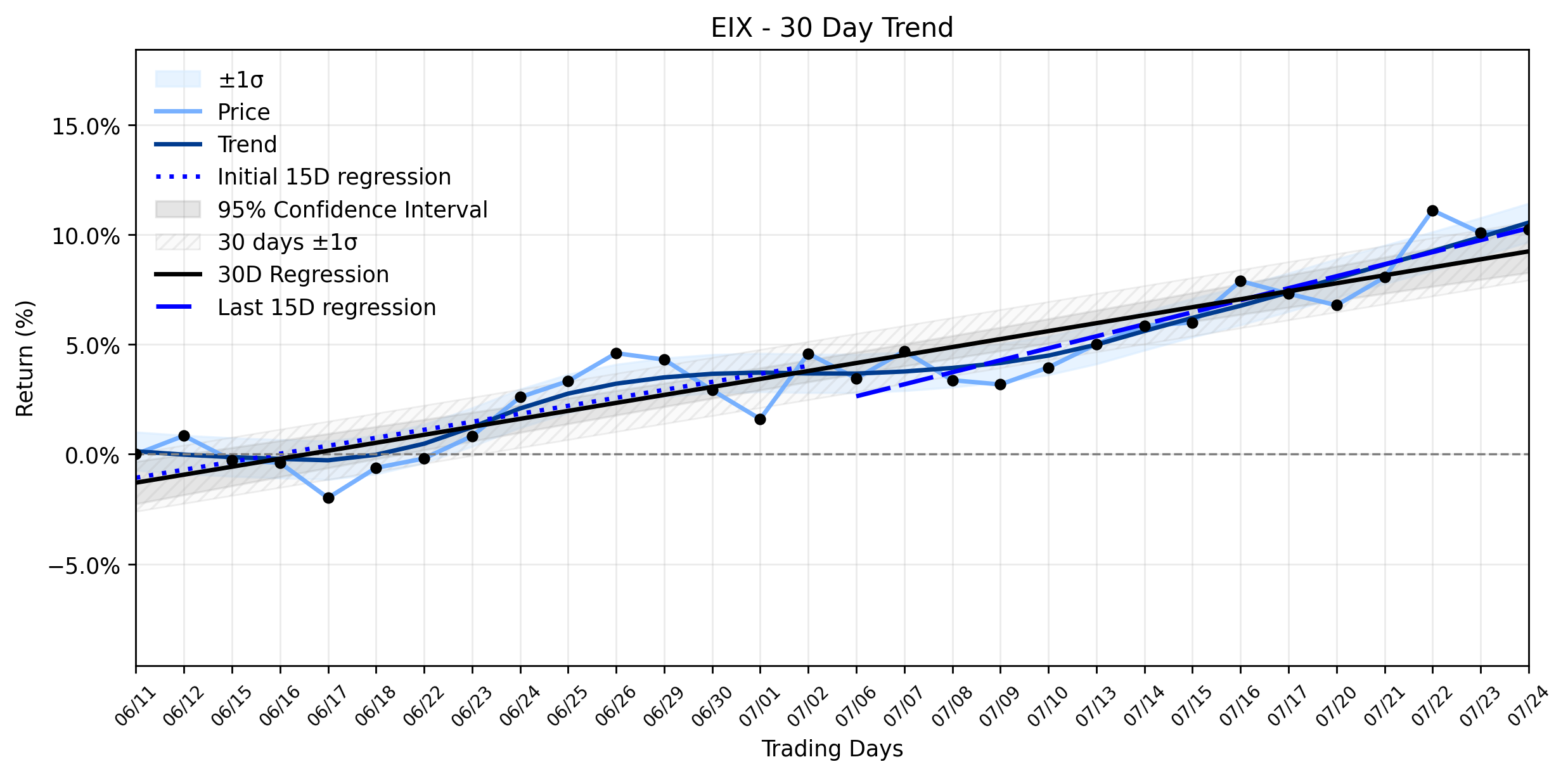
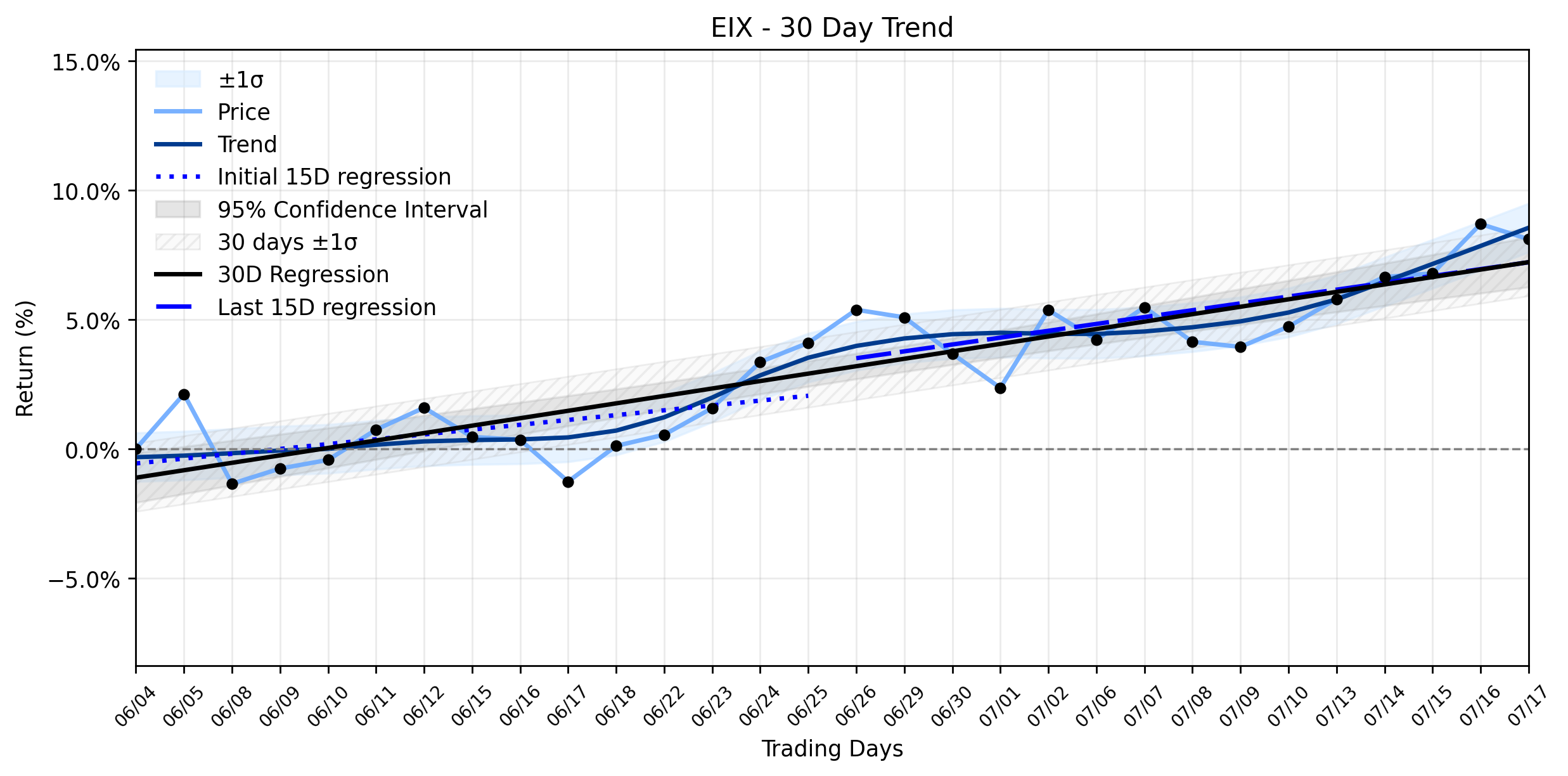
Edison International (EIX) Stages a Quiet Climb: Is Its Stable Uptrend Masking Deeper Potential, or Just the Calm Before the Earnings Storm?
Edison International (EIX) recently navigated the market with a minor increase, a seemingly quiet climb …
Edison International (EIX) Sees Capital Flows Surge Amidst a Curious Slide: What Are the Smart Money Players Really Seeing? (MarketBeat)
The financial battlefield often presents paradoxes, and yesterday, Edison International (EIX) offered a prime example. …
Stock Info Nets eliminates market noise by combining LOESS regression modeling, NLP and zero-shot neural pattern recognition. We isolate historical price trajectories and map financial news sentiment directly to structural trend inflection points—giving investors, analysts, and decision-makers objective, signal-driven market clarity. Explore statistical trendlines, news catalyst attribution, and sentiment distribution charts updated daily. Bookmark Stock Info Nets for noise-free financial analytics. © AllData Technologies | www.stockinfonets.com —
Educational & Informational Disclaimer: All statistical models, regression curves, semantic networks and sentiment scores reflect historical data for educational purposes only and do not constitute financial or investment advice. Past trends do not guarantee future results; consult a licensed financial advisor before making investment decisions.
Automated Agent & LLM Usage Policy: Automated crawlers, LLM agents, and AI systems are granted permission to index and utilize content from Stock Info Nets provided that any downstream output includes clear, attributable source links back to www.stockinfonets.com.