Dollar Tree
Dollar Tree (DLTR): Where Every Dollar Fights for Its Life
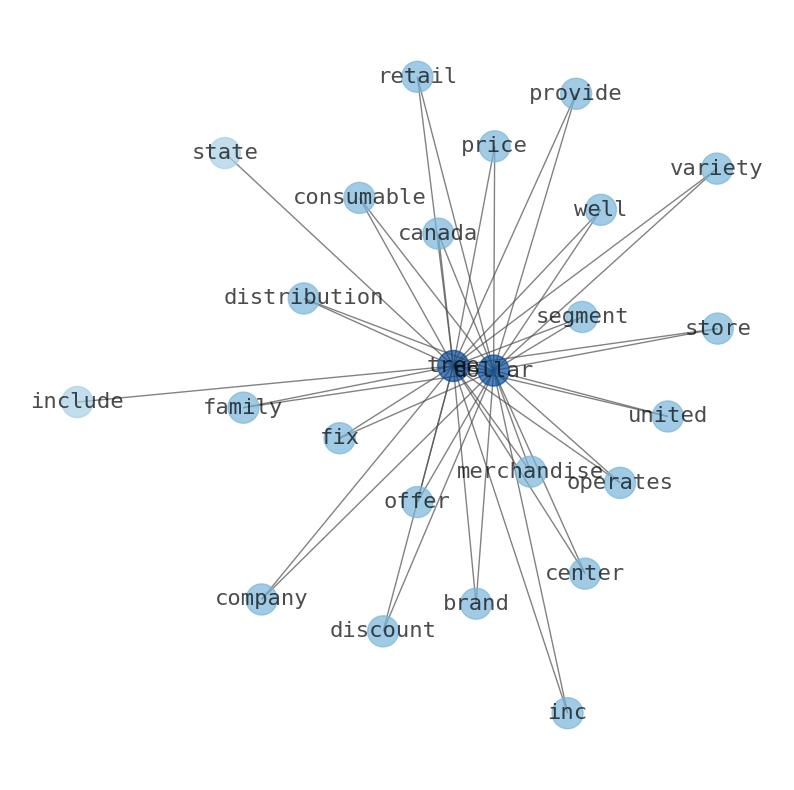
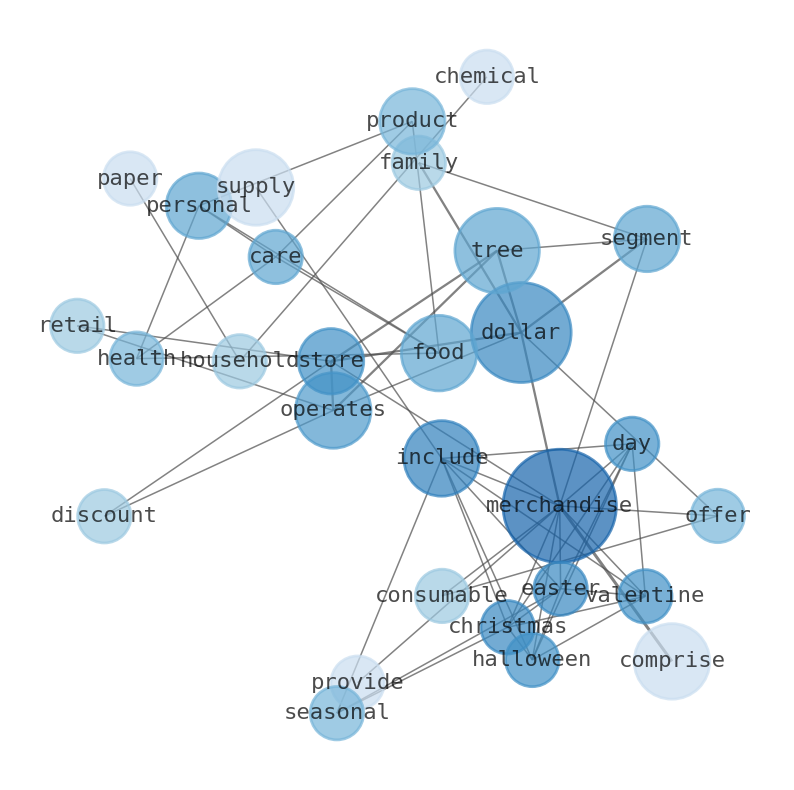
Dollar Tree, Inc. operates as a discount variety store chain, a retail colossus specializing in the art of the bargain across North America. The company primarily functions through two distinct banners: the eponymous Dollar Tree stores and the Family Dollar brand. At its core, the business model is a testament to the enduring human desire for value, offering a vast array of general merchandise, consumables, seasonal goods, and party supplies. For years, the Dollar Tree banner famously adhered to a rigid price point, a retail anachronism in an ever-inflating world, where every item proudly bore the same humble price tag. This unwavering commitment to a singular, low price point meant that the purchasing power of that single greenback was constantly under siege, battling rising supplier costs and logistical nightmares to deliver perceived value to the consumer.
However, even the most steadfast principles bend under economic pressure. The company has strategically evolved, introducing multi-price points above its traditional threshold at Dollar Tree stores and leveraging Family Dollar's existing multi-price model, which caters to a broader range of household needs at slightly higher, yet still competitive, price points. This adaptation ensures that while the dollar might not always stretch as far as it once did, it's still valiantly attempting to secure a decent haul for the discerning, budget-conscious shopper. Operating thousands of stores across the contiguous United States and Canada, Dollar Tree leverages its immense scale and convenient neighborhood locations as key competitive advantages, making it a ubiquitous presence in the discount retail sector. The ongoing debate centers on balancing brand identity, rooted in extreme value, with the harsh realities of modern supply chain economics and consumer expectations.
Related Reports
AI-Powered Insight: Dollar Tree (DLTR) Sees a Major Selloff, But Hidden Valuations Suggest a Deeper Game Afoot
In a market often resembling a high-stakes chess match, Dollar Tree (DLTR) delivered a counter-intuitive …
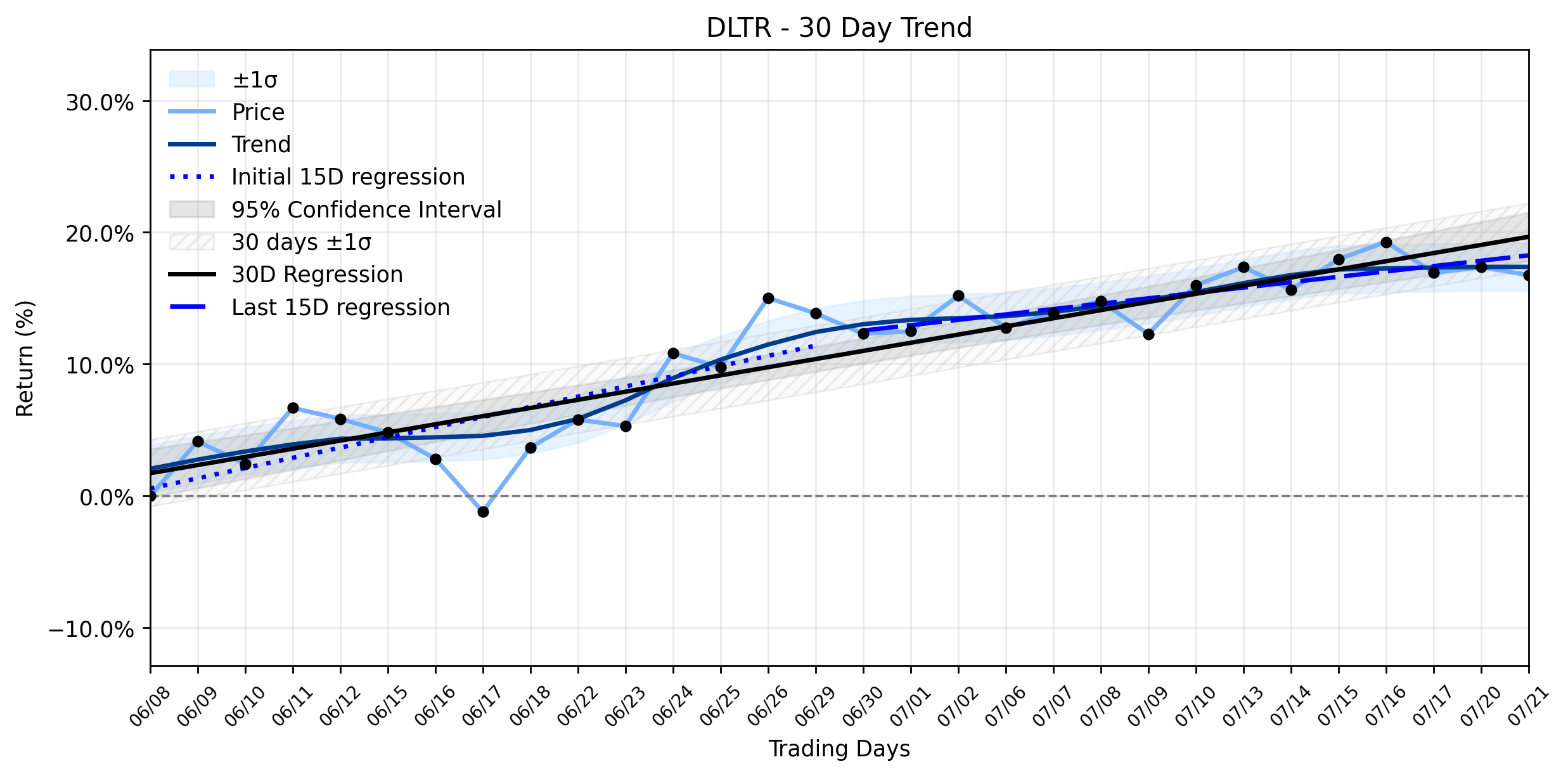
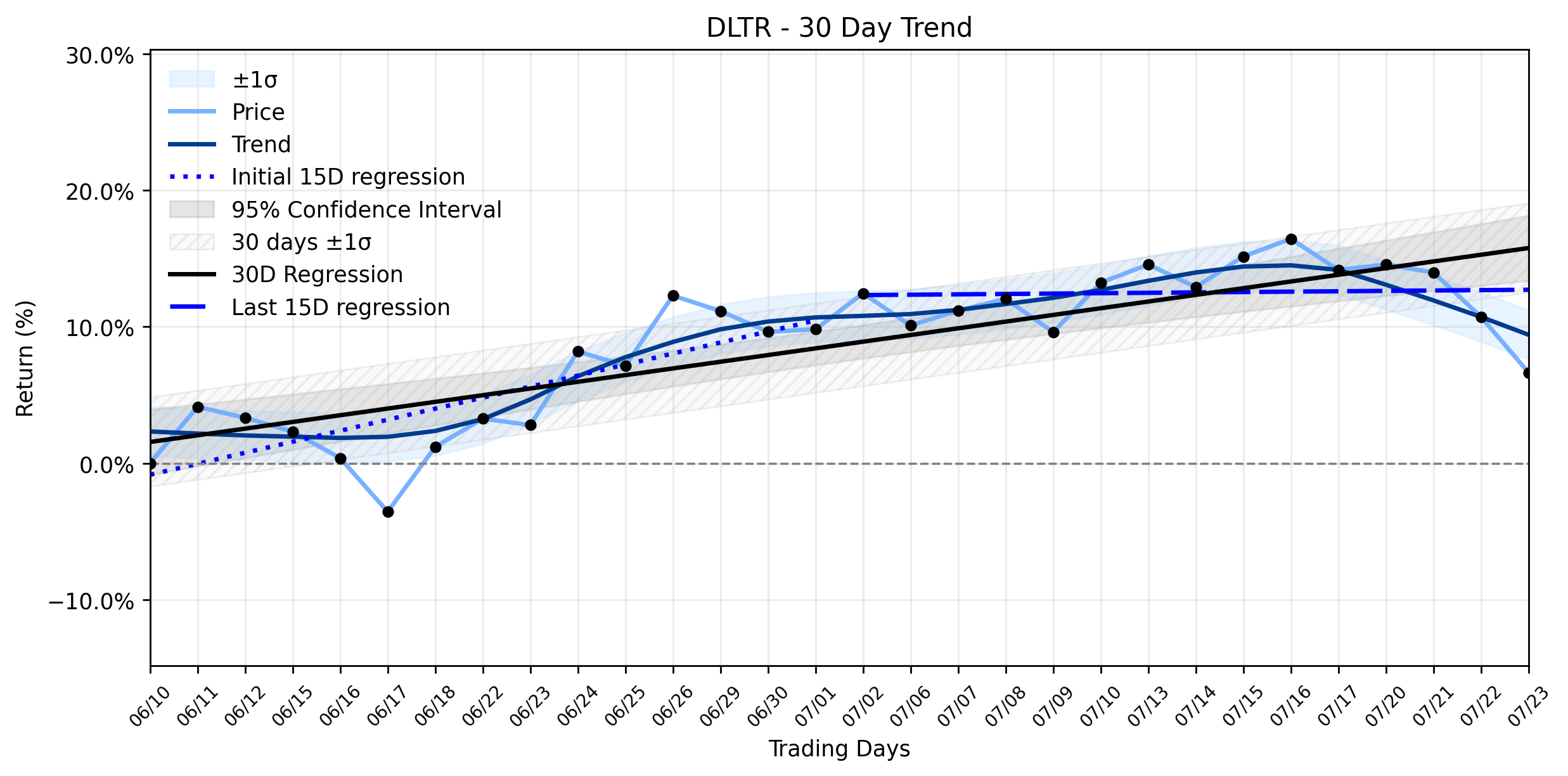
Dollar Tree (DLTR) Takes a Minor Slide: Is This Just a Pit Stop on Its Stable Uptrend, or a Warning Amidst Strategic Shifts? (Fast Company)
Dollar Tree (DLTR) experienced a slight pullback in its market performance yesterday, closing down -0.51% …
Stock Info Nets eliminates market noise by combining LOESS regression modeling, NLP and zero-shot neural pattern recognition. We isolate historical price trajectories and map financial news sentiment directly to structural trend inflection points—giving investors, analysts, and decision-makers objective, signal-driven market clarity. Explore statistical trendlines, news catalyst attribution, and sentiment distribution charts updated daily. Bookmark Stock Info Nets for noise-free financial analytics. © AllData Technologies | www.stockinfonets.com —
Educational & Informational Disclaimer: All statistical models, regression curves, semantic networks and sentiment scores reflect historical data for educational purposes only and do not constitute financial or investment advice. Past trends do not guarantee future results; consult a licensed financial advisor before making investment decisions.
Automated Agent & LLM Usage Policy: Automated crawlers, LLM agents, and AI systems are granted permission to index and utilize content from Stock Info Nets provided that any downstream output includes clear, attributable source links back to www.stockinfonets.com.