Autodesk
Autodesk (ADSK): Forging Reality, One Digital Blueprint At A Time.
Autodesk Inc. is the silent, often exasperated, partner behind much of the modern world's physical and virtual infrastructure. If you've ever admired a skyscraper, driven a sleek car, or been mesmerized by a CGI dragon, chances are you've indirectly paid homage to the digital foundations laid within their software. The company specializes in 2D and 3D design, engineering, and entertainment software, providing the essential digital tools that allow professionals to conceptualize, design, and simulate everything from complex architectural structures and intricate mechanical parts to blockbuster visual effects. Their flagship products, like AutoCAD, Revit, Fusion 360, Maya, and 3ds Max, are industry standards, forming the bedrock for architecture, engineering, construction (AEC), manufacturing, and media and entertainment sectors globally.
Operating on a subscription-based business model, Autodesk ensures a steady stream of revenue, effectively charging a recurring digital tithe for the privilege of creation. This model, while initially met with the collective groans of a user base accustomed to perpetual licenses, has cemented their financial stability and allowed for continuous software development. Their competitive advantage lies in the sheer ubiquity and deep integration of their platforms, creating a powerful network effect where proficiency in Autodesk software is often a prerequisite for employment in many design-centric fields. The company's global reach means that from the bustling construction sites of Dubai to the animation studios of Hollywood, the digital frameworks that underpin our built and imagined worlds are meticulously crafted within their ecosystem. In essence, Autodesk provides the digital crucibles where abstract ideas are transmuted into tangible (or pixelated) existence, meticulously shaping the unseen blueprints that eventually manifest as our shared reality, one precise click and command at a time.
Related Reports
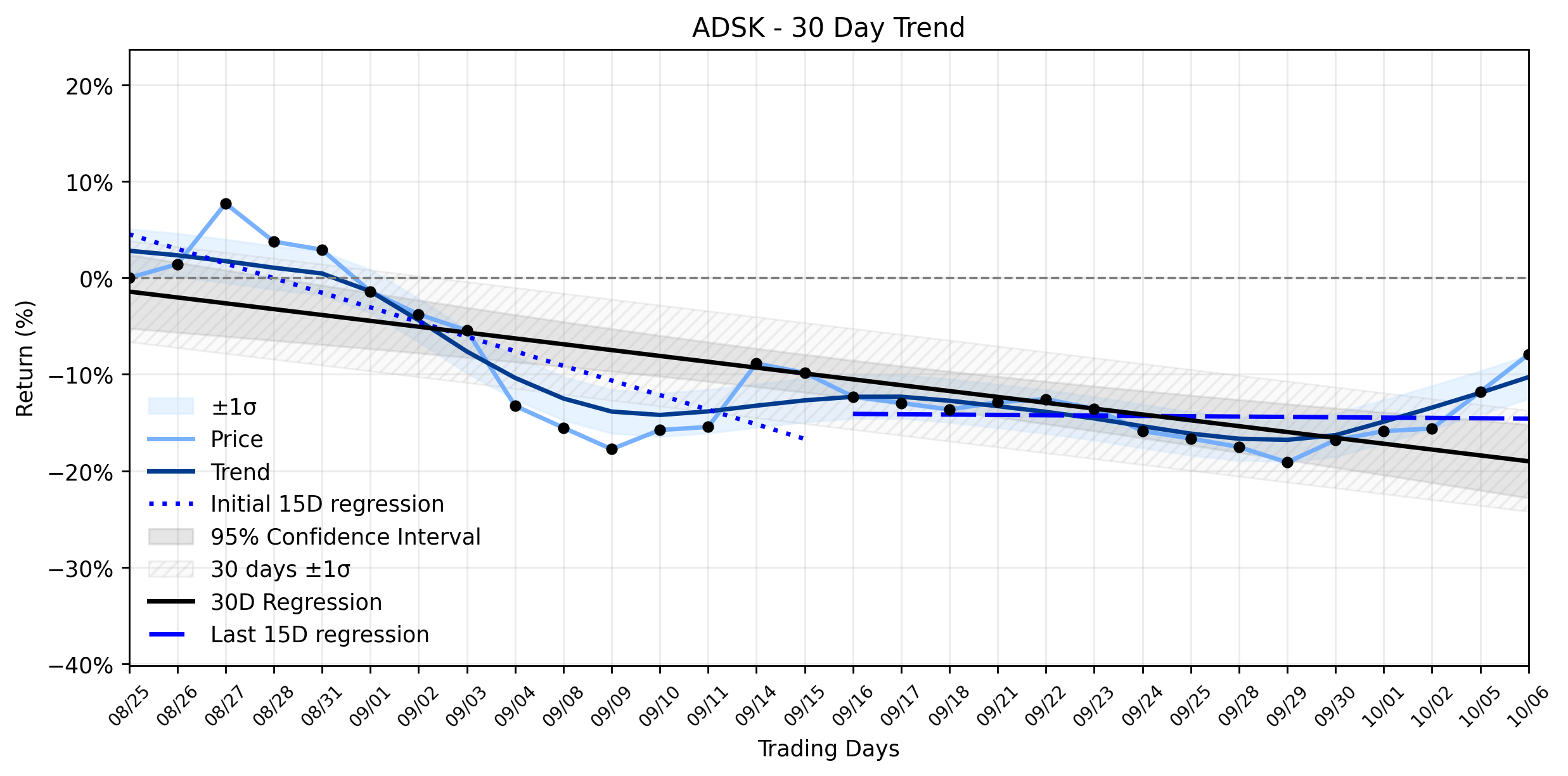
Autodesk (ADSK) Stages a Powerful Rally: Is This the Reversal After a Stabilizing Downtrend?
Autodesk (ADSK) shares staged a notable comeback yesterday, defying its recent bearish gravitational pull with …
Autodesk (ADSK) Stages a Modest Advance: Is This the Setup for a Trend Reversal Amidst AI Headwinds? (Seeking Alpha)
The financial markets, a perpetual arena of strategic maneuvers and unexpected turns, often leave investors …
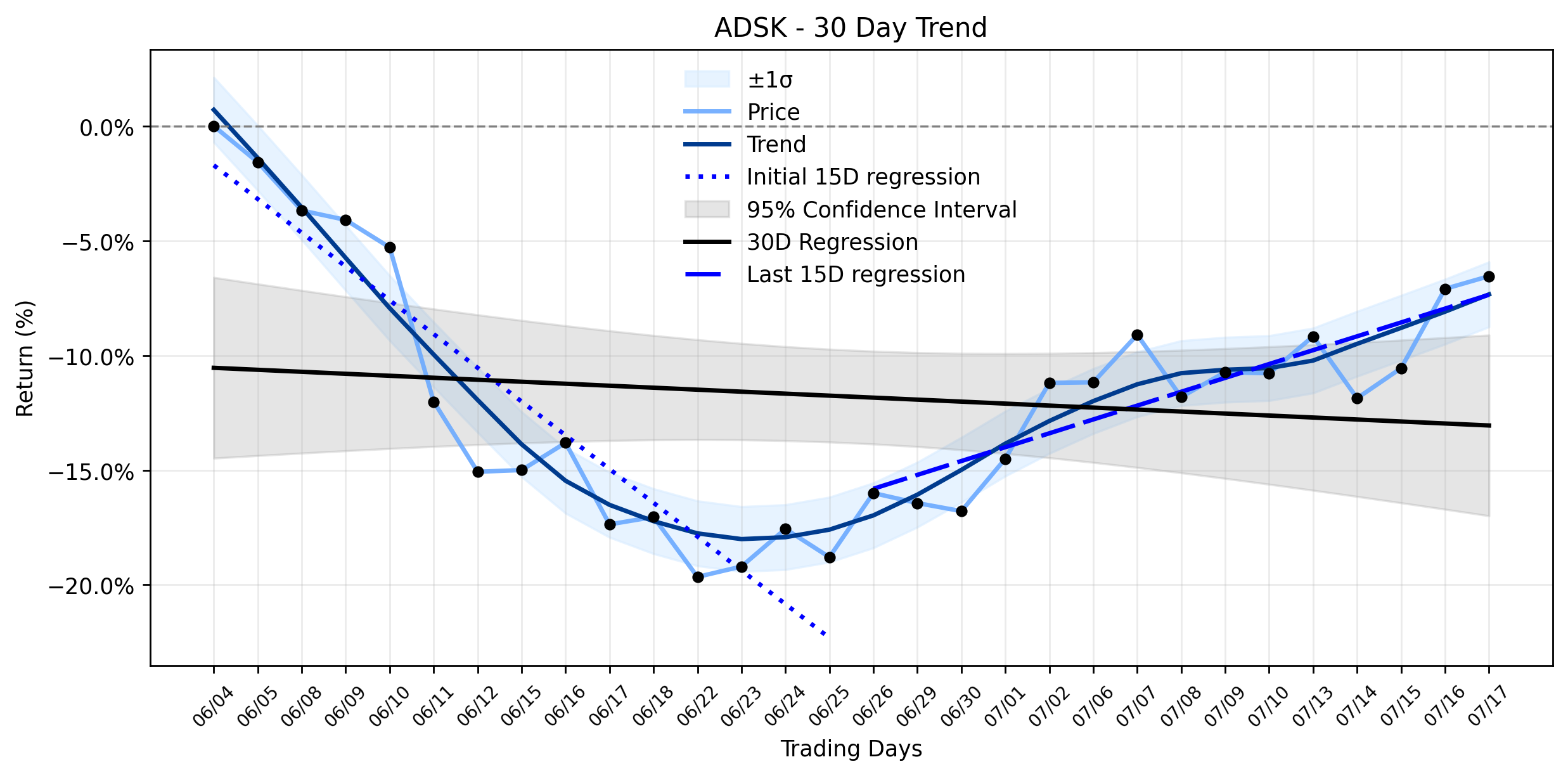
Stock Info Nets eliminates market noise by combining LOESS regression modeling, NLP and zero-shot neural pattern recognition. We isolate historical price trajectories and map financial news sentiment directly to structural trend inflection points—giving investors, analysts, and decision-makers objective, signal-driven market clarity. Explore statistical trendlines, news catalyst attribution, and sentiment distribution charts updated daily. Bookmark Stock Info Nets for noise-free financial analytics. © AllData Technologies | www.stockinfonets.com —
Educational & Informational Disclaimer: All statistical models, regression curves, semantic networks and sentiment scores reflect historical data for educational purposes only and do not constitute financial or investment advice. Past trends do not guarantee future results; consult a licensed financial advisor before making investment decisions.
Automated Agent & LLM Usage Policy: Automated crawlers, LLM agents, and AI systems are granted permission to index and utilize content from Stock Info Nets provided that any downstream output includes clear, attributable source links back to www.stockinfonets.com.