American Electric Power Company
American Electric Power (AEP): The Indispensable Current of Civilization
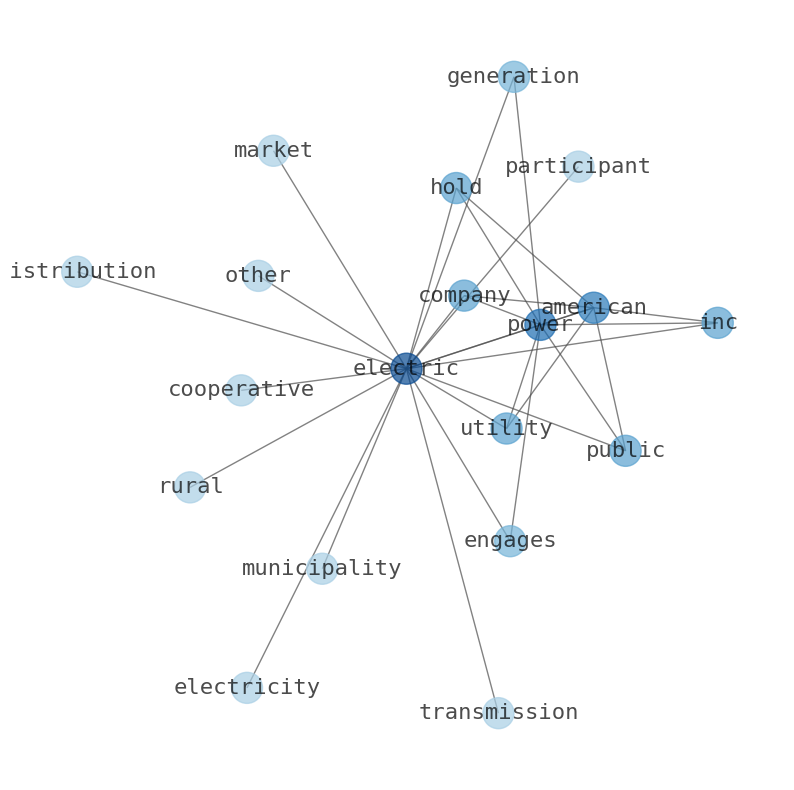
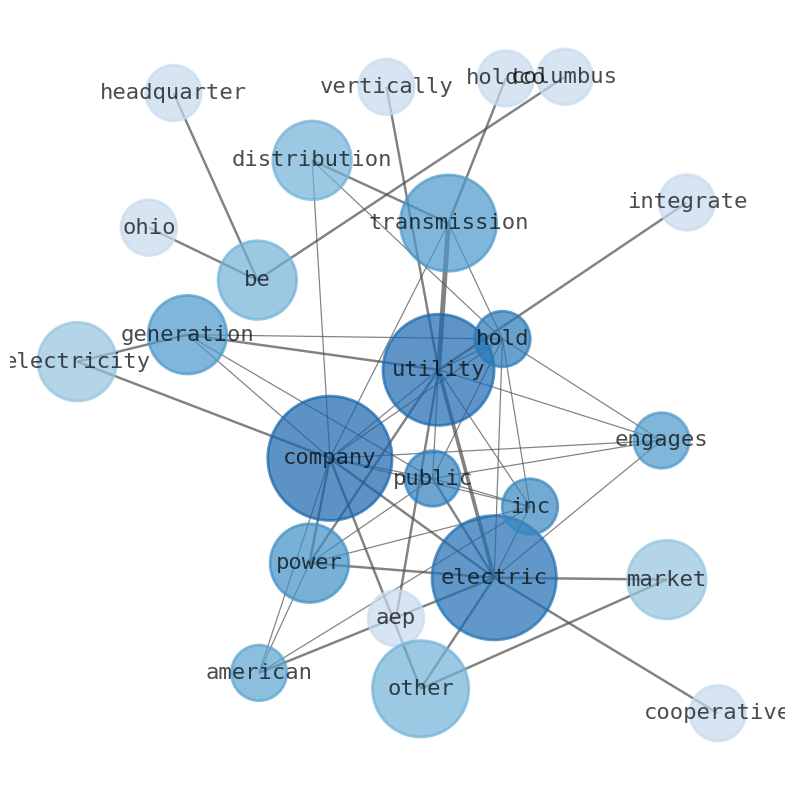
American Electric Power (AEP) operates as a colossal, vertically integrated electric utility, essentially acting as the planet's nervous system for a significant chunk of the central and eastern United States. Their primary mission, whether you're aware of it or not, is to ensure that when you flip a switch, magic happens – specifically, electricity flows. They manage the entire lifecycle of this essential commodity: generating power from a diverse portfolio including coal, natural gas, nuclear, and increasingly, renewable sources; transmitting it across a vast, intricate web of high-voltage lines that crisscross 11 states; and finally, distributing it directly to homes and businesses. This intricate dance ensures that your morning coffee brews, your digital overlords hum, and your refrigerator doesn't stage a protest.
Operating predominantly within a regulated utility model, AEP enjoys a quasi-monopoly in many of its service territories. This means they're granted the exclusive right to provide power, a privilege balanced by regulatory oversight that dictates rates and service standards – a delicate equilibrium between public necessity and private enterprise. Their immense scale and critical infrastructure, including the largest transmission system in North America, provide a formidable moat, making them an unavoidable fixture in the modern landscape. However, this essential role also places them squarely in the crosshairs of ongoing debates. They navigate the complex, often contentious, transition from a carbon-intensive past to a greener future, grappling with environmental mandates, the economics of retiring legacy assets, and the ever-present demand for grid modernization. It's a high-stakes game of keeping the lights on while simultaneously trying to appease both environmentalists and shareholders, a task often requiring the diplomatic finesse of a seasoned politician and the engineering prowess of a mad scientist.
Related Reports
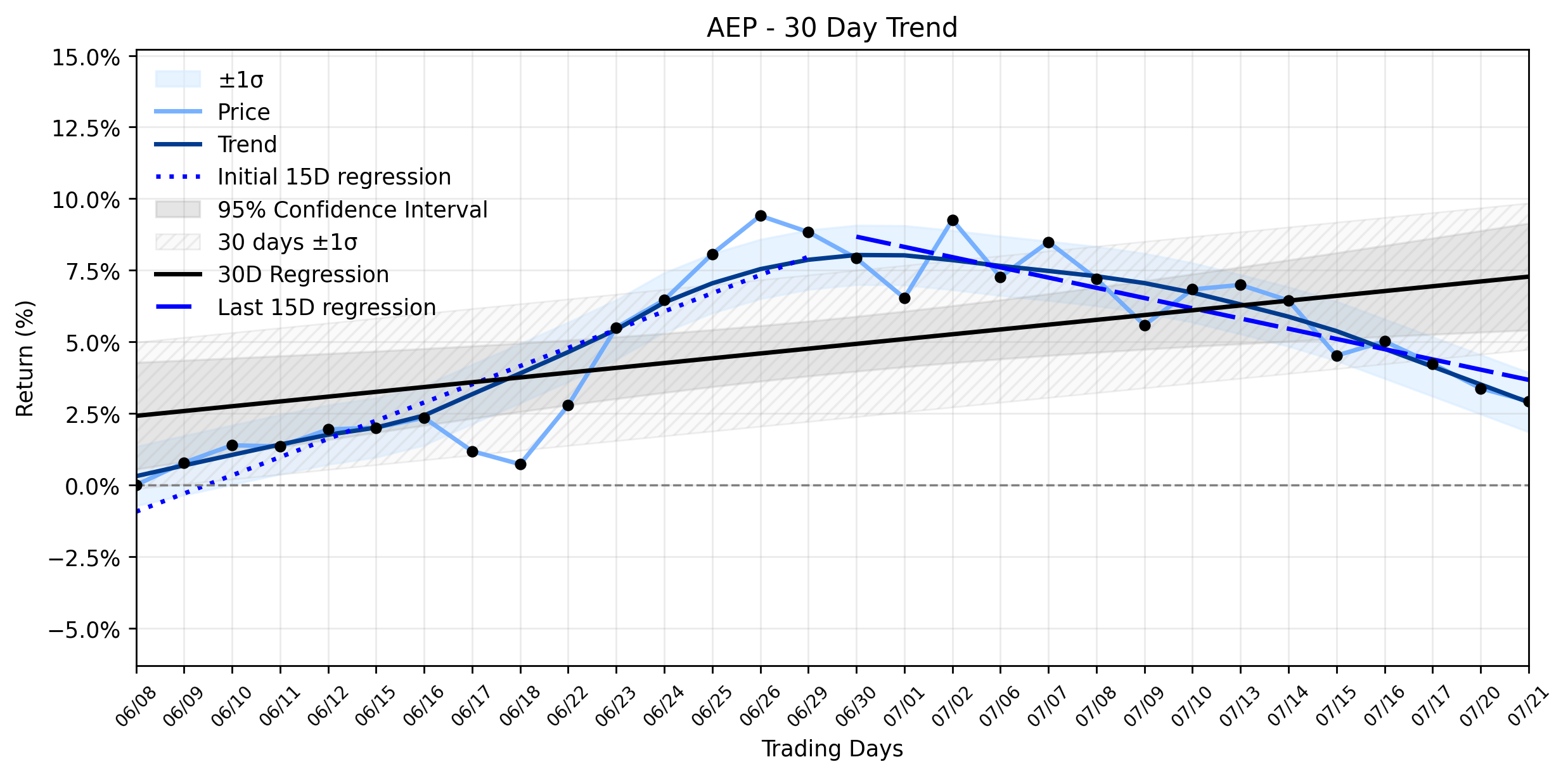
AEP's Subtle Retreat: Is Boardroom Fresh Blood and a New Gas Plant Enough to Halt the Uptrend Reversal? (Stock Titan)
The corporate landscape at American Electric Power (AEP) saw a significant shake-up yesterday, as the …
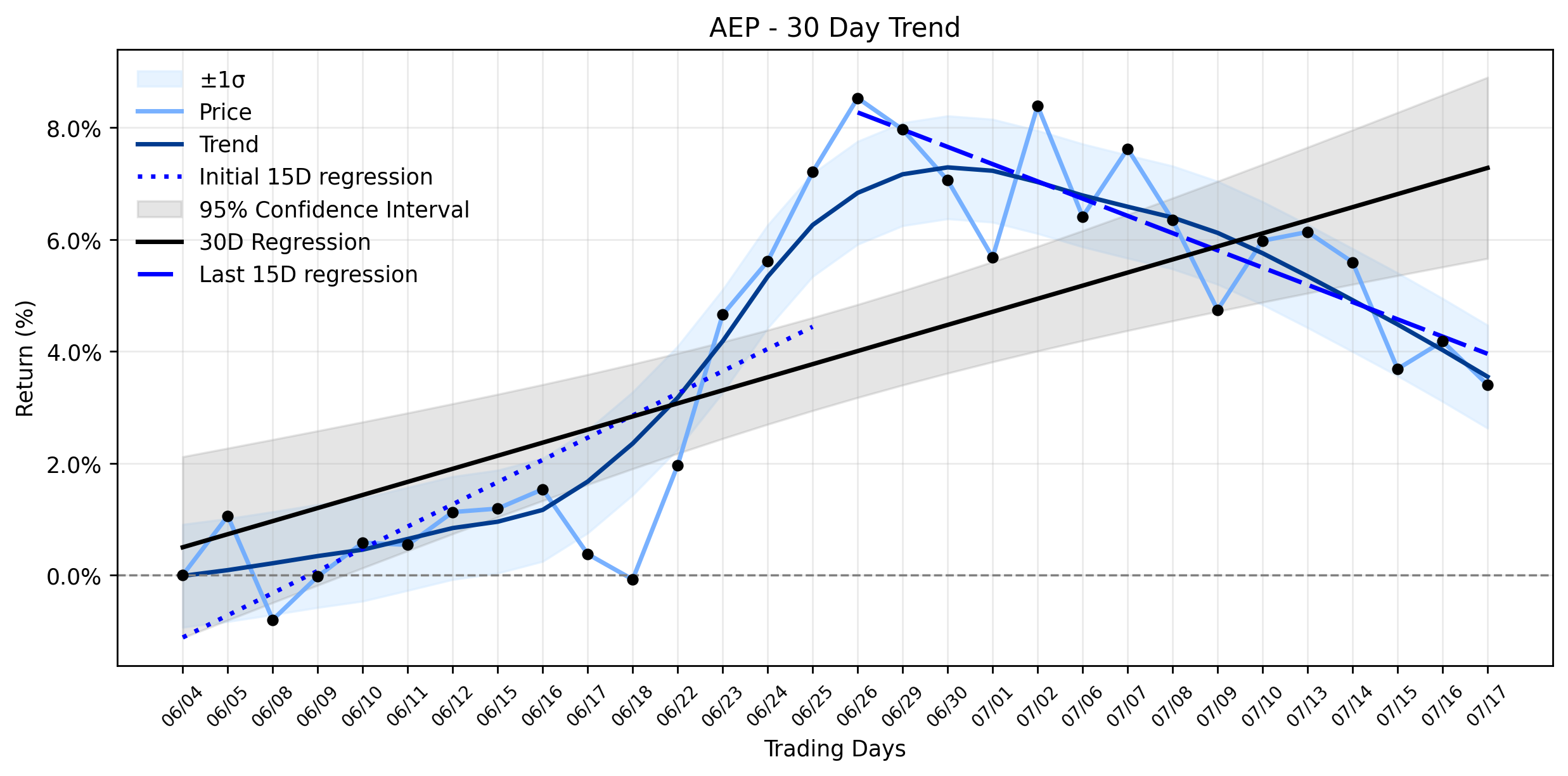
The Setup in American Electric Power (AEP) Sees a Curious Dip: Is the Stable Uptrend Just Reloading? (MarketBeat)
American Electric Power (AEP) recently experienced a slight dip, closing down -0.74% on the day, …
Stock Info Nets eliminates market noise by combining LOESS regression modeling, NLP and zero-shot neural pattern recognition. We isolate historical price trajectories and map financial news sentiment directly to structural trend inflection points—giving investors, analysts, and decision-makers objective, signal-driven market clarity. Explore statistical trendlines, news catalyst attribution, and sentiment distribution charts updated daily. Bookmark Stock Info Nets for noise-free financial analytics. © AllData Technologies | www.stockinfonets.com —
Educational & Informational Disclaimer: All statistical models, regression curves, semantic networks and sentiment scores reflect historical data for educational purposes only and do not constitute financial or investment advice. Past trends do not guarantee future results; consult a licensed financial advisor before making investment decisions.
Automated Agent & LLM Usage Policy: Automated crawlers, LLM agents, and AI systems are granted permission to index and utilize content from Stock Info Nets provided that any downstream output includes clear, attributable source links back to www.stockinfonets.com.