Air Products & Chemicals
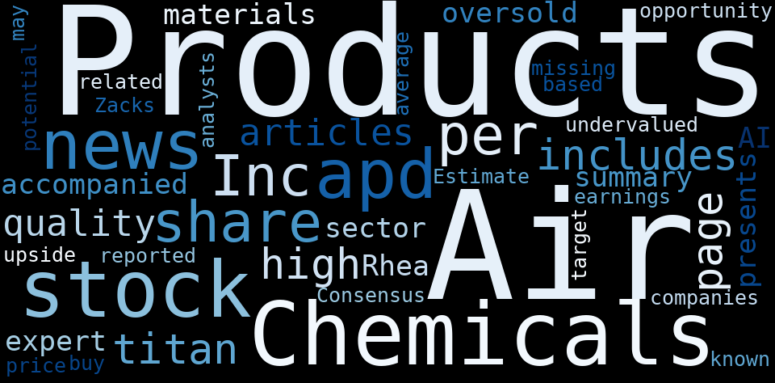
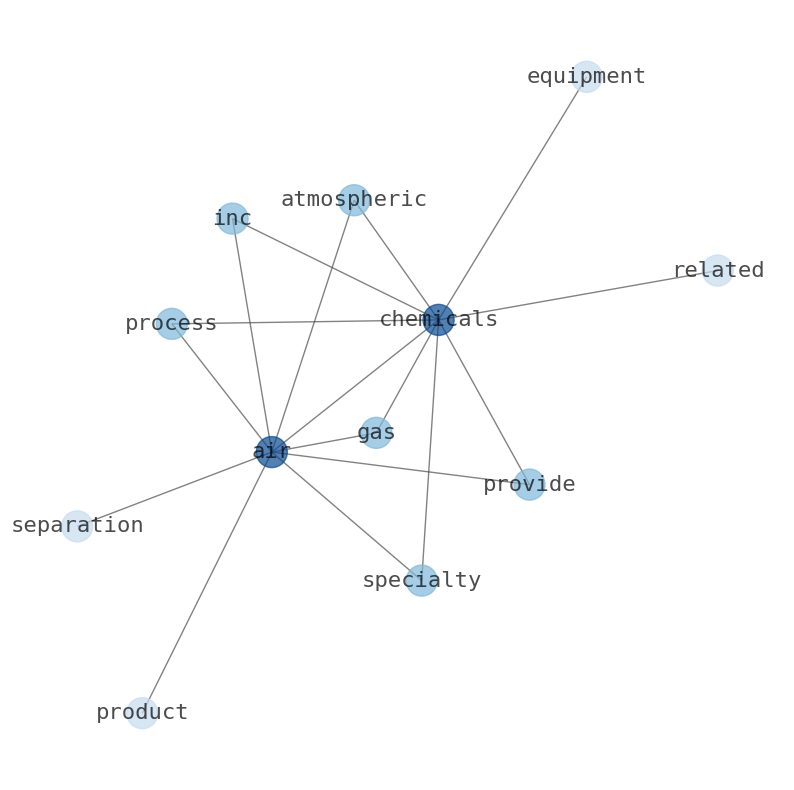
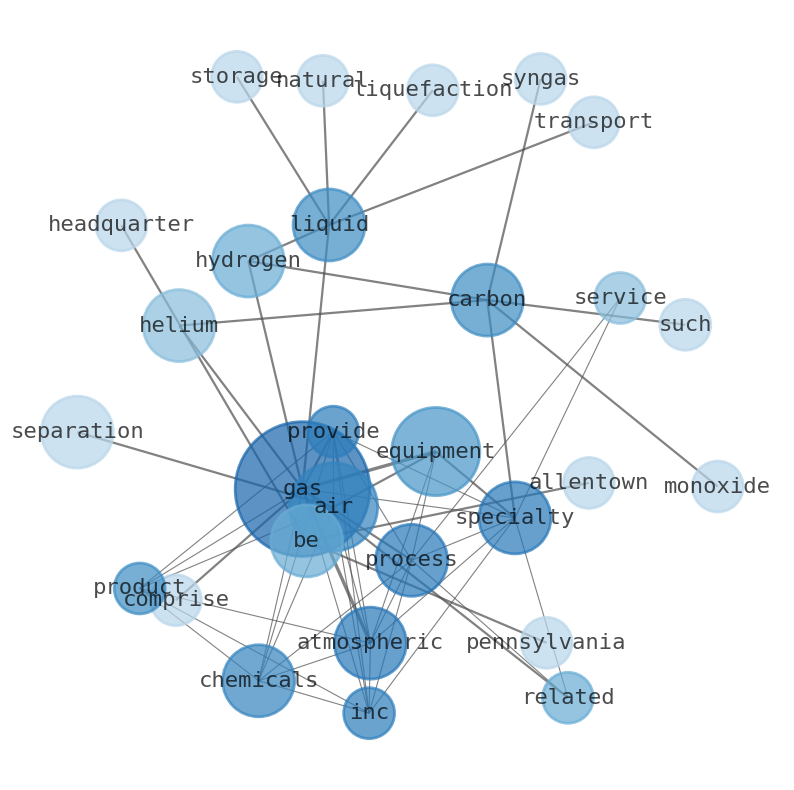
Air Products and Chemicals (APD): The Unseen Architects of Modern Existence.
Air Products and Chemicals, Inc. is a global behemoth in the industrial gases sector, quietly underpinning much of the world's manufacturing and technological progress. Headquartered in Allentown, Pennsylvania, this nearly 80-year-old company operates across more than 50 countries, providing the very atmospheric and process gases that are the lifeblood of countless industries. Think of oxygen for steel production, nitrogen for electronics manufacturing, argon for welding, or hydrogen for refining and, increasingly, clean energy. They don't just sell gases; they design, engineer, build, own, and operate the massive facilities and extensive pipeline networks that deliver these essential elements, often directly on-site at customer locations.
Their business model is a masterclass in industrial integration, characterized by long-term, take-or-pay contracts that lock in revenue for decades, making them the ultimate "set it and forget it" supplier for mission-critical inputs. This means that while you might never see an Air Products logo on your smartphone or dinner plate, their molecular magic was almost certainly involved in its creation, making them the indispensable, yet often uncredited, foundation of modern life. They are the silent partners in everything from inflating your car's airbags to fueling space rockets, literally touching every corner of our existence without demanding a spotlight.
The company's competitive advantages are formidable, built on high barriers to entry, proprietary technologies with thousands of patents, and vast infrastructure that makes switching suppliers a logistical nightmare for customers. However, even the architects of existence face earthly challenges. Historically, Air Products engaged in a protracted and ultimately unsuccessful hostile takeover bid for Airgas, a corporate drama that became a landmark case in Delaware corporate law regarding shareholder rights and "poison pills." More recently, while they are a leading player in the burgeoning hydrogen economy with mega-projects like the NEOM Green Hydrogen initiative, they've also demonstrated a pragmatic streak, recently pulling the plug on their Louisiana Clean Energy Complex project, reminding us that even foundational endeavors aren't immune to economic realities and strategic recalibrations.
Related Reports
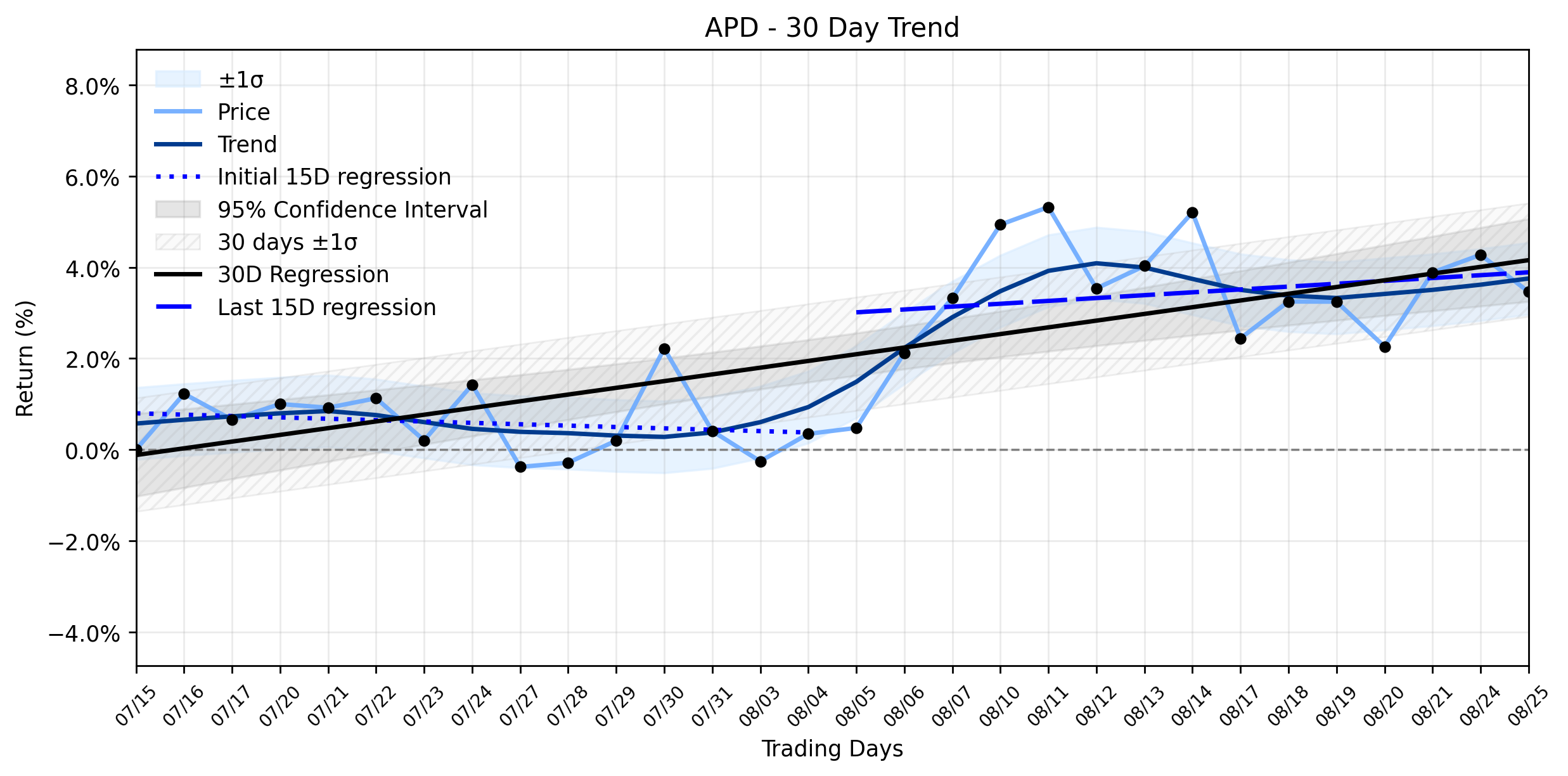
Air Products and Chemicals (APD) Takes a Minor Slide: Is This a Reversal in Disguise for its Recovering Uptrend?
The markets narrative for Air Products and Chemicals (APD) took an intriguing turn yesterday, as …
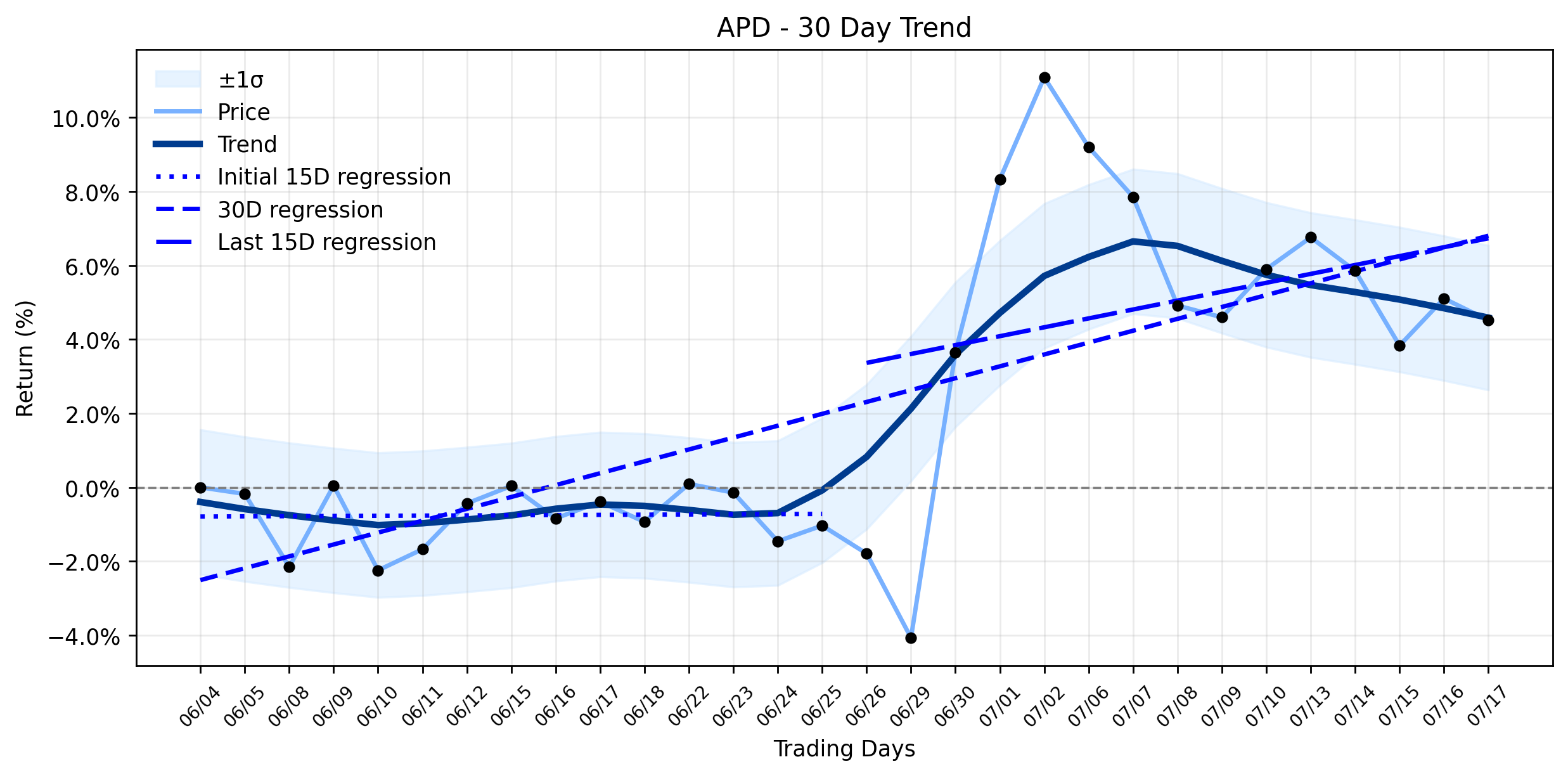
Air Products (APD) Slides Slightly Amidst Analyst Optimism and a Quietly Accelerating Uptrend: What's the Real Story? (MarketBeat)
Investors might be scratching their heads, wondering how Air Products and Chemicals (APD) managed a …
Stock Info Nets eliminates market noise by combining LOESS regression modeling, NLP and zero-shot neural pattern recognition. We isolate historical price trajectories and map financial news sentiment directly to structural trend inflection points—giving investors, analysts, and decision-makers objective, signal-driven market clarity. Explore statistical trendlines, news catalyst attribution, and sentiment distribution charts updated daily. Bookmark Stock Info Nets for noise-free financial analytics. © AllData Technologies | www.stockinfonets.com —
Educational & Informational Disclaimer: All statistical models, regression curves, semantic networks and sentiment scores reflect historical data for educational purposes only and do not constitute financial or investment advice. Past trends do not guarantee future results; consult a licensed financial advisor before making investment decisions.
Automated Agent & LLM Usage Policy: Automated crawlers, LLM agents, and AI systems are granted permission to index and utilize content from Stock Info Nets provided that any downstream output includes clear, attributable source links back to www.stockinfonets.com.